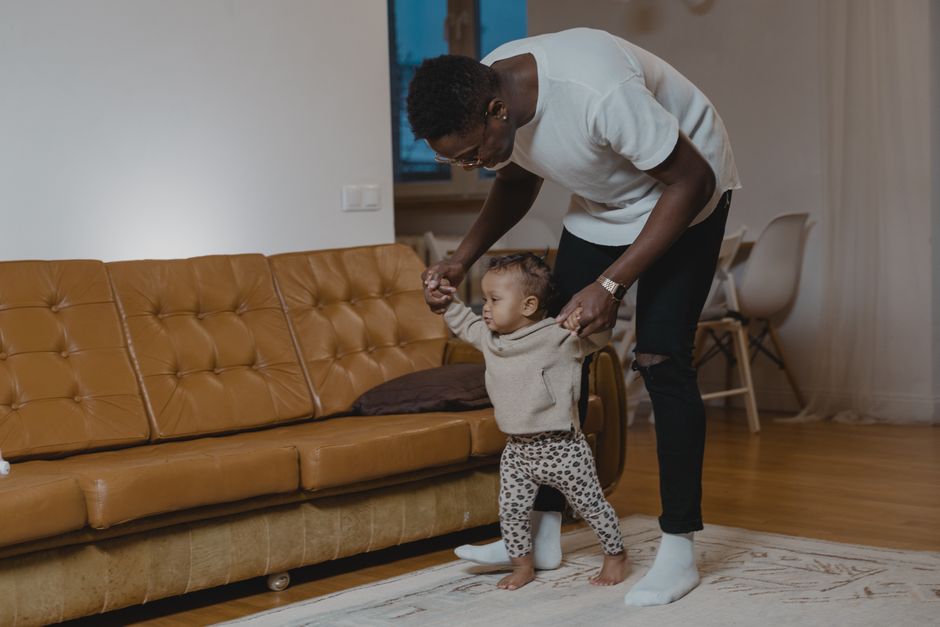
Baby Not Pointing by 12 to 15 Months? 5 Milestone Signs and Fun At-Home Exercises
Wondering when babies start pointing with index fingers? Discover why pointing is a crucial communication milestone, when to talk to your pediatrician, and home floor play tips.
Sarah Collins
Mom of Two & Founder of Mommy Tips & Life
Google AdSense Placeholder
Slot ready for "header-banner". Set your AdSense publisher ID in settings when approved.
🩺 Medical Disclaimer: This guide is for educational purposes and should not replace pediatric or obstetric medical consultation.
🛍️ Affiliate Disclosure: We may earn a small commission when you purchase through our links at no extra cost to you.
At my son Leo’s 12-month wellness checkup, the pediatrician ran through a standard developmental checklist: Is he pulling to stand? Is he clapping? Does he point to show you things he likes?
When the doctor asked that last question, my heart sank. Leo could roll, crawl with lightning speed, and loved banging wooden blocks together, but he never isolated his little index finger to point. If he wanted his water cup or a teddy bear on a high shelf, he would grunt, wave an open palm, or reach his whole arm out. Over the next month, I found myself obsessively scrolling mom forums at midnight, analyzing every gesture and panicking that he was falling behind on critical social milestones.
The Upfront Breakthrough Summary: Pointing is much more than a cute gesture; it is the neurological foundation for joint attention, social communication, and speech acquisition. If your 12-to-15-month-old isn’t pointing yet, it does not mean there is a permanent delay. In many cases, babies simply need targeted fine-motor finger games, interactive book-reading models, and opportunities to communicate without parents anticipating their every need. By implementing daily “Bubble Pop Index Games”, Visual Finger Tracking, and reducing background digital distractions, Leo was pointing with enthusiasm within three weeks.
1. The Neuroscience of Pointing: Why Joint Attention Matters
Pointing is a complex cognitive and motor milestone that combines three distinct developmental systems:
- Fine Motor Finger Isolation: Neurologically separating the index finger while curling the remaining three fingers requires fine motor cortex maturation.
- Triadic Social Gaze (Joint Attention): The baby looks at you, looks at the object of interest, and looks back at you to confirm you are sharing the experience.
- Symbolic Communication: The baby realizes: “I can use my body to change what is in mommy’s mind without having to say words yet.”
[ Baby Sees Interesting Object (e.g., Airplane or Dog) ]
                          ⬇
[ Neurological Command: Isolate Index Finger & Point ]
                          ⬇
[ Eye Contact Shift: Baby Looks at Parent -> Looks at Object -> Looks Back ]
                          ⬇
- If Lacking Modeling or Over-Screened: Frustration Grunts & Delayed Gestures ❌
- If Modeled with Floor Play & Joint Attention: Rapid Speech & Expressive Gestures ✅
To support overall verbal and non-verbal progress, read our guides on how to boost toddler language and speech at home, baby not responding to their name milestone delays, and baby not babbling early warning signs.
2. The Two Types of Pointing: Declarative vs. Imperative
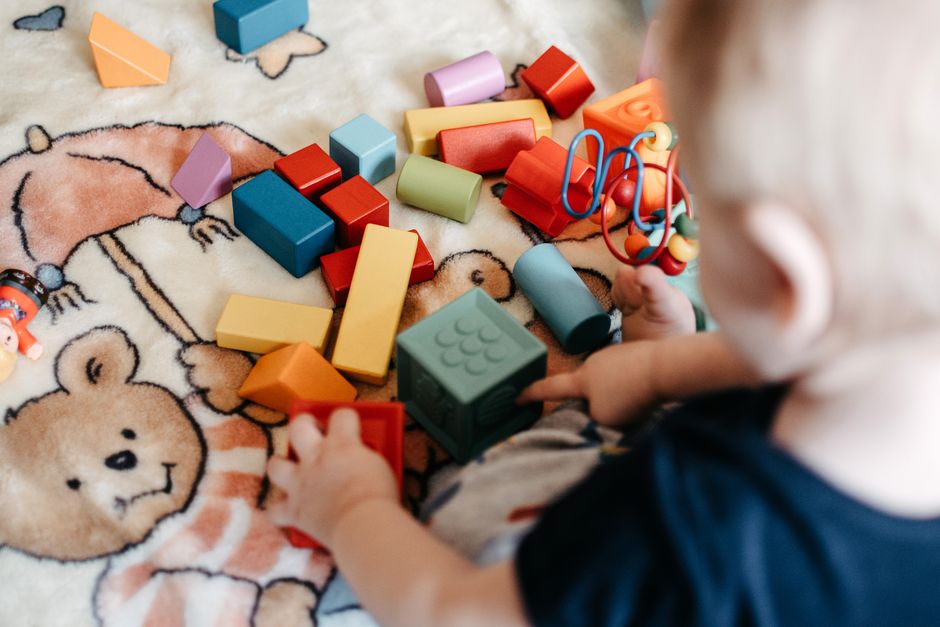
Pediatric speech-language pathologists (SLPs) divide pointing into two critical developmental categories:
Type 1: Imperative Pointing (“I Want That”)
- Emerges: Around 10 to 12 months.
- Function: Instrumental request. The baby points at a banana, sippy cup, or toy they cannot reach as a tool to get you to give it to them.
Type 2: Declarative Pointing (“Look at That!”)
- Emerges: Around 12 to 15 months.
- Function: Social sharing. The baby points out the window at a barking dog, a bird flying by, or a glowing lamp just to say: “Look Mommy, isn’t that cool?”
- Significance: Declarative pointing is the cornerstone of empathy, shared social joy, and conversational readiness.
💡 Pediatric / Mom Tip: Declarative pointing is closely linked with vocabulary growth. Babies who point declaratively at 12–14 months typically understand and speak significantly more words by 24 months.
3. The 5 Common Reasons Why a Baby Isn’t Pointing Yet
If your child hasn’t mastered pointing by their first birthday, consider these 5 common factors:
Reason #1: The “Mind-Reading Parent” Habit
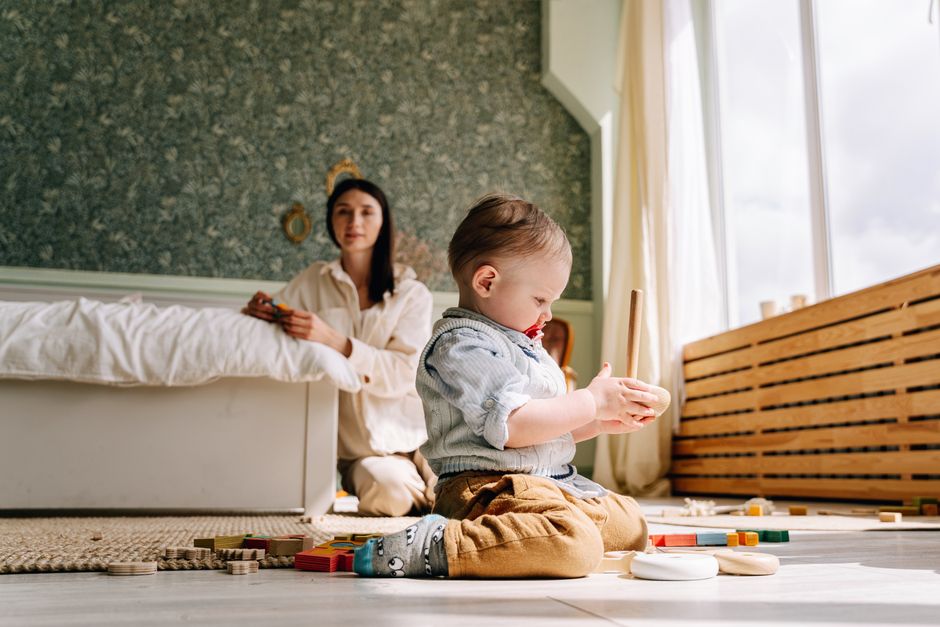
When parents anticipate every single need—handing the baby their cup before they ask, or passing toys the second they look in that direction—the baby has no biological motivation to develop communicative gestures.
Reason #2: Excessive Passive Screen Time
Passive viewing of rapid-frame cartoons suppresses interactive joint attention. Children learn gestures from 3D real-world interaction, not flat screens. Read our investigation on toddler screen time speech delay traps and overstimulating cartoons to avoid.
Reason #3: Container Overuse and Lack of Floor Mobility
Spending prolonged hours in bouncers, walkers, or high chairs limits upper-body exploratory reaching. Learn about the motor risks in our article on container baby syndrome symptoms and prevention.
Reason #4: Immature Fine Motor Finger Isolation
Some babies possess strong social desire but haven’t developed the physical strength and neural control to extend the index finger independently, resorting to whole-hand reaching instead.
Reason #5: Auditory or Visual Processing Delays
If a child has undiagnosed chronic fluid behind the eardrum (common after mild ear infections) or subtle vision issues, their spatial tracking and sound localization may lag temporarily.
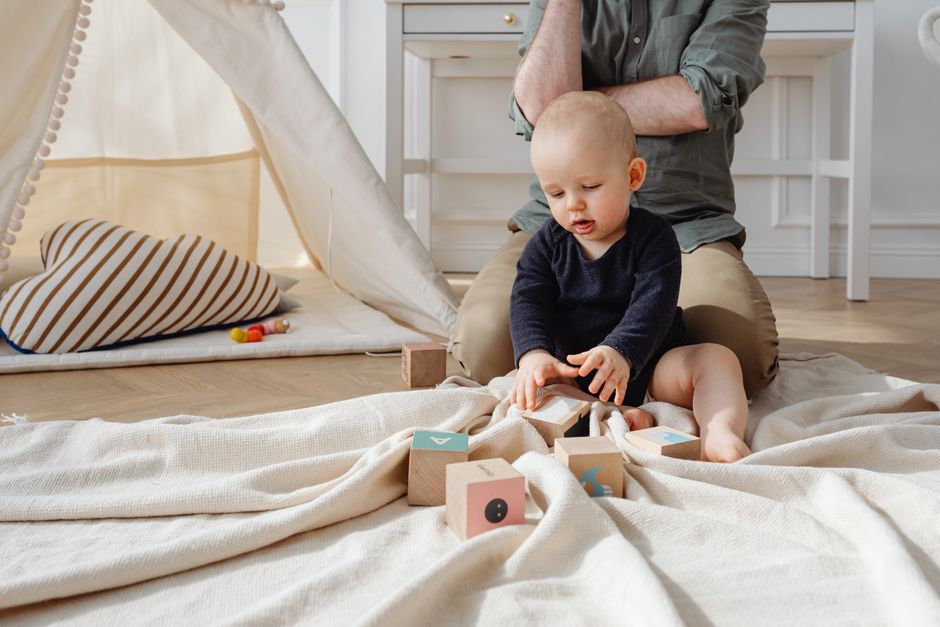
4. Comparison: Whole-Hand Reaching vs. Isolated Declarative Pointing
| Development Trait | Whole-Hand Reaching (8–10 Months) | Isolated Declarative Pointing (12–15 Months) ✅ |
|---|---|---|
| Physical Form | Open palm, five extended fingers | Single index finger extended, thumb tucked |
| Gaze Pattern | Stares fixated solely on the toy | Shifts gaze between parent’s eyes and object (triadic) |
| Intent | Physical grasping / wanting to grab | Social communication / sharing interest |
| Vocal Pair | Grunts of frustration | Cooing, happy babbling, or naming sounds |
| Language Readiness | Early motor exploration | Pre-verbal milestone directly preceding words |
Before babies learn to isolate the index finger for pointing, they first develop finger coordination by picking up tiny objects. Review our step-by-step guide on baby pincer grasp milestones, red flags, and OT activities to see how fine motor control evolves.
5. 4 Fun At-Home Floor Exercises to Teach Pointing
You can easily encourage pointing through daily playful interactions:
Exercise 1: The Soap Bubble “Pop Point”
Blow non-toxic bubbles during floor play. Instead of catching them with an open hand, dramatically extend your index finger, say “POP!”, and burst one bubble at a time. Then gently take your baby’s hand, extend their index finger, and help them pop a bubble while cheering excitedly.
Exercise 2: Peek-Through Board Books
Choose sturdy board books with finger holes, sensory textures, or lift-the-flaps (like Where’s Spot?). Place your finger firmly on illustrations, asking “Where is the puppy? Look! Right there!” Guide your baby’s index finger to poke through holes and push interactive sound buttons.
Exercise 3: The “Choice on High Shelf” Game
Place two favorite toys or snack options on a clear shelf just out of their reach. When your baby looks toward them, hold your hand out and ask, “Which one do you want? Show me with your finger!” Wait patiently for 5–10 seconds to give their brain processing time to gesture before handing it over.
Exercise 4: Laser / Light Flashlight Tracking
In a dim room, shine a small flashlight beam onto the wall or floor. Point at the circle of light with your finger, saying “Look at the light!” Babies naturally track the beam and attempt to touch the dot with an extended finger.
⚠️ Warning Alert: If your baby is 18 months old and does not point to show you things, does not respond to their name when called, does not make regular eye contact, or has lost previously acquired babbling skills, schedule a comprehensive developmental screening with your pediatrician and local Early Intervention program (free in all US states under IDEA Part C).
6. Encouraging Communication With Joy and Patience
Remember that every baby develops at their own unique pace. Milestone charts provide helpful clinical guidelines, but children are not robots following a rigid timeline.
With daily responsive floor play, loving eye contact, and lots of interactive games, your little one will soon be pointing at every bird, truck, and flower in sight—opening up a wonderful new world of communication.
Google AdSense Placeholder
Slot ready for "in-article". Set your AdSense publisher ID in settings when approved.
Frequently Asked Questions by Moms
When should a baby start pointing with their index finger? ▼
Most babies begin pointing between 9 and 14 months of age. Proto-imperative pointing (pointing to ask for something) usually appears first around 10–12 months, followed by proto-declarative pointing (pointing to share interest in an object or event) between 12 and 15 months.
Why is pointing considered such an important developmental milestone by pediatricians and the CDC? ▼
Pointing is the universal bridge to verbal language and the hallmark of 'joint attention'—the ability to coordinate visual attention with another person toward an external object. Studies show pointing is one of the strongest predictive indicators of future language development and social-communication skills.
What is the difference between open-hand reaching and index finger pointing? ▼
Open-hand reaching is a motor desire to grasp a physical object. Isolated index finger pointing requires advanced fine motor coordination, neural isolation of the extensor indicis muscle, and a social intent to direct someone else's attention.

Written by Sarah Collins
Doctor-Reviewed & Fact-CheckedMom of Two & Founder of Mommy Tips & Life
Sarah is a mother of two (Liam & Maya) sharing evidence-based parenting guides, infant sleep solutions, and baby safety alerts tested in real family life and vetted against AAP clinical standards.
Google AdSense Placeholder
Slot ready for "footer-banner". Set your AdSense publisher ID in settings when approved.