Container Baby Syndrome: 5 Hidden Motor Delay Signs and How to Fix Floor Play
Is your baby spending hours in swings, bouncers, and car seat capsules? Discover 5 subtle signs of Container Baby Syndrome, plagiocephaly risks, and pediatric floor play fixes.
Sarah Collins
Mom of Two & Founder of Mommy Tips & Life

Google AdSense Placeholder
Slot ready for "header-banner". Set your AdSense publisher ID in settings when approved.
🩺 Medical Disclaimer: This guide is for educational purposes and should not replace pediatric or obstetric medical consultation.
🛍️ Affiliate Disclosure: We may earn a small commission when you purchase through our links at no extra cost to you.
When Lucas was three months old, baby gear felt like my personal lifesaver. Between balancing work emails, making dinner, and folding mountains of laundry, Lucas went from the electric swing to the vibrating bouncer, then into the car seat carrier for errands, and finally into the stationary upright floor seat while I cooked. He seemed calm, entertained, and safe.
Then came his four-month well-check. The pediatrician gently ran his fingers over the back of Lucas’s skull and frowned. “Sarah, look at his head shape here—he is developing noticeable positional plagiocephaly on the right side, and his neck muscles are significantly tight on the left.” The doctor explained that Lucas was showing early signs of Container Baby Syndrome. I sat in the car afterward and cried my eyes out, feeling like my desire for a few hands-free minutes had compromised my baby’s physical development.
The Upfront Breakthrough Summary: Pediatric physical therapists emphasize that an infant’s brain and musculoskeletal system require gravity, resistance, and unrestricted floor movement to wire neural pathways properly. What felt like an overwhelming diagnosis was completely reversed in 8 weeks with three daily habits: enforcing the 15-Minute Equipment Rule, setting up a safe “Yes-Space” floor gym, and incorporating gentle tummy time alternatives when baby hates floor play. Today, Lucas has perfect posture, strong core strength, and never needed a corrective helmet.
1. What Exactly Is a “Container”?
A “container” is any piece of baby equipment that holds an infant in a fixed, molded position with restricted head, spine, and limb mobility.
Common containers include:
- Electric swings and rockers
- Vibrating floor bouncers
- Molded foam floor seats (like Bumbos)
- Car seat capsules (when used outside of vehicle transit)
- Exersaucers and upright jumper toys
- Strollers without a flat bassinet attachment
[ Hours Spent in Restrictive Containers ]
                   ⬇
[ Zero Gravitational Resistance on Neck, Core & Pelvis ]
                   ⬇
[ Uneven Pressure on Soft Infant Skull Bones & Tightening Neck ]
                   ⬇
[ Delayed Motor Milestones (Rolling, Sitting, Crawling) ]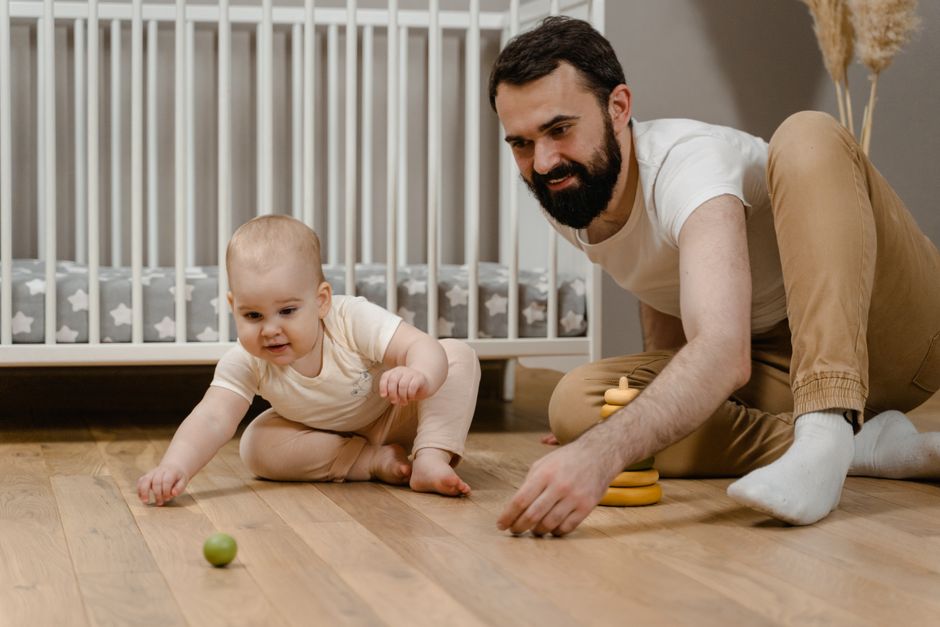
2. The 5 Warning Signs of Container Baby Syndrome Most Parents Miss
Container Baby Syndrome develops gradually. Watch for these five subtle developmental red flags:
Sign #1: Flat Spots on the Head (Positional Plagiocephaly or Brachycephaly)
Infant skull bones are soft, malleable plates separated by cranial sutures. When a baby’s head rests against the rigid plastic or taut fabric of a car seat or bouncer for extended periods, constant gravitational compression flattens the back or side of the skull. For step-by-step repositioning techniques, check our complete guide on baby flat head syndrome causes, plagiocephaly prevention, and non-helmet fixes.
Sign #2: Asymmetric Head Turning & Neck Stiffness (Torticollis)
If your baby consistently looks only to the left or right, or tilts their ear toward one shoulder, the sternocleidomastoid muscle has shortened and tightened. Containers exacerbate this because babies turn toward room lights or television screens from a fixed angle.
If your baby is also exposed to excessive background screens, learn how overstimulation impacts development in our guide on toddler screen time traps and speech delays.
Sign #3: Delayed Floor Milestones (Rolling, Pushing Up, and Sitting)
Babies build the shoulder girdle and abdominal strength required to roll over and crawl by kicking against firm surfaces. Babies kept in containers lack the opportunities to push against gravity, causing them to miss rolling milestones and delayed sitting balance. If your baby struggles with core stability, see our pediatric PT guide on baby not sitting up milestone delays and exercises.

Sign #4: Rigid “W-Sitting” or Toe-Walking Propensity
When babies are placed in upright stationary activity jumpers or molded floor seats before their core muscles are mature, their bodies compensate by locking leg joints or thrusting backward on tiptoes. Discover why pediatric physical therapists caution against molded chairs in our deep dive on baby floor seats safety hazards and PT alternatives.
⚠️ Warning Alert: Upright jumper seats and wheeled baby walkers do NOT teach babies to walk faster. In fact, they place abnormal strain on infant hip joints. Review why health agencies warn against them in our deep dive on why pediatricians ban baby walkers.
Sign #5: Sensory Irritability When Placed Flat on the Floor
Does your baby instantly scream the moment their back touches a flat play mat?
When infants become accustomed to the passive cradling of curved seats, their vestibular (balance) and proprioceptive (body awareness) systems become under-stimulated, making the flat floor feel unfamiliar and disorienting.
3. Container Habits vs. Pediatric Floor Play Swaps
| Common Gear Habit ❌ | Pediatric Physical Therapy Alternative ✅ |
|---|---|
| All-Day Bouncer Parking: Keeping baby in a swing for hours while awake. | The 15-Minute Cap: Limit container use to a maximum of 15–20 mins per session. |
| Car Seat Carrier as a Napper: Leaving baby asleep in the infant car seat inside the house. | Flat Sleep Surface Transfer: Transfer immediately to a firm, empty crib or flat bassinet. |
| Forced Propped Sitting: Using foam floor seats before baby can balance independently. | Natural Tripod Floor Practice: Let baby balance with hands on the floor naturally. |
| registry overload: Buying 4 different swings and bouncers. | Minimalist Playmat Setup: Invest in a non-toxic padded floor mat and high-contrast cards. |
Check our curated list of overhyped baby registry items parents regret buying to keep your nursery clutter-free and developmentally supportive.
4. The 3-Step “Floor Freedom” Action Plan
You do not need to throw away your baby swing or feel guilty about using a bouncer to take a shower. The goal is balance. Follow this 3-step routine:
Step 1: Create a Dedicated “Yes-Space”
Set up an enclosed, clean floor area using a non-toxic foam play mat and baby gates. Keep it stocked with 2 or 3 open-ended developmental toys (like wooden rattles or soft mirrors). A safe “Yes-Space” allows you to step away without worrying about household safety hazards.
Step 2: Implement “Tummy Time in Disguise”
If your baby hates traditional flat tummy time:
- Chest-to-Chest: Recline on the sofa at a 45° angle and place your baby on your chest, making direct eye contact.
- Over the Lap: Lay your baby belly-down across your thighs while gently patting their bottom.
- The Airplane Carry: Carry your baby face-down resting securely on your forearm.
Step 3: Practice Side-Lying Play
Place a rolled-up receiving towel behind your baby’s back to support them lying on their side. Side-lying brings their hands together at the midline, strengthens lateral neck muscles, and completely relieves pressure on the back of the skull.
💡 Pediatric / Mom Tip: For every 15 minutes your baby spends in a car seat or stroller, aim to provide 15 minutes of unrestricted floor freedom afterward to recalibrate their vestibular system.
Summary: Floor Play is Baby’s Best Brain Gym
Babies do not need fancy electronic gadgets, battery-powered swings, or motorized rockers to develop remarkable cognitive and motor skills.
The greatest gift you can give your developing baby is the simplest one: a blanket on the floor, your loving voice, and the freedom to roll, stretch, reach, and discover the world at their own natural pace.
Google AdSense Placeholder
Slot ready for "in-article". Set your AdSense publisher ID in settings when approved.
Frequently Asked Questions by Moms
What is Container Baby Syndrome (CBS)? ▼
Container Baby Syndrome is a collection of movement, structural, and behavioral issues that arise when an infant spends too much time confined in restrictive baby gear—such as swings, bouncers, car seats, strollers, and stationary upright seats—rather than having unrestricted movement on the floor.
What are the most common physical signs of Container Baby Syndrome? ▼
The hallmark physical signs include positional plagiocephaly (flat spots on the back or side of the head), positional torticollis (tightened neck muscles causing a head tilt), delayed gross motor milestones (rolling, sitting, crawling), and reduced core muscle tone.
How much floor time does a baby need every day? ▼
Pediatric physical therapists recommend at least 60 to 90 minutes of total floor play (including supervised tummy time, side-lying, and back play) distributed in short 5-to-15-minute bursts throughout the day for infants aged 2 to 6 months.

Written by Sarah Collins
Doctor-Reviewed & Fact-CheckedMom of Two & Founder of Mommy Tips & Life
Sarah is a mother of two (Liam & Maya) sharing evidence-based parenting guides, infant sleep solutions, and baby safety alerts tested in real family life and vetted against AAP clinical standards.
Google AdSense Placeholder
Slot ready for "footer-banner". Set your AdSense publisher ID in settings when approved.