5 Screen Time Traps Causing Toddler Speech Delays (And What to Do Instead)
Worried about your toddler's vocabulary? Learn how overstimulating screen time impacts developing brains and easy language-boosting floor routines.
Sarah Collins
Mom of Two & Founder of Mommy Tips & Life
Google AdSense Placeholder
Slot ready for "header-banner". Set your AdSense publisher ID in settings when approved.
🩺 Medical Disclaimer: This guide is for educational purposes and should not replace pediatric or obstetric medical consultation.
🛍️ Affiliate Disclosure: We may earn a small commission when you purchase through our links at no extra cost to you.
When my son Lucas was 18 months old, our pediatric checkup felt like a punch to the gut. While his peers were babbling in sweet 2-word combinations, Lucas had only three recognizable words: “Mama,” “no,” and “ball.” Most of the time, he would point aggressively, grunt in frustration, or burst into tears when I couldn’t guess what snack he wanted.
I was overwhelmed by secret, suffocating mom-guilt. During the peak exhaustion of caring for a newborn and a toddler, I had fallen into the habit of turning on brightly colored nursery rhyme videos on YouTube for 45 minutes every morning just to cook breakfast and fold laundry. I believed the app’s glowing promise that the show was “educational and designed by developmental experts.”
The Quick Breakthrough Summary: Our pediatric speech-language pathologist (SLP) quickly diagnosed the root cause: Lucas didn’t have an irreversible cognitive disorder; he had a screen-induced language plateau. By executing a 7-day gentle screen detox, eliminating background television noise, and implementing 15 minutes of daily “Serve-and-Return” floor narration, Lucas added 24 new words to his vocabulary in just four weeks.
When language delays leave toddlers unable to communicate their basic needs, severe behavioral meltdowns frequently follow. If your child’s media habits are triggering severe post-screen rage, see our guide on identifying overstimulating cartoons for toddlers and calmer swaps. If communication frustrations are escalating into daily screaming fits, discover our pediatrician-vetted guide on how to handle toddler tantrums without screaming or time-outs. Furthermore, if your baby is also lagging behind on gross motor milestones like crawling and rolling, learn how restrictive equipment contributes to Container Baby Syndrome and floor play fixes.
Here is the exact, neuroscience-backed breakdown of the 5 screen time traps stalling speech milestones and the simple daily shifts that accelerate your toddler’s vocabulary.
1. The “Educational Cartoon” Fallacy (Passive vs. Interactive Learning)
Marketing campaigns convince parents that tablets and animations can teach infants phonics, shapes, and numbers before age two.
The Video Deficit Effect in Infant Neurology
Developmental neuroscience has proven that children under 30 months suffer from the “Video Deficit Effect.” A toddler’s brain cannot easily transfer 2D two-dimensional representations on a flat glass screen into real-world 3D motor and linguistic understanding.
When a screen says “Apple,” the child stares at flashing pixels. But when a parent hands the child an apple, the child feels the cool texture, smells the skin, watches their mother’s lips form the round “Ah-pul” shape, and experiences sensory-rich neurological integration.
[ 2D Screen Display ("Passive Reception") ] ➔ Disconnected Audio/Visual ➔ Weak Synaptic Binding ❌
[ Human Interaction ("Active 3D Experience") ] ➔ Multi-Sensory + Social Contingency ➔ Strong Neural Wiring ✅
💡 Pediatric / Mom Tip: The American Academy of Pediatrics (AAP) recommends zero digital screen media (excluding live video-chatting with distant family) for children under 18 to 24 months of age.
2. Overstimulating Neon Shows & Dopamine Crashes
Not all children’s media is created equal. High-stimulation sensory cartoons operate on hyper-reward dopamine loops.
The Anatomy of an Overstimulating Show:
- Rapid Scene Cuts: Camera perspectives change every 1.5 to 3 seconds, forcing the immature prefrontal cortex into continuous sensory hyper-arousal.
- Neon High-Contrast Colors: Saturated fluorescents trigger intense visual fixation, preventing the child from looking away.
- Fast-Paced Unnatural Audio: Frenetic chipmunk voices and non-stop sound effects overwhelm auditory processing centers.
When the screen is turned off, the toddler’s dopamine levels plummet abruptly, resulting in immediate, catastrophic behavioral meltdowns.
LOW-STIMULATION vs. HYPER-STIMULATION SHOWS:
• High-Stimulation (Avoid ❌): 2-second scene switches, neon flashing lights, hyperactive pacing, synthesized beats.
• Low-Stimulation (Safer Choices for >2yo ✅): Slower scene transitions (>6-8 seconds), natural muted color palettes, real-life human interactions, gentle classical or acoustic melodies (e.g., Mister Rogers, Bluey, Trash Truck, Little Bear).
3. Background Television Noise & The Stolen “Word Gap”
Leaving the television playing in the background while your toddler plays with toys—even if they aren’t actively watching—causes silent developmental harm.
The “Disrupted Word Count” Phenomenon
Clinical research published in Pediatrics demonstrated that for every hour a television is on in the background:
- Parents Speak 500 to 1,000 Fewer Words: Caregivers subconsciously reduce natural conversation, chatter, and commentary.
- Child Vocalizations Drop by 77%: Toddlers babble and experiment with sounds significantly less.
- Auditory Clutter: The continuous hum of broadcast audio impairs an infant’s ability to filter out background noise to isolate fundamental human vocal phonemes.
⚠️ Warning Alert: Turn off background televisions during daytime play. A quiet room with natural household sounds promotes independent exploratory play and invites spontaneous conversation.
4. Handheld Smartphones as Emotional “Digital Pacifiers”
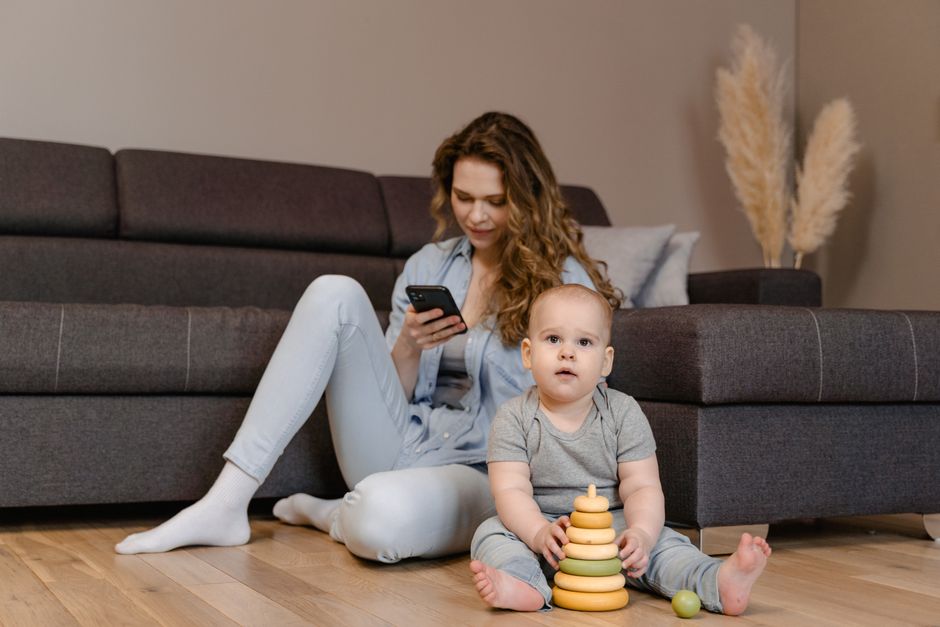
Handing an agitated toddler an iPhone in the grocery store checkout line or at a restaurant instantly stops tears—but carries a steep developmental trade-off.
The Loss of Emotional Self-Regulation & Social Curiosity
Using handheld screens to soothe emotional distress robs the child’s nervous system of learning how to co-regulate with a caregiver.
Furthermore, when a toddler is glued to a smartphone in a shopping cart, they miss out on critical real-world linguistic exposures: hearing the cashier speak, pointing at bright yellow bananas in the produce aisle, and watching people’s facial expressions.
5. The “Serve-and-Return” Breakthrough Routine (15 Minutes a Day)
You do not need fancy flashcards or expensive speech programs to unlock your toddler’s speech. You only need Serve-and-Return conversational loops.
The 3 Doctor-Approved Language Techniques:
1. The “Expectant 5-Second Pause”
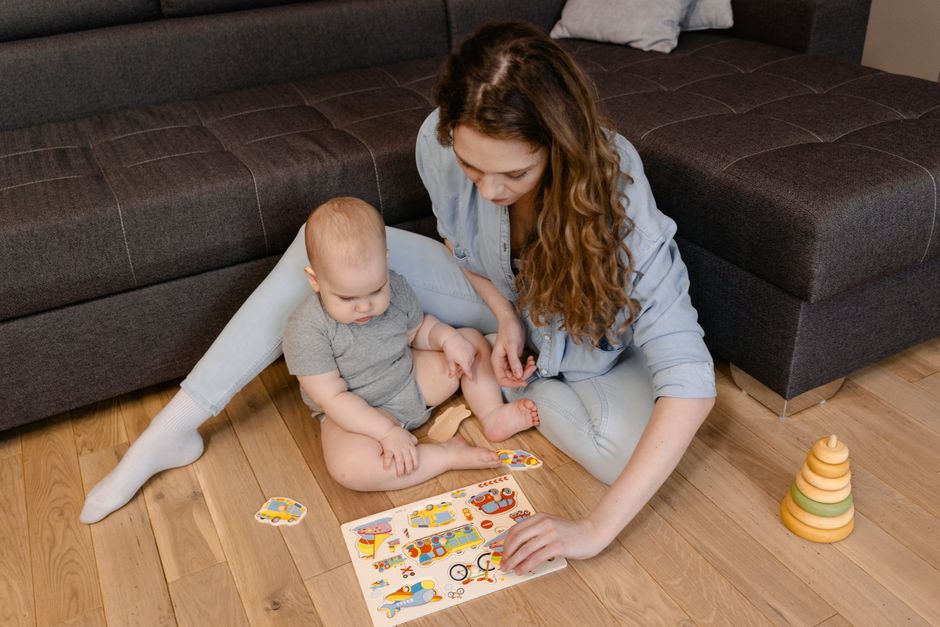
When asking your toddler a question or offering a choice (e.g., “Do you want milk or water?”), hold the cups up, lean in with an engaged smile, and wait 5 to 7 full seconds in total silence. Toddlers process auditory language at a third of adult speed. Give their brain time to retrieve the motor program for speech without stepping in to answer for them.
2. Parallel Talk & Sports Casting
Narrate what your child is doing like a gentle sports commentator:
- “Lucas is pushing the blue car. Zoom! Fast car went under the couch!”
- Avoid interrogation questions (“What color is that? Say car! What’s this?”), which create conversational performance anxiety.
3. The Plus-One Expansion Rule
Whatever single word your child says, repeat it back and add one descriptive word:
- Child: “Doggy!”
- Mom: “Big doggy! That is a big fluffy doggy!”
- Child: “Juice.”
- Mom: “More juice! Sweet apple juice.”
Toddler Language Development Action Guide
| Daily Practice | Language Delay Trap ❌ | Speech-Boosting Habit ✅ |
|---|---|---|
| Video Content | Fast-paced neon cartoons with rapid cuts | Low-stimulation shows with natural human pacing |
| TV Usage | Background noise playing all day | TV powered off during daytime play and meals |
| Conversational Style | Constant quiz questions (“Say ball!”) | Parallel narration (“Lucas is rolling the round ball!”) |
| Response Timing | Answering for the toddler after 1 second | Expectant 5-second silence to allow motor formulation |
| Word Modeling | Single-word acknowledgments | The Plus-One expansion rule (“Car” ➔ “Fast red car!”) |
A Message of Hope for Every Parent
Speech delays can feel scary and isolating, but an infant’s brain possesses remarkable neuroplasticity. When you swap passive screen minutes for genuine, eye-to-eye floor play and responsive conversation, you ignite powerful neural pathways that allow their communication to blossom.
Celebrate every new sound, grunt-turned-syllable, and tentative word. For actionable daily games and evidence-based SLP techniques, see our companion guide on how to boost toddler speech and language at home. You are your child’s very best teacher.
Disclaimer: This article is for informational purposes only. If your child shows significant milestone delays, lacks eye contact, or fails to respond to their name, consult your pediatrician or a certified Speech-Language Pathologist (SLP) for a formal evaluation.
Google AdSense Placeholder
Slot ready for "in-article". Set your AdSense publisher ID in settings when approved.
Frequently Asked Questions by Moms
How does screen time cause speech delay in toddlers? ▼
Screen time delays expressive speech by displacing interactive human conversations. Toddlers learn phonemes, lip shapes, and language reciprocity through face-to-face 'serve-and-return' interactions. Passive viewing lacks social responsiveness, reducing vocal practice and auditory processing.
What is an overstimulating children's cartoon? ▼
Overstimulating shows feature rapid camera cuts (often every 2-3 seconds), neon primary colors, hyperactive music, and exaggerated sound effects. These sensory spikes overflood a toddler's immature prefrontal cortex with dopamine, causing attention fragmentation and dysregulation.
How many words should an 18-month-old toddler speak? ▼
According to the CDC and AAP developmental milestones, an 18-month-old should spontaneously use at least 10 to 20 individual spoken words (including names and animal sounds) and point to show you something interesting.
What is the best way to help a speech-delayed toddler catch up? ▼
Institute a daily 15-minute floor play routine using 'serve-and-return' narration: describe what your toddler is looking at in 2-3 word sentences, use expectant 5-second pauses to encourage vocal imitation, and eliminate background television.

Written by Sarah Collins
Doctor-Reviewed & Fact-CheckedMom of Two & Founder of Mommy Tips & Life
Sarah is a mother of two (Liam & Maya) sharing evidence-based parenting guides, infant sleep solutions, and baby safety alerts tested in real family life and vetted against AAP clinical standards.
Google AdSense Placeholder
Slot ready for "footer-banner". Set your AdSense publisher ID in settings when approved.