Baby Cruising but Not Walking? 5 Movement Mistakes Parents Make and How to Encourage First Steps
Is your 12-to-15-month-old comfortably walking along furniture but terrified to let go? Learn the foot posture traps, hand-holding mistakes, and pediatric PT exercises for independent walking.
Sarah Collins
Mom of Two & Founder of Mommy Tips & Life
Google AdSense Placeholder
Slot ready for "header-banner". Set your AdSense publisher ID in settings when approved.
🩺 Medical Disclaimer: This guide is for educational purposes and should not replace pediatric or obstetric medical consultation.
🛍️ Affiliate Disclosure: We may earn a small commission when you purchase through our links at no extra cost to you.
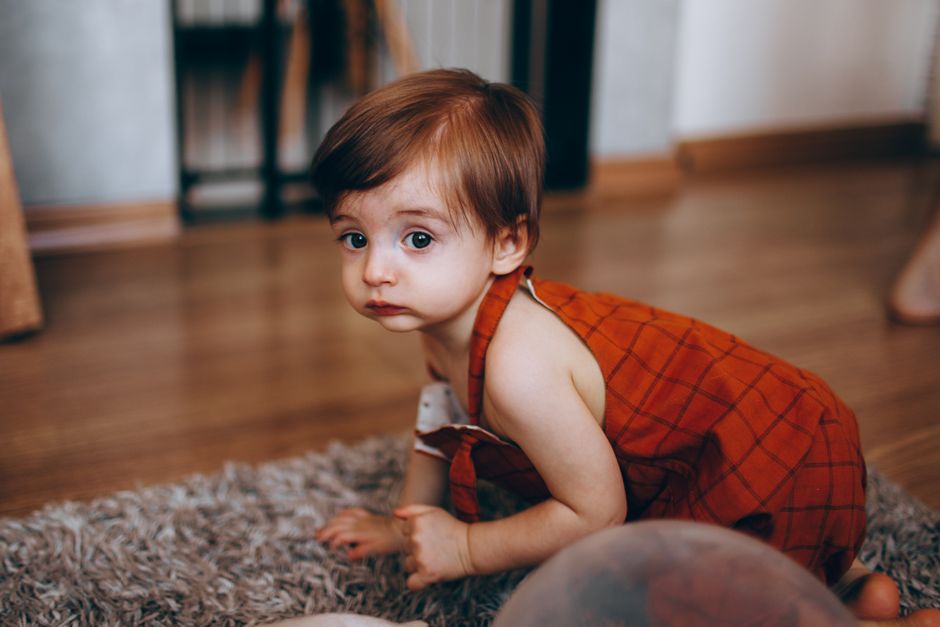
When my son Liam reached 14 months, our living room looked like an obstacle course. He had been “cruising”—shuffling sideways along the edges of our sectional sofa, coffee table, and media console—for nearly four months. He could zip along the couch with one hand, laughing and grabbing pillows.
Yet the millisecond his fingertips left the fabric to bridge an open gap, his eyes filled with hesitation, and he immediately plopped down onto his padded diaper and speed-crawled across the rug. Meanwhile, at our weekly library playgroup, 11-month-olds were already toddling across the room like drunken sailors.
I felt that familiar pang of maternal comparison and worry: Was his core too weak? Were his ankles unstable? Did I do something wrong by letting him crawl for so long?
The Upfront Breakthrough Summary: The turning point came during a consultation with a pediatric physical therapist. She explained that cruising sideways and walking forward use completely different neurological and muscular pathways. Cruising relies on lateral hip abduction and static furniture bracing, while independent walking requires forward pelvic weight-shifting, ankle proprioception, and trunk balance. By implementing a 3-step biomechanical coaching plan—eliminating restrictive shoes to maximize barefoot sensory input, replacing overhead hand-holding with low-pelvic support, and creating “furniture bridges” with weighted laundry baskets—Liam took his first five independent steps across our living room in just nine days.
Biomechanics 101: Why Cruising Doesn’t Automatically Equal Walking
To help your baby make the leap from furniture cruising to true independent steps, you have to understand what happens inside their musculoskeletal system.
       ┌────────────────────────────────────────────────────────┐
       │             CRUISING VS. FORWARD WALKING BIOMECHANICS  │
       ├──────────────────────────┬─────────────────────────────┤
       │ Furniture Cruising       │ Independent Forward Walking │
       ├──────────────────────────┼─────────────────────────────┤
       │ Lateral movement (sideways) Forward sagittal propulsion │
       │ Upper body provides 60%  │ Trunk & core provide 100%   │
       │ of stability & weight    │ balance & dynamic stability │
       ├──────────────────────────┴─────────────────────────────┤
       │ ➔ The Cruising Gap: Baby must learn dynamic weight-    │
       │    shifting from one single leg to the other in mid-air│
       └────────────────────────────────────────────────────────┘
When a baby cruises, they are leaning their upper body weight into the couch. To walk forward into open space, their brain must recruit the deep intrinsic muscles of the foot, core abdominals, and the vestibular balance system in the inner ear.
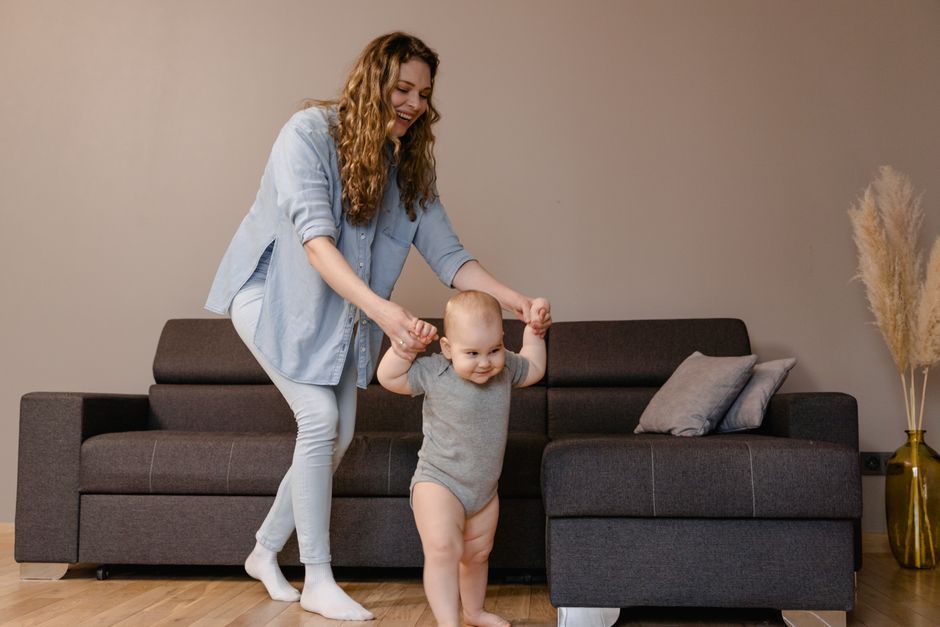
1. Walking Baby with Both Hands Held High (The Overhead Trap)
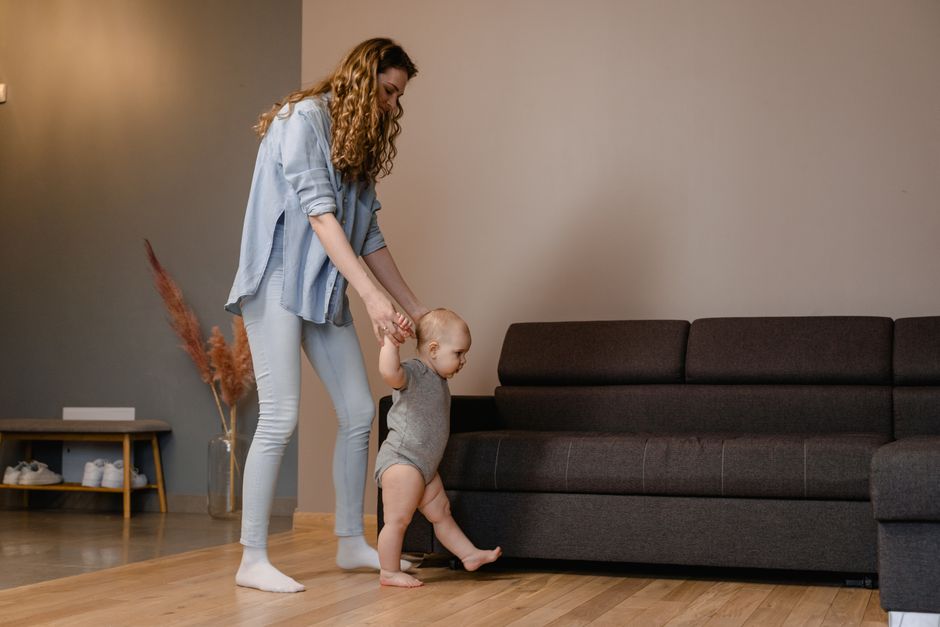
The most instinctual thing parents do when encouraging walking is standing behind the baby, grabbing both hands, and pulling their arms up high above their head.
   ❌ OVERHEAD "PUPPET" WALKING      ✅ LOW PELVIC / TORSO GUIDANCE

     [Hands Pulled High Above Head]       [Hands Supported at Hips / Ribs]
                 |                                      |
     ➔ Shifts Weight Backward to Heels   ➔ Centers Gravity Over Mid-Foot
     ➔ Disengages Core Abdominals        ➔ Baby Actively Balances Trunk
     ➔ Creates False Hanging Balance     ➔ Promotes True Independent Steps
Why Overhead Hand-Holding Delays Balance:
- Pulls Weight to the Heels: Raising the arms forces the baby’s pelvis into an anterior tilt and throws their center of gravity backward, preventing natural forward heel-to-toe propulsion.
- Deactivates Trunk Muscles: Instead of engaging their own oblique and abdominal muscles to stay upright, the baby hangs passively from your grip like a marionette.
The Pediatric PT Alternative:
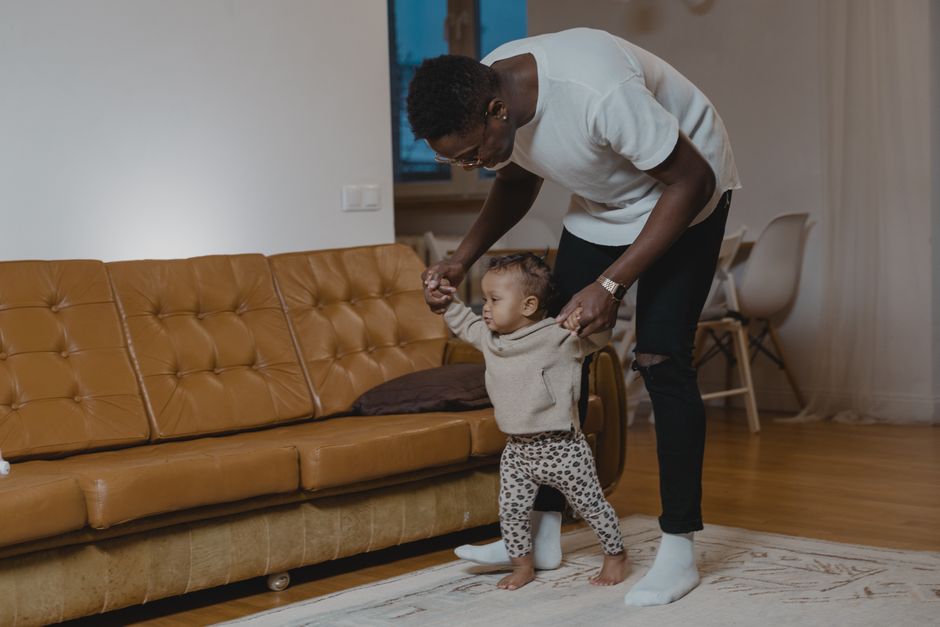
- Hold your baby at hip level or around their lower ribcage, keeping your hands low so their arms remain relaxed at their sides.
- Or, offer them two small wooden spoons or rings to hold onto while you hold the other end, keeping the connection low and horizontal.
2. Putting Rigid, Hard-Soled Shoes on Developing Feet
Many well-meaning parents buy adorable miniature sneakers or hard-leather walking shoes, believing stiff ankle support is necessary to keep baby upright.
The Power of Barefoot Proprioception:
The soles of an infant’s feet contain over 200,000 sensory nerve endings—one of the highest concentrations in the human body. When a baby walks barefoot:
- The toes spread and grip the floor (preventing falls).
- Sensory feedback informs the brain about floor texture, slope, and gravitational changes.
- The intrinsic foot muscles and arch ligaments strengthen naturally.
Rigid shoes act like wooden planks, blinding the brain’s sensory feedback loop. For a full analysis on foot health, read our guide on why hard-soled baby shoes harm walking and foot posture.
💡 Pediatric / Mom Tip: Keep your baby 100% barefoot indoors on hardwood, tile, and rugs. When walking outdoors on pavement or grass, choose ultra-flexible, wide-toe-box barefoot moccasins with thin rubber soles that bend completely in half with zero resistance.
3. Relying on Dangerous Wheeled Walkers Instead of Push Wagons
Placing an infant in a traditional seated wheeled walker does NOT teach them to walk—in fact, pediatric studies prove it actively delays motor milestones.
| Equipment Type | Physical Action ⚙️ | Impact on Walking Development 🚶 | Safety Rating 🛡️ |
|---|---|---|---|
| Seated Wheeled Walker | Pushes backward with toe tips | Weakens heels, delays walking by 3–4 weeks | BANNED & DANGEROUS ❌ |
| Weighted Push Wagon | Baby pushes forward against resistance | Strengthens glutes, teaches upright posture | EXCELLENT / PT Approved ✅ |
| Barefoot Floor Play | Cruising, squatting, dynamic transitions | Builds ankle stability and core balance | GOLD STANDARD ✅ |
| Heavy Furniture Bridging | Moving between couch and ottoman | Teaches momentary balance release | HIGHLY EFFECTIVE ✅ |
Seated walkers encourage abnormal “toe-pointing” gait patterns and are so dangerous regarding stairway falls that the AAP has called for a total manufacturing ban. Learn more in our breakdown of why baby walkers are banned and safer alternatives.
4. Overlooking the “Furniture Gap” Strategy (The Bridging Game)
Babies who cruise for months often remain stuck simply because the physical gaps between furniture in their home are too wide (3 to 4 feet). If letting go means a guaranteed tumble, the baby will sensibly choose to crawl.
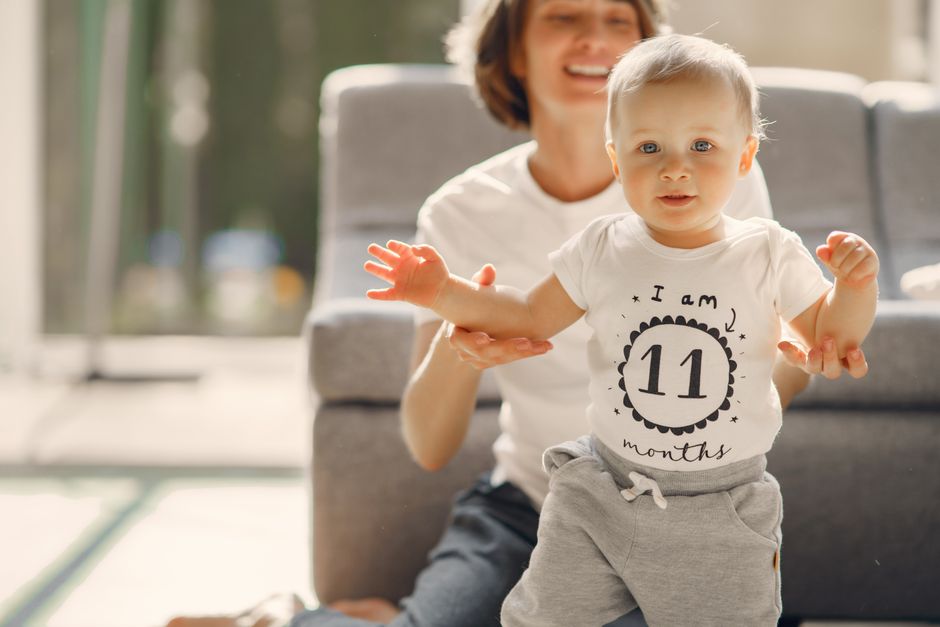
How to Create “Micro-Gaps”:
- The 6-Inch Island: Move your coffee table or an ottoman just 6 inches away from the sofa. Your baby will reach across, holding the couch with one hand and touching the ottoman with the other.
- The 12-Inch Gap: Over several days, widen the gap to 12 inches. To cross, your baby will have to let go of the couch for one full second to reach the ottoman.
- The Standing Toy Distraction: Place a musical toy on top of a low ottoman away from walls. While your baby is happily playing with both hands on the toy, gently blow bubbles in front of them; they will often let go with both hands to catch a bubble without even realizing they are standing independently!
⚠️ Warning Alert: If your toddler frequently sits on the floor in a “W-shape” (knees bent with feet splayed out wide to the sides), make sure to address it promptly. Read our guide on W-sitting in toddlers and core weakness traps.
5. Summary: Cruising Mistakes vs. First Steps Strategies
| Common Mistake ❌ | Evidence-Based PT Alternative ✅ | Why It Works 💡 |
|---|---|---|
| Pulling baby’s arms up over their head to walk | Supporting gently at hips or lower ribcage | Keeps center of gravity centered and engages core |
| Putting stiff, hard-soled sneakers on indoors | Letting baby practice 100% barefoot | Stimulates 200,000 sensory foot nerves for grip |
| Using seated wheeled baby walkers | Using a weighted wooden push cart | Provides forward resistive force and proper gait mechanics |
| Keeping wide open floor spaces without bridges | Narrowing furniture gaps to 6–12 inches | Encourages brief, confident release of hands |
| Stressing when baby is not walking at 12 months | Understanding the normal window is 9–16 months | Alleviates parental anxiety and respects infant timeline |
When to Seek a Pediatric Physical Therapy Evaluation
Remember that the normal developmental window for independent walking is wide: anywhere between 9 and 16 months is considered entirely typical.
However, schedule a conversation with your pediatrician if:
- Your child is not taking independent steps by 18 months.
- They walk exclusively on their tiptoes for months without putting heels down.
- There is noticeable asymmetry in leg strength or movement.
- For a deeper dive on late walking timelines, see our post on baby not walking at 15 months and milestone delays.
Final Thoughts From Sarah
Watching your baby cruise effortlessly along furniture while refusing to let go can test your patience. You are so eager to witness those adorable, wobbly first steps across the room!
Take comfort in knowing that your baby’s cautious hesitation is actually a sign of healthy body awareness. They are building the muscle strength, bone density, and spatial confidence needed to step out into the world. Ditch the shoes, lower your hands, set up some furniture bridges, and cheer them on. Those magical first steps will happen before you know it!
Google AdSense Placeholder
Slot ready for "in-article". Set your AdSense publisher ID in settings when approved.
Frequently Asked Questions by Moms
How long after cruising along furniture do babies typically walk independently? ▼
Most infants cruise sideways along furniture for 2 to 4 months before taking their first independent steps. While cruising builds lateral hip strength, forward walking requires forward pelvic weight-shifting and trunk balance, which develops later (typically between 11 and 16 months).
Why does my baby drop to their knees and crawl the second they let go of furniture? ▼
Crawling is exceptionally fast, energy-efficient, and secure. When babies let go of furniture, their vestibular balance system feels momentarily ungrounded; dropping to all fours is an intelligent self-preservation strategy, not a regression or physical defect.
Is walking with two hands held above baby's head bad for motor development? ▼
Yes. Walking with arms raised high in a 'V-shape' pulls the infant's center of gravity backward, prevents core abdominal engagement, and creates a reliance on parental shoulder tension rather than independent balance.
When should I consult a pediatrician or physical therapist if my baby isn't walking? ▼
The CDC and AAP recommend evaluation if a child is not taking independent steps by 18 months of age, or earlier if you notice asymmetry (using only one side of the body), persistent toe-walking, extreme stiffness, or lack of floor-to-stand transitions.

Written by Sarah Collins
Doctor-Reviewed & Fact-CheckedMom of Two & Founder of Mommy Tips & Life
Sarah is a mother of two (Liam & Maya) sharing evidence-based parenting guides, infant sleep solutions, and baby safety alerts tested in real family life and vetted against AAP clinical standards.
Google AdSense Placeholder
Slot ready for "footer-banner". Set your AdSense publisher ID in settings when approved.