Baby Not Babbling by 9 or 12 Months? 5 Hidden Causes and Speech Therapist Fixes
Is your baby unusually quiet or not babbling consonant sounds? Discover the difference between cooing and babbling, red flag milestone delays, and speech therapist tips.
Sarah Collins
Mom of Two & Founder of Mommy Tips & Life
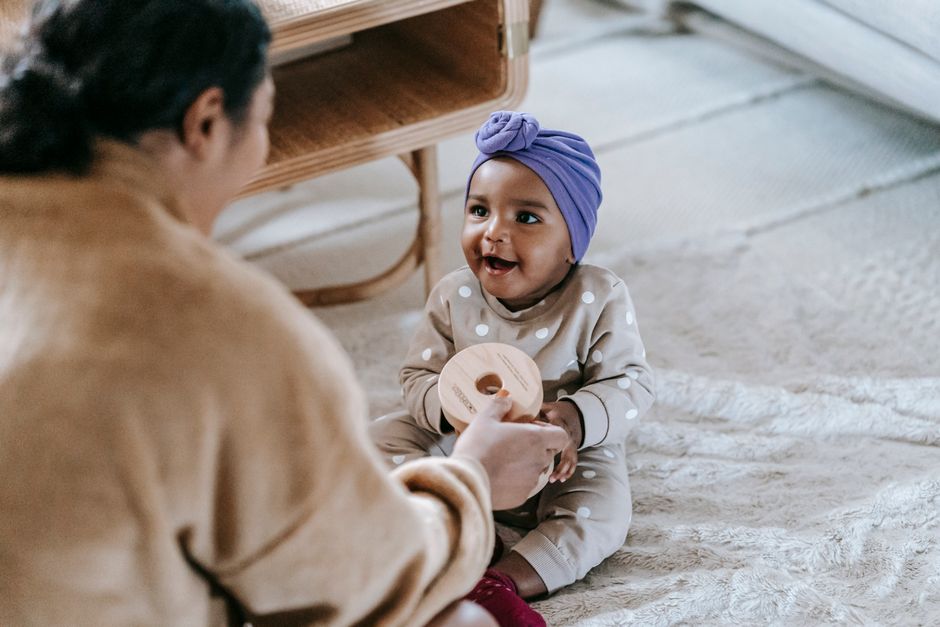
Google AdSense Placeholder
Slot ready for "header-banner". Set your AdSense publisher ID in settings when approved.
🩺 Medical Disclaimer: This guide is for educational purposes and should not replace pediatric or obstetric medical consultation.
🛍️ Affiliate Disclosure: We may earn a small commission when you purchase through our links at no extra cost to you.
When my son Liam was eight months old, I went to a community baby playgroup where other infants were peppering the room with endless “da-da-da”, “ma-ma”, and “ba-ba” sounds. Liam, on the other hand, was wonderfully calm and gentle—but completely quiet. He would smile, make eye contact, and let out an occasional “ahhh” or “eeeh”, but not a single repetitive consonant sound had ever crossed his lips.
I felt a cold panic rising in my chest. Was he falling behind? Was this an early sign of autism, developmental apraxia, or a profound hearing issue? For weeks, I spent late hours scrolling through pediatric forums, analyzing every tiny vocalization and worrying myself sick. But when we took Liam to a pediatric speech-language pathologist (SLP) and pediatric audiologist at nine months, she uncovered something we had completely missed: Liam had asymptomatic fluid trapped behind his eardrums from a cold two months prior that muffled high-frequency consonants, combined with daily interactive habits we needed to shift.
The Quick Breakthrough Summary: The solution didn’t require high-stress drills or expensive flashcards. Our turning point was addressing his middle ear fluid with our pediatrician, practicing face-to-face “parentese” responsive narration at eye level, and honoring 5-second expectant pauses to give him conversational space. Within four weeks, Liam erupted into a joyful symphony of “ba-ba-ba” and “da-da-da”, hitting his first-year language milestones right on schedule.
Here is the doctor-vetted, compassionate guide to understanding infant vocal milestones, why babbling delays happen, and how to gently encourage your baby’s voice.
1. Cooing vs. Canonical Babbling: The Developmental Ladder (H2)
Many parents are told that because their baby makes sweet “cooing” sounds, their speech is progressing normally. While cooing is a wonderful milestone, speech pathologists distinguish strictly between vocal phases.
The Speech Progression Timeline (H3)
- Reflexive & Discovery Phase (0 to 3 Months): Crying, vegetative sounds, grunting, and early guttural gurgles.
- Cooing & Vowel Play (3 to 6 Months): Open-vocal-tract sounds like “oooh”, “aaah”, and “eeeh”. The infant learns how their vocal cords resonate and experiment with pitch changes.
- Canonical & Reduplicated Babbling (6 to 9 Months): True speech practice where consonants and vowels fuse into repeated syllables: “ba-ba-ba”, “da-da-da”, “ma-ma-ma”. This requires intricate motor coordination between the tongue, lips, and soft palate.
- Variegated Babbling & Jargon (10 to 12 Months): Mixing varied syllables (“ba-de-ma-to”) with human inflection and conversational cadences that sound like fluent sentences in an invented language.

Why Canonical Babbling Matters (H4)
Canonical babbling is the foundational building block of expressive spoken language. If a child does not practice consonant strings by 9 to 10 months, their first functional spoken words (typically emerging between 12 and 15 months) are almost universally delayed.
\u1f4bd Pediatric / Mom Tip: Motor milestones and language are intimately connected in the brain’s developing neural circuitry. If your baby is focusing all their mental energy on physical milestones, read our guide on baby crawling milestones and late bloomers and boosting tummy time strength.
2. 5 Hidden Causes of Delayed Infant Babbling (H2)
When a 9-to-12-month-old infant is not yet babbling consonants, pediatric specialists investigate these 5 primary physical and environmental factors:
1. Asymptomatic Middle Ear Fluid (Otitis Media with Effusion) (H3)
Up to 40% of babies have thick, stagnant fluid behind the tympanic membrane after simple viral colds, with zero fever, redness, or pain. This fluid creates a 20-to-30 decibel conductive hearing loss–equivalent to wearing swimming earplugs underwater. The baby hears low vowels (“ah”, “oh”) clearly, but delicate high-frequency consonants (“b”, “d”, “m”, “t”) are muffled and lost.
2. Motor Milestone Competition (H3)
The human infant brain can only dedicate massive neurological bandwidth to one major milestone system at a time. When an infant is mastering sitting unsupported, crawling, or pulling up to stand, speech center wiring temporarily plateaus for 3 to 5 weeks while motor pathways cement.
3. Lack of Face-to-Face Visual Articulation Cues (H3)
Babies do not learn consonant sounds solely by hearing them—they learn by watching mouth shapes. They need to observe how lips press together for “m” and “b”, and how the tongue taps behind the front teeth for “d”. If a baby is positioned facing outward in strollers or sits looking at walls, visual speech modeling drops significantly.
4. Oral Motor Restrictions (Tongue-Tie / Lip-Tie) (H3)
Ankyloglossia (tongue-tie) or severe upper labial ties restrict the freedom of the tongue tip and upper lip, making the elevated alveolar tapping needed for “d”, “t”, and “n” physically frustrating for the infant.
5. Conversational Over-Talking (Lack of Turn-Taking Silence) (H3)
Loving parents frequently maintain a continuous stream of monologue without pausing. If a baby is never given 5 to 8 seconds of quiet, expectant eye contact after a phrase, they never learn that conversations operate on a turn-taking rhythm.
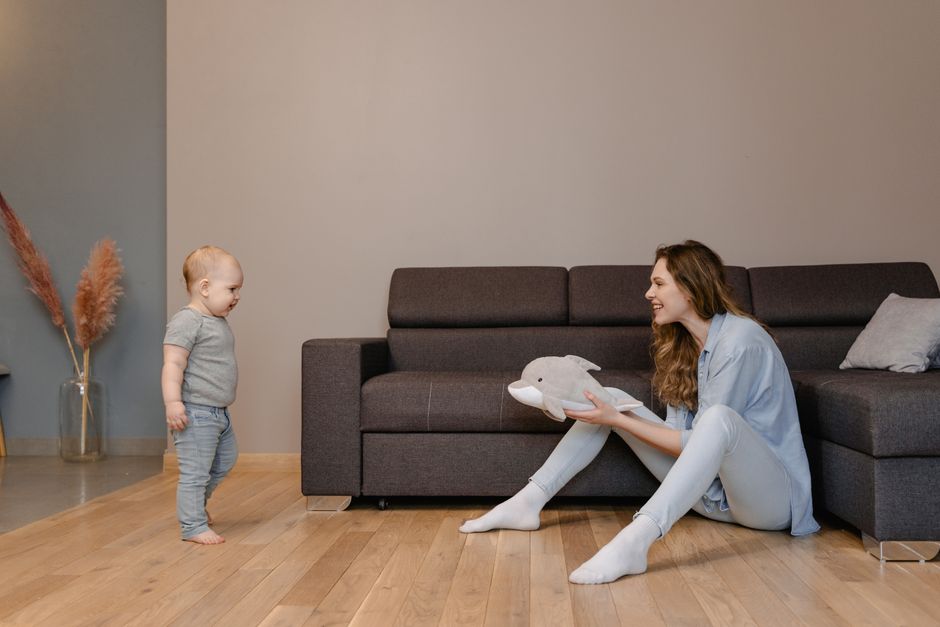
3. Red Flag Signs: When to Request an SL@ & Audiology Evaluation (H2)
Early intervention is the single most powerful tool for ensuring developmental success. You do not need to wait for a 12-month checkup if you observe these clinical red flags:
- By 6 Months: No vocal cooing, chuckling, or responsive smiling when spoken to directly.
- By 9 Months: No consonant-vowel babbling (“ba”, “da”, “ma”), no imitation of playful vocal pitches, and lack of head turning toward parents’ moving figures.
- By 12 Months: No response to their spoken name, no communicative pointing or waving, and complete absence of consonant sounds.
- Any Age: Sudden loss or regression of previously mastered vocal sounds or social interactions (see our guide on first words and speech delay warning signs).
\u26a0\ufe0f Warning Alert: In the United States, Early Intervention (EI) services are publicly funded under IDEA Part C. Any parent can self-refer their child for a comprehensive developmental evaluation at zero out-of-pocket cost without requiring a physician’s prescription.
4. 4 Speech Therapist Techniques to Unlock Babbling at Home (H2)
Technique 1: Melodic “Parentese” (Acoustic Exaggeration) (H3)
Parentese is not nonsensical baby talk; it is real grammatical speech delivered in an elongated, musical, high-pitch cadence with exaggerated vowels and facial expressions. Studies show that parentese activates infant auditory attention twice as effectively as standard adult speech.
Technique 2: The 5-Second Expectant Pause (H3)
Look your baby straight in the eyes, smile, and say: “Ba-ba-ba! Can you say ba-ba?” Then freeze with an inviting, expectant smile and count to five silently. This gives your baby’s developing motor cortex time to organize the neural command from their brain to their vocal cords.
Technique 3: Direct Lip-to-Face Proximity (H3)
Hold your baby 10 to 14 inches from your face during diaper changes, feeding, and floor play. Exaggerate lip movements: smack your lips together dramatically when saying “Mmm-ma!” and pop your lips for “Buh-buh-bubble!”
Technique 4: Mirror Imitation Games (H3)
Sit with your baby in front of a large, shatterproof nursery floor mirror. Point to your mouth and their mouth, making silly consonant popping sounds together to reinforce visual and acoustic self-awareness.
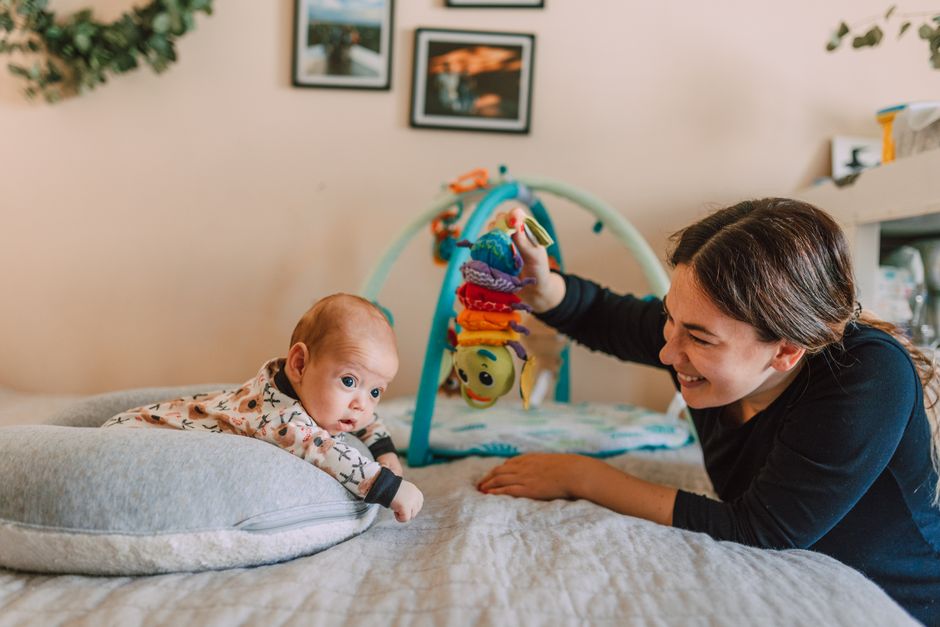
Summary Checklist Table: Babbling Traps & Doctor-Approved Fixes (H2)
| Common Mistake \u274c | Healthy Alternative \u2705 |
|---|---|
| Waiting until age 2 before checking speech delays | Evaluate milestones by 9 to 12 months |
| Ignoring asymptomatic ear fluid after colds | have pediatrician check middle ear frequently |
| Relying on screen shows for “education” | Engage in live eye-to-eye parentese speech |
| Talkingconstantly without pausing for responses | Use 5-second expectant pauses for turn-taking |
| Pressuring baby with stressful “sadada” demands | Keep vocalizations playful, rewarding, and fun |
Every baby unlocks their voice at their own gentle pace. With warm connection and patience, your little one will soon fill your home with endless chatter.
Google AdSense Placeholder
Slot ready for "in-article". Set your AdSense publisher ID in settings when approved.
Frequently Asked Questions by Moms
What is the difference between infant cooing and babbling? ▼
Cooing (usually around 2 to 4 months) consists of vowel-only sounds like 'oooh' and 'aaah'. Babbling (starting 6 to 9 months) requires consonant-vowel combinations like 'ba-ba', 'da-da', or 'ma-ma' (canonical babbling).
At what age should I be concerned if my baby is not babbling? ▼
If your baby is 9 months old and has not yet produced repetitive consonant sounds (ba, da, ma), or if they do not respond to their name by 9 to 12 months, you should request a pediatric evaluation and audiology screening.
Can chronic middle ear fluid delay baby babbling? ▼
Yes. Undetected middle ear fluid (otitis media with effusion) muffles sound like being underwater, directly impeding the baby's ability to hear and imitate subtle consonant sounds.
How can I encourage my baby to start babbling at home? ▼
Use melodic parentese, get down to eye level so they see your lips move, respond in a conversational pause whenever they vocalize, and narrate everyday activities.

Written by Sarah Collins
Doctor-Reviewed & Fact-CheckedMom of Two & Founder of Mommy Tips & Life
Sarah is a mother of two (Liam & Maya) sharing evidence-based parenting guides, infant sleep solutions, and baby safety alerts tested in real family life and vetted against AAP clinical standards.
Google AdSense Placeholder
Slot ready for "footer-banner". Set your AdSense publisher ID in settings when approved.