Why Pediatricians Beg You Not to Buy Baby Walkers: 5 Hidden Dangers and Safer Swaps
Thinking of buying a traditional wheeled baby walker? Discover why the AAP calls for a total ban, how walkers delay walking milestones, and 3 safe developmental swaps.
Sarah Collins
Mom of Two & Founder of Mommy Tips & Life
Google AdSense Placeholder
Slot ready for "header-banner". Set your AdSense publisher ID in settings when approved.
🩺 Medical Disclaimer: This guide is for educational purposes and should not replace pediatric or obstetric medical consultation.
🛍️ Affiliate Disclosure: We may earn a small commission when you purchase through our links at no extra cost to you.
When Maya was seven months old, my well-meaning in-laws surprised us with a brand-new, deluxe wheeled baby walker. It had flashing musical lights, a rotating steering wheel, and four swivel casters. The first time we snapped Maya into the molded seat, she grinned ear-to-ear, kicked her legs, and shot across our hardwood floor like a miniature race car.
Then came the moment that still makes my stomach drop six years later. Maya gained momentum, propelled herself across the kitchen, and caught her front wheel on the metal transition threshold leading to our basement staircase door. The walker tilted sharply, nearly flipping head-first down twelve wooden stairs. I dove onto the floor and snagged the walker’s plastic frame with one hand just inches before disaster. My hands shook for the rest of the evening, and that walker was in the garbage dumpster before sunrise.
The Upfront Breakthrough Summary: While baby walkers are marketed as helpful tools that teach infants how to walk, the American Academy of Pediatrics (AAP) has called for an outright ban on their manufacture and sale. Pediatric orthopedic surgeons and trauma teams emphasize two critical truths: traditional walkers cause thousands of emergency room admissions each year, and they actually delay independent walking. The solution is simple: replace seated wheeled walkers with weighted push-behind activity wagons, stationary activity centers, and barefoot floor exploration.
1. Why Canada Banned Wheeled Walkers (And Why the AAP Demands a US Ban)
In 2004, Canada became the first country in the world to make owning, selling, or importing a traditional wheeled baby walker illegal—punishable by fines up to $100,000.
In the United States, despite mandatory safety brake regulations introduced in the late 1990s, pediatric emergency rooms still treat over 2,000 infants annually for severe trauma directly related to wheeled walkers.
[ Baby Suspended in Wheeled Walker ]
                 ⬇
[ High Velocity: Up to 4 Feet Per Second (Faster Than Adult Reflexes) ]
                 ⬇
[ Elevated Reaching Height (Access to Stove Burners, Cords, Chemicals) ]
                 ⬇
[ Stair Tumbles & Fractures (Leading Cause of Severe Infant Head Trauma) ]
If you are currently setting up your baby registry or auditing baby equipment, check our essential guide on overhyped baby registry items parents regret buying, discover why narrow crotch-dangler baby carriers harm infant hips, and read our investigation into why pediatric PTs warn against baby jumpers and Jumperoos to protect your infant’s hip health.
2. The 5 Major Hidden Dangers of Seated Wheeled Walkers
Parents often assume walkers are safe as long as they are watching their child. However, the physics of walker movement surpass adult reaction times:
Danger #1: Terrifying Speed (4 Feet Per Second)
A baby in a wheeled walker can travel four feet in less than a single second. If an infant moves toward an open doorway or pet bowl, an adult sitting on the couch cannot react fast enough to intervene before impact.
Danger #2: Catastrophic Stairway Falls
Over 75% of walker-related ER visits result from falling down a flight of stairs. When a walker tumbles, the rigid plastic frame traps the baby upside down, causing severe skull fractures, intracranial bleeds, and cervical spine trauma.
Danger #3: The “Elevated Reach” Burn Hazard
When seated in a walker, an infant sits several inches higher than when crawling on the floor. This elevated height allows babies to:
- Reach hot coffee mugs and dangling teapot cords on countertops.
- Pull tablecloths, bringing heavy ceramics or cutlery crashing down.
- Access toxic cleaning supplies or open oven doors.
For a complete safety inspection of your baby’s room, explore our comprehensive nursery checklist on hidden nursery items that pose serious safety hazards.

Danger #4: The Biomechanical Trap (Abnormal Toe-Walking Gait)
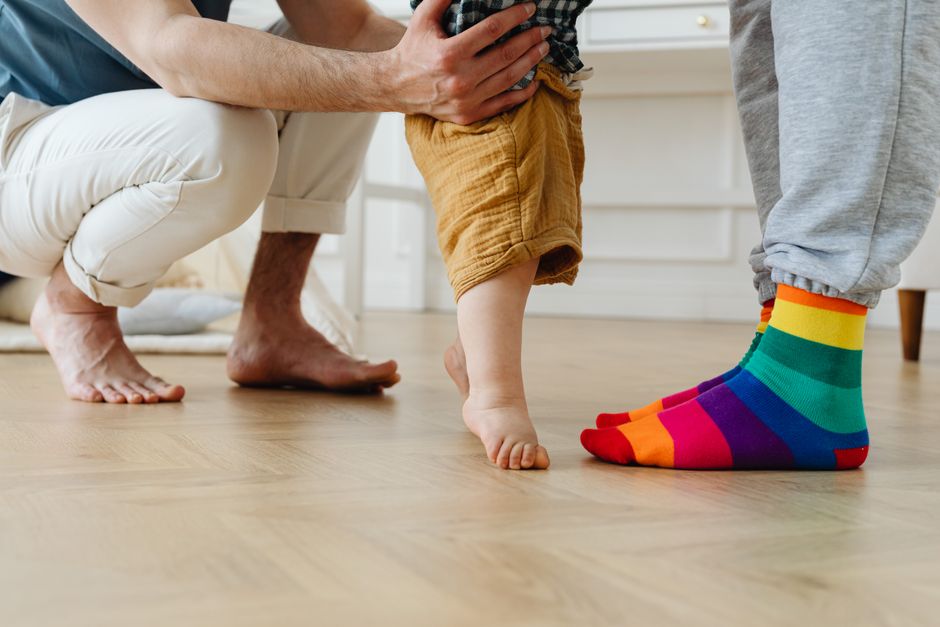
How do babies move a seated walker? They lean forward on their bellies and push with the tips of their toes.
The Orthopedic Consequence: This movement pattern shortens and tightens the Achilles tendons and calf muscles while ignoring the quadriceps and glutes. Natural walking requires a heel-to-toe strike and balanced pelvic control—skills that walkers actively undermine.
If your baby is spending long periods in restrictive gear, learn how equipment confinement impacts overall milestone progression in our guide to Container Baby Syndrome and motor delay prevention.
Danger #5: Visual Occlusion of the Feet
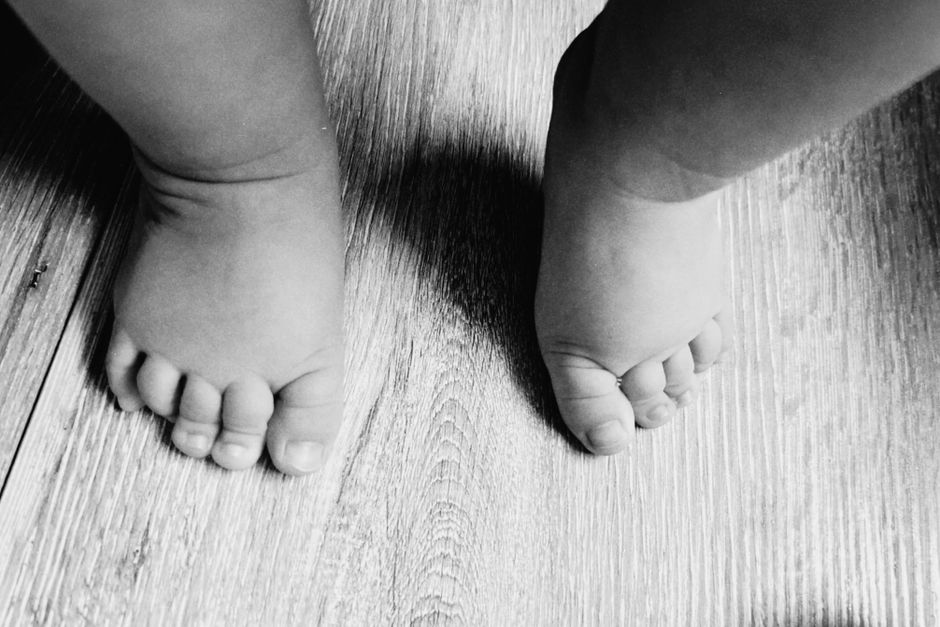
To learn balance, an infant’s developing brain must watch their own feet make contact with the floor. The wide, bulky plastic tray of a walker blocks their field of vision, depriving the brain of visual-motor integration.
3. Wheeled Walkers vs. Pediatric-Approved Swaps
| Traditional Wheeled Walker ❌ | Pediatric Orthopedic Alternative ✅ |
|---|---|
| Suspended Seated Mobility: Promotes toe-walking and poor pelvic engagement. | Barefoot Floor Play: Builds natural plantar arch strength and proprioception. |
| High-Speed Rolling Wheels: Extreme fall and stairway tumble hazard. | Weighted Push-Behind Wagon: Baby must stand and bear weight to push forward. |
| Blocks Sight of Feet: Impedes visual-motor neural wiring. | Stationary Activity Center: Zero wheels; flat base for stable weight-bearing. |
| Banned in Multiple Countries: High rate of pediatric head trauma. | Pull-to-Stand Furniture: Low coffee tables and sturdy floor ottoman practice. |
4. The 3 Safe Developmental Swaps to Accelerate Walking
To help your baby develop rock-solid balance and coordination, choose these pediatrician-approved tools instead:
1. The Weighted Wooden Push-Behind Walker
- Look for a sturdy wooden wagon or activity cart where your baby stands behind the handle.
- Weighted push walkers require your baby to actively bear their full body weight through their feet, engaging their abdominal core and hip stabilizers while controlling their speed.
2. Stationary Activity Centers (Exersaucers Without Wheels)
- If you need a safe 15-minute container while cooking dinner, choose a stationary activity table where your baby’s feet rest flat on an adjustable floor plate.
- Ensure their knees are bent slightly at a 90° angle so they practice flat-foot weight-bearing.
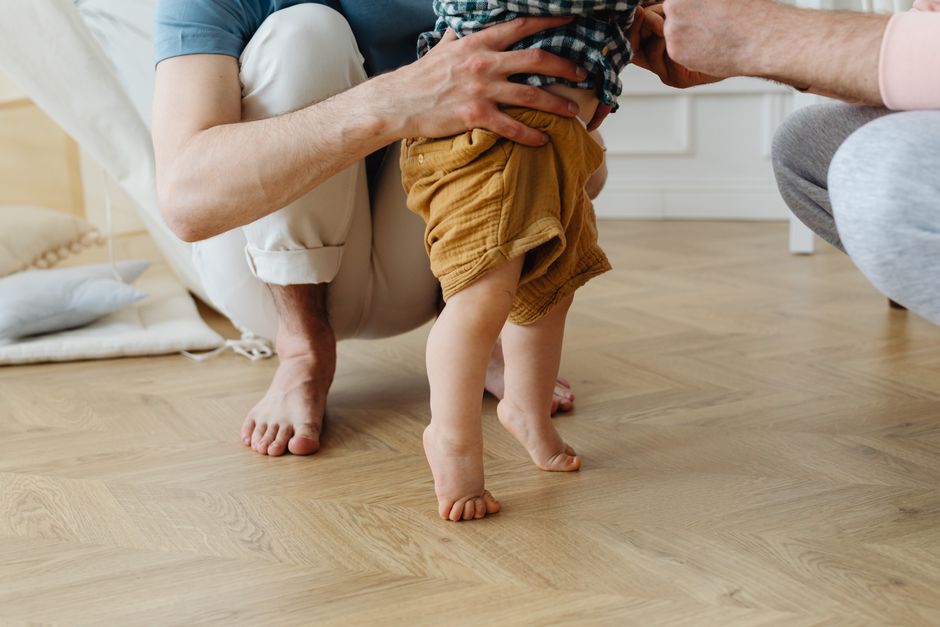
3. Barefoot Freedom on Grippy Surfaces
- Ditch stiff hard-soled baby shoes indoors.
- Bare feet allow thousands of sensory nerve endings on the bottom of the foot to grip the floor, sending vital proprioceptive feedback to the cerebellum.
💡 Pediatric / Mom Tip: When your baby starts pulling up on furniture, arrange heavy sofa cushions or low footrests in a circle on the rug to create a natural “cruising obstacle course.”
⚠️ Warning Alert: If you currently have a wheeled walker at home, do not donate or resell it. Disassemble the frame and recycle the parts to protect other families from accidental nursery injuries.
Summary: Walking Unfolds Naturally on Baby’s Timeline
Every parent eagerly anticipates those magical, wobbly first independent steps. It can be tempting to buy gadgets promising to speed up the process, but babies are biologically wired to walk when their bones, muscles, and vestibular systems are ready.
By ditching hazardous wheeled walkers and giving your baby the gift of unrestricted floor time, you give them the strongest, safest foundation for a lifetime of confident movement.
Google AdSense Placeholder
Slot ready for "in-article". Set your AdSense publisher ID in settings when approved.
Frequently Asked Questions by Moms
Why are traditional wheeled baby walkers banned in Canada? ▼
Canada enacted a complete ban on the sale, import, and advertisement of traditional wheeled baby walkers under the Canada Consumer Product Safety Act in 2004 due to the severe rate of head injuries, bone fractures, stair falls, and burns associated with infants traveling at speeds exceeding 3 to 4 feet per second.
Do baby walkers help infants learn to walk faster? ▼
No. Extensive pediatric research proves that traditional seated walkers actually delay independent walking milestones by 2 to 4 weeks. They promote abnormal toe-walking postures, prevent babies from seeing their feet, and weaken core trunk muscles by providing artificial pelvic suspension.
What is the safest alternative to a wheeled baby walker? ▼
The safest developmental alternatives are weighted push-behind walkers (wagon-style push toys), stationary activity centers (where feet rest flat on a solid base with zero wheels), and unrestricted barefoot floor play.

Written by Sarah Collins
Doctor-Reviewed & Fact-CheckedMom of Two & Founder of Mommy Tips & Life
Sarah is a mother of two (Liam & Maya) sharing evidence-based parenting guides, infant sleep solutions, and baby safety alerts tested in real family life and vetted against AAP clinical standards.
Google AdSense Placeholder
Slot ready for "footer-banner". Set your AdSense publisher ID in settings when approved.