Baby Not Walking at 15 Months? 5 Crucial Signs vs Normal Development Milestones
Worried your 15-month-old isn't walking yet? Learn the difference between normal variation and red flags, cruising milestones, and physical therapy exercises.
Sarah Collins
Mom of Two & Founder of Mommy Tips & Life
Google AdSense Placeholder
Slot ready for "header-banner". Set your AdSense publisher ID in settings when approved.
🩺 Medical Disclaimer: This guide is for educational purposes and should not replace pediatric or obstetric medical consultation.
🛍️ Affiliate Disclosure: We may earn a small commission when you purchase through our links at no extra cost to you.
When my son Lucas was fifteen months old, we attended a neighborhood playground playdate. While several eleven- and twelve-month-old babies were happily toddling across the grass, Lucas sat contentedly in the sandbox, happily stacking plastic cups and refusing to take a single independent step.
A well-meaning relative walked over, watched him, and frowned: “Is he still not walking? You should really get his hips checked—my kids were running by ten months.”
That single comment sent me into a tailspin of late-night Google searches, anxiety, and mom-guilt. I spent the next week frantically holding Lucas by his wrists, trying to force him to take steps across the living room carpet while he collapsed his knees in protest. At his 15-month pediatric checkup, our doctor performed a comprehensive motor evaluation and laughed gently: “Sarah, his core strength, hip alignment, and balance are flawless. He’s not delayed—he’s just a cautious observer who will walk when he feels 100% stable.”
Four weeks later, at 16 months and two days, Lucas casually stood up in the living room and walked across the entire room with zero wobbling.
The Quick Breakthrough Summary: The medical window for independent walking is wide: 9 to 18 months. Social media often makes parents believe walking at 10 months is the baseline, but late walkers (14–17 months) frequently develop advanced fine motor, speech, and cognitive problem-solving skills first. By eliminating restrictive baby walkers, keeping feet bare for sensory tactile feedback, and practicing dynamic cruising games and low couch bridging, you give your toddler the exact vestibular and core confidence needed to take flight.
Here is the pediatrician-approved guide to walking milestones, distinguishing normal development from true red flags, and boosting walking confidence naturally.
1. The 9-to-18 Month Range: Why Social Media Distorts Milestones
In the age of social media highlight reels, it is easy to panic when you see 10-month-olds sprinting on video.
   [ THE CLINICAL WALKING WINDOW (CDC / AAP) ]
   9 Months ───────── 12 Months ───────── 15 Months ───────── 18 Months
   Early Walkers      Average Range       Normal Cautious     Clinical Evaluation
   (5-10% of babies)  (50% of babies)     (35% of babies)     Threshold Red Flag
Gross motor development is not a race. Studies show that a baby who walks at 9 months has no cognitive, academic, or athletic advantage over a child who walks at 16 months.

Why Some Babies Walk Later:
- Temperament: “Cautious cautious” babies prefer to master 100% balance before trying, whereas “daredevil” babies attempt steps with zero fear of falling.
- Cognitive Allocation: Babies often focus their developmental energy on one major domain at a time—many late walkers experience massive speech explosions or advanced fine-motor dexterity during this window.
- Physical Build: Babies with larger heads or longer torsos have a higher center of gravity, requiring more core stabilizer strength to balance upright.
If your baby had a unique crawling style or delayed four-point movement, explore our foundational breakdown on baby crawling milestone delays and motor alternatives.
2. The 4 Pre-Walking Milestones That Matter More Than Solo Steps
Pediatric physical therapists evaluate a child’s motor readiness through functional foundational movement rather than arbitrary calendar dates.
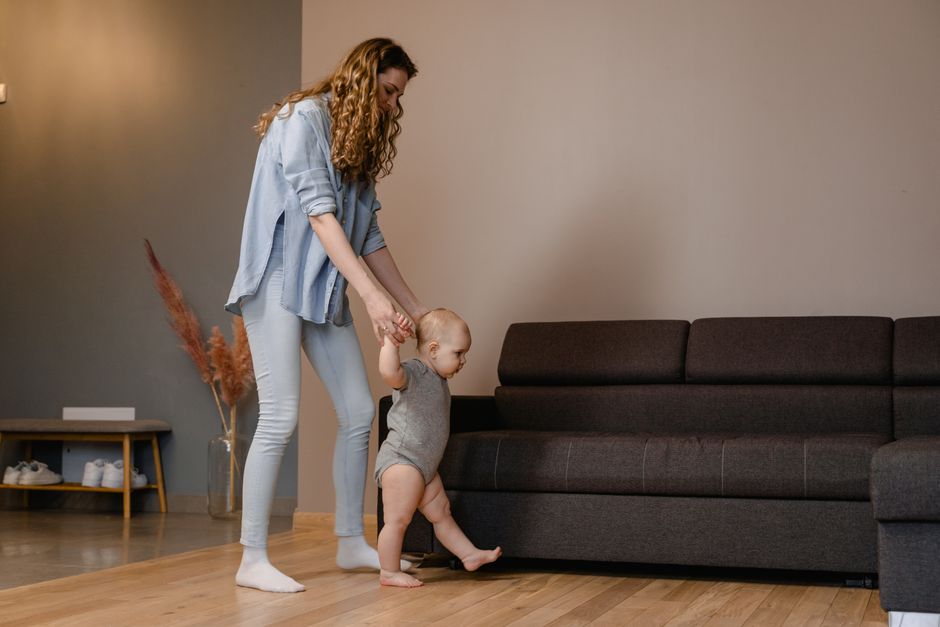
Key Milestones Indicating Your Baby is On Track:
- Pull-to-Stand with Fluidity: Smoothly transitioning from sitting to kneeling to standing using a coffee table or couch without stiffening their legs into rigid hyperextension.
- Dynamic Lateral Cruising: Walking sideways along furniture while transferring weight smoothly from hip to hip.
- Furniture Bridging: Stepping across a 6-to-12 inch gap between the coffee table and sofa without dropping to the floor.
- Squatting and Recovering: Crouching down from standing to grab a toy off the floor and returning to standing using their quadriceps and glutes.
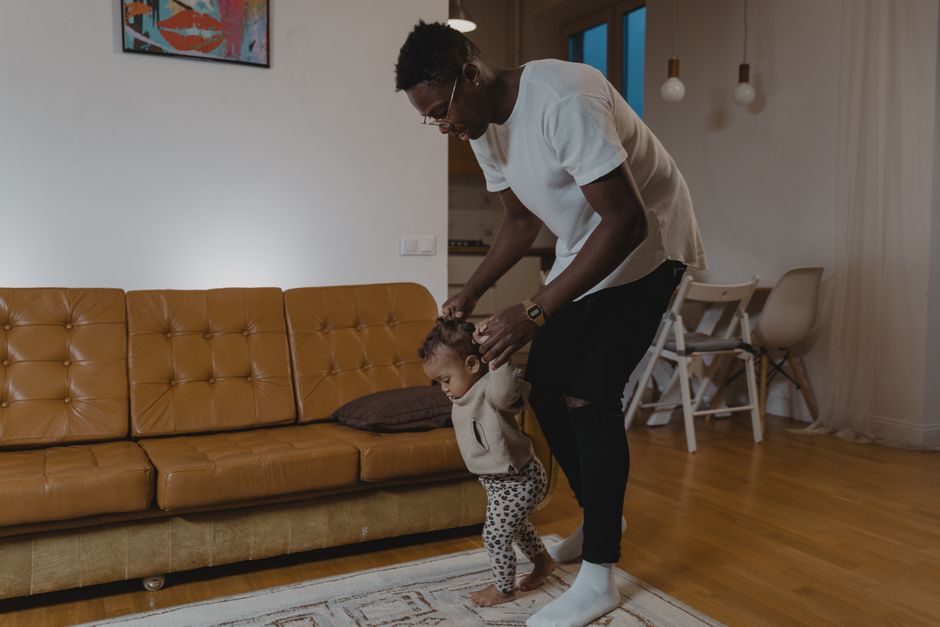
💡 Pediatric / Mom Tip: Never hold your baby by their hands above their head to “walk” them around the house. Elevating their arms pulls their center of gravity forward onto their toes, encouraging an unnatural forward pitch. Instead, support them gently around their torso or hips, or let them push a weighted push-wagon.
3. “Bottom Shufflers”, Butt Scooters & Joint Hypermobility
Approximately 10% of typically developing infants are “bottom shufflers”—they scoot around on their bottoms or army-crawl rather than using a classic hands-and-knees crawl.
   ┌────────────────────────────────────────────────────────┐
   │ THE BOTTOM-SHUFFLER TRAJECTORY                         │
   │ • Fast, efficient sitting mobility                     │
   │ • Often possess mild joint laxity / hypermobility      │
   │ • Less motivation to stand (they can get anywhere!)    │
   │ • Average walking age: 16 to 19 Months (Normal!)       │
   └────────────────────────────────────────────────────────┘
Bottom shufflers frequently have mild joint hypermobility (benign loose ligaments). Their ankles and knees require extra muscle activation to stabilize, which simply takes a few extra weeks of growth. Once their postural muscles mature, they transition to walking with zero long-term complications.
If your toddler often sits in an unnatural leg splay on the floor, read our pediatric physical therapist analysis on W-sitting in toddlers and core development risks.
4. The Walker and Jumper Trap: Why Equipment Delays Independent Walking
When parents worry about walking, their first instinct is often to buy a wheeled baby walker, an exersaucer, or a doorway jumper.
Physical therapists and the AAP strongly discourage these devices for two critical reasons:
The Biomechanical Setbacks of Walkers:
- Toe-Walking Conditioning: Walkers position the seat too high, forcing babies to push off on the tips of their toes rather than striking with their heels. For warning signs, see our guide on toddler toe-walking and when to worry.
- Weakened Core & Hip Stabilizers: Suspended fabric seats do all the anti-gravity work for the baby, preventing the activation of gluteus medius and deep core postural muscles.
- Lack of Proprioception: Being trapped in equipment deprives the brain of vestibular balance calibration. Learn more about preventing container baby syndrome and developmental restrictions.
5. Doctor-Vetted Floor Play Exercises to Boost Walking Confidence
Here are 4 simple, highly effective physical therapy games you can play at home:
Exercise 1: The Barefoot Sensory Advantage
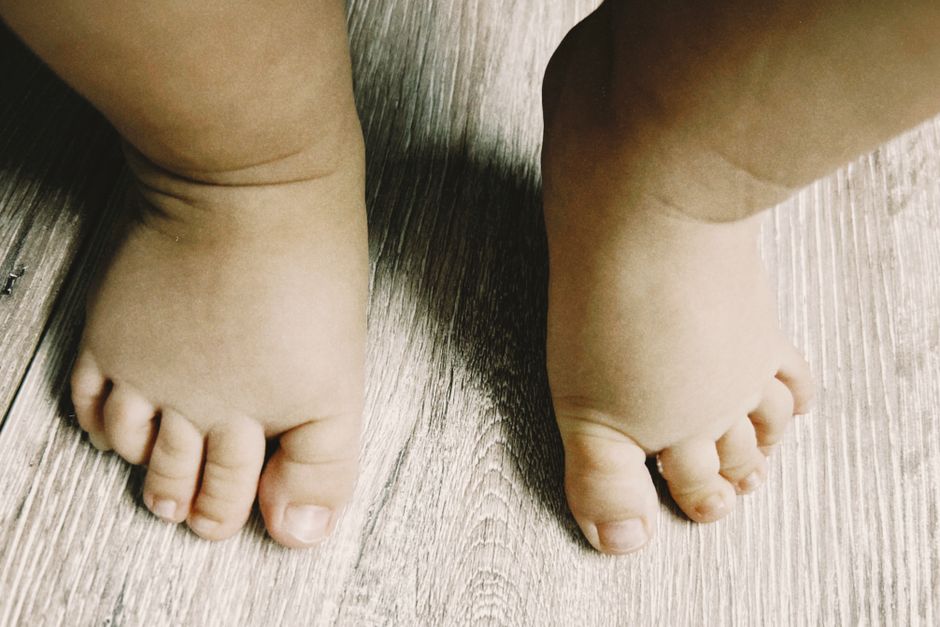
Ditch stiff shoes and socks indoors! Going barefoot allows 200,000 nerve endings on the soles of the feet to grip the floor, sending vital tactile proprioceptive feedback to the brainstem to adjust balance micro-muscles.
Exercise 2: The Weighted Laundry Basket Push
Place several heavy books or towels inside an inverted plastic laundry basket. Let your toddler push it across carpet or hardwood. The added weight provides resistance and stability, giving them the confidence of independent locomotion without tipping over.
Exercise 3: Low Couch Toy Lures
Place enticing, high-value toys just out of reach on couch cushions or low ottomans to encourage frequent pull-to-stands, lateral cruising, and transitional squatting.
⚠️ Warning Alert: Discuss motor delays with your pediatrician immediately if your child cannot sit independently without support by 9 months (see our guide to infant sitting milestones), cannot bear weight on their legs by 12 months, or demonstrates asymmetrical limb movement (favoring one arm or leg).
Summary Comparison: Toddler Walking Milestones
| Motor Observation | Outdated Worry ❌ | Evidence-Based Reality ✅ |
|---|---|---|
| Walking at 15 Months | “My baby is falling behind their peers.” | Within the normal 9-to-18 month developmental window. |
| Mobility Style | Butt scooting is a neurological defect. | A normal, benign developmental variation. |
| Walking Equipment | Wheeled walkers teach babies how to walk. | Walkers delay balance and increase toe-walking risk. |
| Footwear Indoors | Babies need rigid, hard-sole shoes for ankle support. | Barefoot floor play maximizes sensory proprioception. |
| Assistance Technique | Holding arms high overhead to pull baby forward. | Supporting gently at the hips or using weighted push toys. |
Every baby unfolds on their own unique neurological timetable. Give your little one plenty of barefoot floor freedom, celebrate their lateral cruising victories, and trust the incredible wisdom of their growing body.
Google AdSense Placeholder
Slot ready for "in-article". Set your AdSense publisher ID in settings when approved.
Frequently Asked Questions by Moms
Is it normal for a 15-month-old baby not to walk independently? ▼
Yes, completely normal. The clinical window for independent walking established by the CDC and American Academy of Pediatrics (AAP) spans from 9 to 18 months. As long as your 15-month-old is pulling to stand, cruising along furniture, crawling efficiently, and weight-bearing through both legs symmetrically, they are well within normal developmental variation.
What are the early signs that my baby is getting ready to walk? ▼
Key pre-walking indicators include cruising laterally while holding furniture with one hand, letting go of support for 3–5 seconds to balance, stooping down from standing to pick up a dropped toy and standing back up without falling, and climbing onto low cushions or stairs.
Why do 'bottom shufflers' or butt scooters walk later? ▼
Babies who scoot on their bottoms instead of classic four-point crawling often walk between 16 and 19 months. Because scooting provides fast mobility without strengthening the reciprocal hip flexors, trunk rotators, and ankle stabilizers used in crawling, their balance system takes a few extra months to calibrate.
When should I see a pediatric physical therapist for walking delay? ▼
Consult your pediatrician or a physical therapist if your child cannot bear weight on their legs by 12 months, cannot pull to stand or cruise by 15 months, walks persistently on tiptoes with stiff legs, favors one side of their body, or is not taking independent steps by 18 months.

Written by Sarah Collins
Doctor-Reviewed & Fact-CheckedMom of Two & Founder of Mommy Tips & Life
Sarah is a mother of two (Liam & Maya) sharing evidence-based parenting guides, infant sleep solutions, and baby safety alerts tested in real family life and vetted against AAP clinical standards.
Google AdSense Placeholder
Slot ready for "footer-banner". Set your AdSense publisher ID in settings when approved.