W-Sitting in Toddlers: 5 Hidden Posture & Core Weakness Traps (And Physical Therapist Fixes)
Does your toddler sit with their knees bent and feet flared out in a 'W'? Learn why pediatric PTs discourage W-sitting, hidden core weakness signs, and gentle posture fixes.
Sarah Collins
Mom of Two & Founder of Mommy Tips & Life
Google AdSense Placeholder
Slot ready for "header-banner". Set your AdSense publisher ID in settings when approved.
🩺 Medical Disclaimer: This guide is for educational purposes and should not replace pediatric or obstetric medical consultation.
🛍️ Affiliate Disclosure: We may earn a small commission when you purchase through our links at no extra cost to you.
When my son Lucas was eighteen months old, I noticed that every time he sat down to build block towers on our living room carpet, his legs formed a perfect “W.” His knees were tucked in front, his bottom was flat on the floor, and his feet were splayed wide out to the sides.
He looked incredibly comfortable and stable. He could play for thirty minutes without tipping over, so I assumed it was just a cute, flexible toddler quirk.
It wasn’t until our 2-year pediatric wellness visit—when our pediatrician noticed his tight hip rotation and slight in-toeing (“pigeon-toe” walk)—that I learned the truth. W-sitting wasn’t just flexibility; it was a compensatory posture masking hidden core and trunk weakness.
The Quick Breakthrough Summary: The turning point was working with a pediatric physical therapist who taught us how to gently retrain Lucas’s seated posture. We eliminated restrictive baby gear, replaced W-sitting with “Criss-Cross Applesauce” and side-sitting variations, introduced fun living room obstacle courses to build deep abdominal and back stabilizers, and used positive verbal cues like “Fix your feet!” instead of reprimands. Within three months, his balance blossomed and his habitual W-sitting completely stopped.
Floor play habits in infancy and toddlerhood have a massive impact on physical development. If your toddler spent significant time in bouncers or swings as an infant, read our guide on reversing container baby syndrome motor delays. Also, if your child experienced delays when learning to crawl or sit, check our pediatric PT guides on baby not sitting up milestone fixes and why jumpers strain infant hip joints.
Here are the 5 hidden risks of habitual W-sitting and evidence-based physical therapy strategies to strengthen your child’s posture.
1. The “Cheat Code” for Weak Core Muscles (The Wide Base Trap)
To understand why toddlers love W-sitting, you have to look at the geometry of the posture.
How W-Sitting Disables the Core
When an adult or child sits cross-legged or with their legs straight out (“long-sitting”), the base of support is relatively narrow. The postural muscles in the spine, abdomen, and pelvis must continuously fire and make micro-adjustments to keep the upper body upright.
When a toddler sits in a “W” position:
- Their thighs and lower legs create an enormous, triangular base of support.
- The hip joints mechanically lock into internal rotation.
- The trunk and core muscles completely turn off.
[ Weak Postural Core / Trunk Stability ]
                 ⬇
[ Child Adopts "W" Position to Avoid Tipping Over ]
                 ⬇
[ Mechanically Locked Hips Replace Active Muscle Use ]
                 ⬇
[ Trunk & Core Muscles Weaken Further (Vicious Cycle) ]
Because the skeleton does all the work of keeping the child upright, the deep core stabilizers never get the workout they need to support running, jumping, and proper school-desk sitting later in life.
2. Hindering Bilateral Coordination and “Crossing the Midline”
One of the most vital neurological milestones in early childhood is the ability to cross the body’s midline—using the right hand to reach for a toy on the far left side, and vice versa.
The Trunk Rotation Deficit
Midline crossing is the foundation for future complex skills, including writing with a dominant hand, reading from left to right across a page, and kicking a ball across the body.
When a toddler is locked in a W-sitting posture, their pelvis cannot pivot, and their torso cannot rotate. If a toy is located to their left, they will only reach for it with their left hand; if it is to their right, they will only use their right hand.
By eliminating natural trunk rotation during play, habitual W-sitting delays bilateral brain integration and dominant hand preference.
💡 Pediatric / Mom Tip: When your child is playing on the floor, place toys diagonally across their body to encourage reaching across their chest. This forces the oblique abdominal muscles to fire and strengthens neural pathways for bilateral coordination.
3. Orthopedic Risks: Hip Dysplasia, Femoral Torsion, and Tight Hamstrings
Habitual W-sitting places extreme, unnatural mechanical stress on growing bones and joint capsules.
3 Major Orthopedic Concerns:
- Hip Subluxation / Dislocation: W-sitting forces the femoral head (the ball of the thigh bone) to push outward against the back edge of the acetabulum (the hip socket). For children with underlying hip dysplasia or joint laxity, this can lead to permanent joint instability.
- Femoral Anteversion (In-Toeing / “Pigeon Toes”): Prolonged internal rotation causes the thigh bone to twist inward over time. When the child stands and walks, their feet and knees point inward toward each other, leading to awkward running mechanics and frequent tripping.
- Tight Hamstrings and Achilles Tendons: Because the legs are folded backward, the hip adductors and internal rotators become chronically tight and shortened, while external rotators become weak and stretched. This chronic tightening is closely linked to gait compensations like toddler toe walking and Achilles tendon stiffness.
4. The 4 Healthy Seating Alternatives to Teach Your Toddler
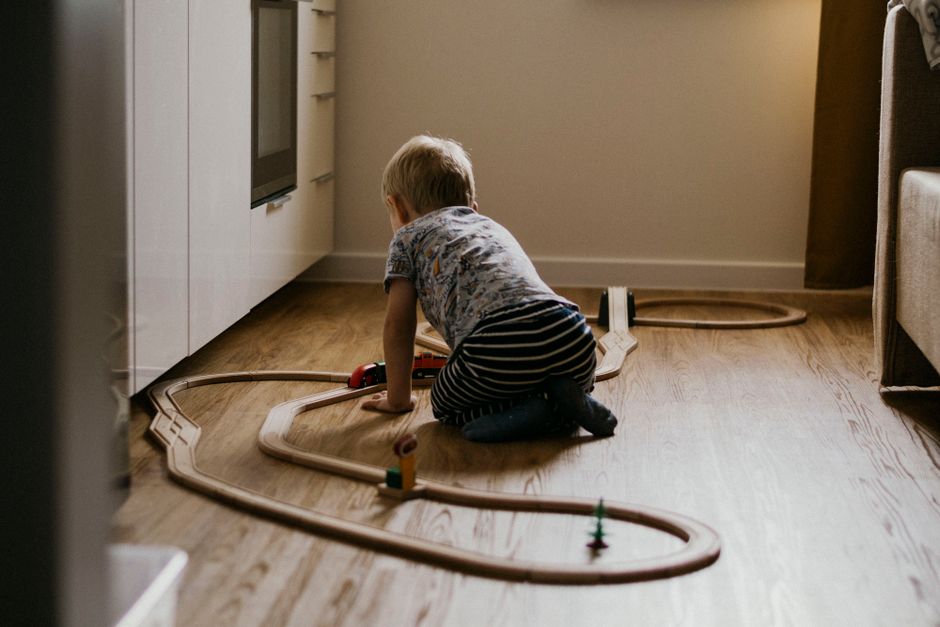
Never punish or yell at a child for W-sitting—they are simply using the most stable tool their body currently knows. Instead, model and reward these 4 orthopedic-approved floor postures:
1. “Criss-Cross Applesauce” (Cross-Legged Sitting)
- Why It’s Great: Places the hips in external rotation, widens the pelvic floor, and requires active abdominal engagement to maintain spinal alignment.
2. “Long Sitting” (Legs Straight Out in Front)
- Why It’s Great: Gently stretches the hamstring muscles behind the knees while challenging the lower back erector spinae muscles.
3. “Side Sitting” (Both Feet Pointing to One Side)
- Why It’s Great: A fantastic transitional posture that engages lateral trunk muscles and allows easy pivoting into hands-and-knees crawling. (Encourage switching sides periodically).
4. “Tailor Sitting” (Butterfly / Soles of Feet Together)
- Why It’s Great: Opens the adductor muscles of the inner thighs and promotes relaxed, upright spinal posture.
⚠️ Warning Alert: If your child physically cannot sit cross-legged or long-sitting without falling backward immediately, do not force them. Provide a low foam cushion, yoga block, or small toddler stool (4–6 inches high) to elevate their pelvis until their core strength catches up.
5. Physical Therapy Games to Build Toddler Core Strength at Home
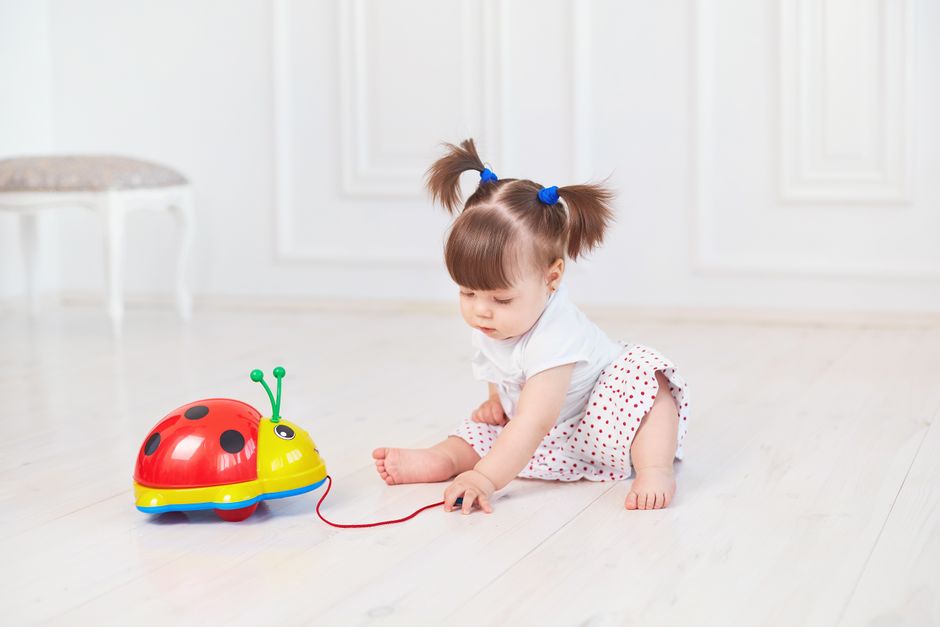
To eliminate W-sitting permanently, you must strengthen the muscles that make alternative postures effortless. Try these 3 playful physical therapy games:
Game 1: The “Animal Crawl” Safari
- Have your toddler imitate different animals across the living room rug: bear crawls (hands and feet on floor with bottom in the air), crab walks (scooting backward on hands and feet), and frog hops.
- Benefit: Strengthens shoulder girdle, lumbar spine, and gluteal complexes.
Game 2: The Peanut Ball / Couch Cushion Bridge
- Place couch cushions or a large exercise ball on the floor. Have your child climb over, straddle, and balance on the cushions while catching bubbles or reaching for plush toys.
- Benefit: Activates dynamic balance reactions and core stabilizers.
Game 3: Squat-and-Play (The Toddler Deep Squat)
- Tape pictures or place puzzle pieces on the floor, but place the puzzle board up on a low coffee table. Your toddler must squat down flat-footed to grab a piece, stand up tall, and place it on the table.
- Benefit: Builds ankle dorsiflexion, quad power, and pelvic floor stability.
Toddler Seated Posture Comparison Guide
| Seated Posture | Muscular Impact | Orthopedic Verdict |
|---|---|---|
| W-Sitting (Habitual) | Zero core engagement; trunk muscles turned off | Discouraged ❌ (Causes hip stress and in-toeing) |
| Criss-Cross Applesauce | Active core and back stabilizers required | Highly Recommended ✅ (Promotes hip external rotation) |
| Long-Sitting (Legs Out) | Stretches hamstrings; requires spinal extension | Highly Recommended ✅ (Builds upright postural endurance) |
| Side-Sitting | Engages oblique abdominal muscles and rotation | Recommended ✅ (Great for active play transitions) |
| Low Stool / Cushion | Elevates pelvis to relieve tight hamstrings | Excellent Adaptive Tool ✅ (Great for desk play) |
When to Consult a Pediatric Physical Therapist
While most W-sitting resolves with consistent gentle reminders and floor games, schedule an evaluation with a Pediatric Physical Therapist (PT) if you observe:
- Your child is older than 2.5 years and refuses to sit in any position other than a “W.”
- Noticeable limp, asymmetrical gait, or frequent unexplained tripping while running.
- Extreme stiffness or pain when moving hips into a cross-legged position.
- Observable weakness (e.g., struggling to climb stairs without holding onto railings with both hands).
Every developmental milestone is a building block for the next adventure. With patience, fun floor challenges, and positive encouragement, you can help your little one build the strength, balance, and posture they need for a lifetime of confident, joyful movement.
Disclaimer: This article is for educational purposes only and reflects pediatric physical therapy best practices. It does not replace clinical medical diagnosis. Consult your pediatrician or pediatric physical therapist for personalized musculoskeletal assessments.
Google AdSense Placeholder
Slot ready for "in-article". Set your AdSense publisher ID in settings when approved.
Frequently Asked Questions by Moms
What exactly is W-sitting? ▼
W-sitting is a seated posture where a child sits on their bottom with their knees bent in front, thighs pointing forward, and both feet and ankles rotated outwards to the sides of their hips, forming the shape of a 'W' when viewed from above.
Is occasional W-sitting normal or harmful for toddlers? ▼
Transitioning through a W-position for a few seconds while moving between crawling and standing is completely normal. However, habitual, prolonged W-sitting (using it as their primary seated posture) is problematic because it locks the hips in extreme internal rotation and prevents trunk muscles from activating.
How does W-sitting affect a toddler's core and spine development? ▼
W-sitting creates an artificially wide base of support that mechanically props the child up with zero muscular effort. Because the core, back, and abdominal muscles don't need to work to keep the child upright, it hinders the development of trunk rotation, midline crossing, and dynamic balance.
What is the best verbal cue to correct a toddler who is W-sitting? ▼
Avoid shaming or negative commands like 'stop sitting like that.' Instead, use positive, actionable cues such as 'Fix your feet, please!' or 'Let's sit criss-cross applesauce!' or gently touch their feet to prompt them to extend their legs forward.

Written by Sarah Collins
Doctor-Reviewed & Fact-CheckedMom of Two & Founder of Mommy Tips & Life
Sarah is a mother of two (Liam & Maya) sharing evidence-based parenting guides, infant sleep solutions, and baby safety alerts tested in real family life and vetted against AAP clinical standards.
Google AdSense Placeholder
Slot ready for "footer-banner". Set your AdSense publisher ID in settings when approved.