Baby Not Crawling? 5 Common Floor Play Mistakes Slowing Down Motor Milestones (And When to Worry)
Is your 9-month-old or 10-month-old showing no interest in crawling or scooting? Discover common floor play mistakes, atypical crawling styles, and red flags.
Sarah Collins
Mom of Two & Founder of Mommy Tips & Life

Google AdSense Placeholder
Slot ready for "header-banner". Set your AdSense publisher ID in settings when approved.
🩺 Medical Disclaimer: This guide is for educational purposes and should not replace pediatric or obstetric medical consultation.
🛍️ Affiliate Disclosure: We may earn a small commission when you purchase through our links at no extra cost to you.
When my daughter Maya turned nine months old, we attended a local mommy-and-me playgroup. Within minutes, three other babies were zooming across the foam mats, chasing balls, and pulling up on toy baskets. Maya, on the other hand, was sitting upright like a peaceful little statue. If I placed her on her tummy, she immediately flattened out like a starfish, grunted in frustration, and burst into tears.
That night, I fell into a toxic 2:00 AM internet spiral. I searched everything from neurological muscular disorders to permanent motor delays. I felt like a failure, blaming myself for not doing enough tummy time or wondering if something was fundamentally wrong with my baby’s spine.
The Upfront Breakthrough Summary: What our pediatric physical therapist explained changed everything: crawling is not an automatic switch that flips—it is the culmination of trunk rotation, weight-shifting, and cross-lateral neural pathway activation (which is also why noticing patterns like baby asymmetrical or one-sided army crawling is so crucial). Maya wasn’t “lazy”; she was simply slipping on our hardwood floors and lacking specific core activation. By ditching tight footie pajamas for barefoot grip, setting up elevated knee-prop stations, and eliminating baby containers, Maya went from a frustrated stationary sitter to an energetic hands-and-knees crawler in under three weeks.
1. The Container Trap: Stealing Unrestricted Floor Hours
The most common reason modern infants delay crawling is Container Baby Syndrome—spending excessive hours confined in bouncers, swings, walkers, activity saucers, and car seat carriers.
While containers offer parents a convenient, safe place to put baby while making dinner, they lock the pelvis in a static, tilted position and prevent the baby from discovering their center of gravity:
[ Hours Spent in Swings, Walkers & Saucers ]
                    ⬇
[ Pelvis Held in Passive Anterior Tilt ]
                    ⬇
[ Core, Hip Flexors & Shoulder Girdle Weaken ]
                    ⬇
- If Kept in Containers: Crawling Delayed Past 10-12 Months ❌
- If Transitioned to Unrestricted Floor Time: Natural Motor Drive Engages ✅
For more details on avoiding container reliance, review our comprehensive clinical guide on container baby syndrome symptoms and prevention.
2. Mistake #1: Slippery Hardwood Floors and Slick Footie Pajamas
To push up onto hands and knees (the quadruped position), an infant needs frictional traction under their palms and knees.
When parents place a baby dressed in synthetic polyester footie pajamas onto smooth hardwood, laminate, or tile floors:
- Every time baby attempts to tuck their knees under their hips, their legs slide backward like an ice skater.
- The baby experiences repeated motor frustration and gives up, preferring to remain seated.
💡 Pediatric / Mom Tip: For all daytime floor play, practice Barefoot and Bare Knees. Dress baby in a simple bodysuit or roll up their pant legs. Direct skin-to-surface contact gives the sensory proprioception and traction needed to propel forward.
3. Mistake #2: Trapping Baby in the “Propped Sitter” Habit
Many parents proudly practice sitting with their 6-to-7-month-old using supportive cushions or pillows. While independent sitting is a great milestone, babies who spend hours sitting upright with toys placed directly in their lap never learn transitional movement.
A baby cannot crawl directly from a sitting posture without learning how to rotate their torso and shift their weight forward onto their hands:
Sitting Upright ➔ Torso Rotation (Side-Sit) ➔ Hands Down ➔ Weight Shift ➔ Quadruped CrawlIf your baby struggles with basic belly-to-back transitions, revisit our foundations on baby rolling over milestone delays and mistakes as well as what to do when baby hates tummy time.

4. Different Crawling Styles: What’s Normal vs. What’s a Red Flag?
Not every baby follows the textbook four-point crawl on day one. Pediatricians recognize several healthy variations:
Normal Crawling Variations
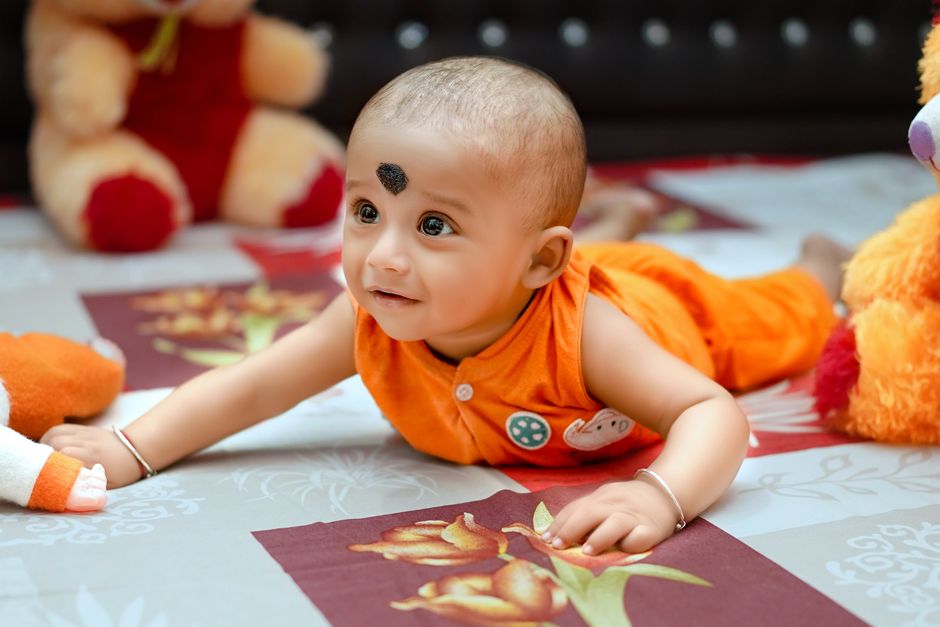
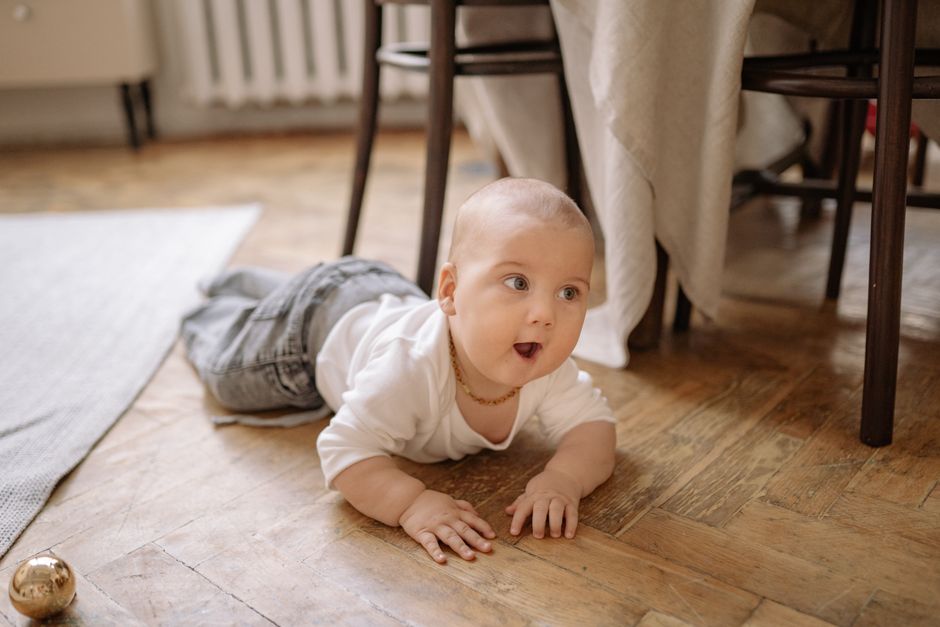
- Army / Commando Crawl: Baby pulls forward using forearms while dragging their belly and legs. (Common initial stage for 2–4 weeks).
- The Bear Crawl: Baby moves on hands and feet with stiff knees and elevated hips.
- The Crab Crawl / Reverse Scoot: Baby pushes backward with hands before figuring out forward momentum.
- The Asymmetrical Hitch: One knee pushes while the other foot plants flat. (Normal if temporary).
- The Bottom Scoot: Baby moves on their bottom using hands and feet (if your child prefers scooting, see our comprehensive guide on why late walkers and 15-month milestones develop differently).
Clinical Red Flags to Discuss with Your Pediatrician
- Baby drags one side of their body completely limp like a dead weight (asymmetry persisting over 4 weeks).
- Baby cannot support any weight on their forearms or hands by 9 months.
- Baby displays extreme muscle stiffness (hypertonia) or floppiness (hypotonia).
- Baby shows zero curiosity or motivation to reach for favorite toys placed 12 inches away.
5. The 4-Step Pediatric PT Routine to Encourage Crawling
If your baby is between 8 and 11 months and needs motor encouragement, implement this daily 15-minute floor routine:
Step 1: The Sofa Cushion Mountain
Place a flat sofa cushion or firm foam bolster on the floor. Place an enticing musical toy on top of the cushion. Lay baby with their chest against the cushion so their knees naturally bend underneath them, practicing the quadruped knee-load posture without bearing full body weight.
Step 2: The Towel / Scarf Lift Assist
Roll a soft bath towel into a narrow band and place it under baby’s ribcage while they are on their tummy. Gently lift upward on the towel ends just enough to take 20% of their body weight off the floor, helping them feel their hands and knees supporting them.
Step 3: High-Value Toy Placement at 45-Degree Angles
Never place toys directly within arm’s reach or straight ahead. Place their favorite item at a 45-degree angle 18 inches away. This forces the baby to shift weight onto one arm, rotate their torso, and kick their legs to reach.
Step 4: Mirror Play Motivation
Babies are fascinated by other babies. Place an unbreakable floor mirror two feet in front of your baby during tummy play. Reaching to touch their own reflection is one of the strongest motor motivators.
Summary: Floor Play Mistakes vs. Milestone Boosters
| Floor Play Habit ❌ | Motor-Boosting Alternative ✅ |
|---|---|
| Slick footie pajamas on smooth hardwood floors causing slipping. | Bare knees and bare feet for natural sensory traction and friction. |
| Keeping baby in bouncers and activity walkers for hours. | Unrestricted open floor play on a firm, non-slip play mat. |
| Handing toys directly to baby’s lap while they are seated. | Placing toys 18 inches away at 45-degree angles to encourage weight shifts. |
| Panicking over army crawling or backward scooting. | Recognizing normal developmental variations and celebrating progress. |
| Forcing rigid standing exercises before core floor strength develops. | Practicing cushion climbing and quadruped props to build shoulder girdle stability. |
Celebrate Every Scoot, Roll, and Wiggle
Remember that every baby operates on their own unique developmental timeline. Motor development is not a race, and a baby who crawls at 10 months is just as healthy, bright, and capable as one who crawled at 6 months.
Provide plenty of barefoot floor freedom, get down on the carpet alongside them, cheer for every wobbly knee push, and watch your little adventurer take off across the room!
Google AdSense Placeholder
Slot ready for "in-article". Set your AdSense publisher ID in settings when approved.
Frequently Asked Questions by Moms
At what age should a baby start crawling? ▼
Most babies begin crawling between 7 and 10 months of age. Crawling styles vary widely from army crawling (commando style) to classic hands-and-knees, bear crawling, or bottom scooting.
Is it okay if a baby skips crawling and goes straight to walking? ▼
While some babies skip crawling and develop normally, pediatric physical therapists emphasize that hands-and-knees crawling builds essential cross-lateral brain coordination, shoulder stability, and wrist strength necessary for future handwriting and motor balance.
When should I worry if my baby is not crawling? ▼
Consult your pediatrician if your baby is 10 to 12 months old and cannot sit unsupported, drags one side of their body limp, shows no interest in moving toward toys, or exhibits stiff, rigid leg extension preventing floor mobility.

Written by Sarah Collins
Doctor-Reviewed & Fact-CheckedMom of Two & Founder of Mommy Tips & Life
Sarah is a mother of two (Liam & Maya) sharing evidence-based parenting guides, infant sleep solutions, and baby safety alerts tested in real family life and vetted against AAP clinical standards.
Google AdSense Placeholder
Slot ready for "footer-banner". Set your AdSense publisher ID in settings when approved.