Baby Monitor Cord Safety: 5 Hidden Strangulation Hazards Most Parents Overlook
Did you know baby monitor cords are one of the leading hidden nursery strangulation hazards? Discover the CPSC 3-foot rule, cord cover errors, and safe camera mounting.
Sarah Collins
Mom of Two & Founder of Mommy Tips & Life

Google AdSense Placeholder
Slot ready for "header-banner". Set your AdSense publisher ID in settings when approved.
🩺 Medical Disclaimer: This guide is for educational purposes and should not replace pediatric or obstetric medical consultation.
🛍️ Affiliate Disclosure: We may earn a small commission when you purchase through our links at no extra cost to you.
It was a quiet Tuesday afternoon nap when my eight-month-old son Lucas woke up earlier than usual. I glanced at the handheld video monitor on my kitchen counter and felt my heart drop into my stomach with cold, paralyzing terror. Lucas was standing upright in his crib, gripping the top wooden rail with one hand, while his other tiny hand was vigorously tugging at the thin black power cord connecting our high-definition camera mounted just above his crib ledge. The cord had slipped slightly behind the drywall, forming a loose, drooping U-shaped loop just inches from his throat.
I sprinted down the hallway, bursting through the nursery door with my breath catching in my chest, and yanked the power plug from the outlet before scooping him into my arms. My hands were shaking so violently I could barely breathe. Like millions of parents, I had carefully positioned the video camera right on the crib rail to get that “perfect, close-up bird’s-eye view” of his sleeping chest. I thought I was being the ultimate vigilant, high-tech mother. In reality, I had unknowingly installed a lethal strangulation hazard directly over his sleeping sanctuary.
That terrifying afternoon forced me to audit our entire nursery setup. According to clinical data from the U.S. Consumer Product Safety Commission (CPSC), dozens of infant fatalities and near-strangulations have occurred specifically from baby monitor electrical cords placed within reach. By implementing the strict 3-foot distance mandate, installing screw-anchored rigid conduit covers, and auditing other hidden nursery cords, we eliminated the danger permanently without sacrificing our ability to monitor our baby’s sleep.
1. The “Bird’s-Eye View” Crib Rail Mount (The #1 Fatal Nursery Trap)
Online nursery influencers and modern baby monitor advertisements constantly showcase cameras mounted directly onto the wooden slats or top rail of a crib using flexible silicone “gooseneck” twist mounts. It looks sleek, minimalist, and provides breathtaking HD video angles.
However, in pediatric safety engineering, a crib rail mount is an extreme hazard.
Even if the cord seems tightly wrapped around the wood when your baby is an immobile newborn, infant physical development advances overnight. Between 5 and 9 months, babies gain rapid upper-body strength, pull to stand, and develop a fierce grasp reflex. A baby can reach over the rail, grab the camera base, and pull 6 feet of slack electrical wiring directly into their crib.
Crib-Mounted Camera ➡️ Standing Pull Reflex ➡️ Cord Pulled Into Bed ➡️ Severe Strangulation Risk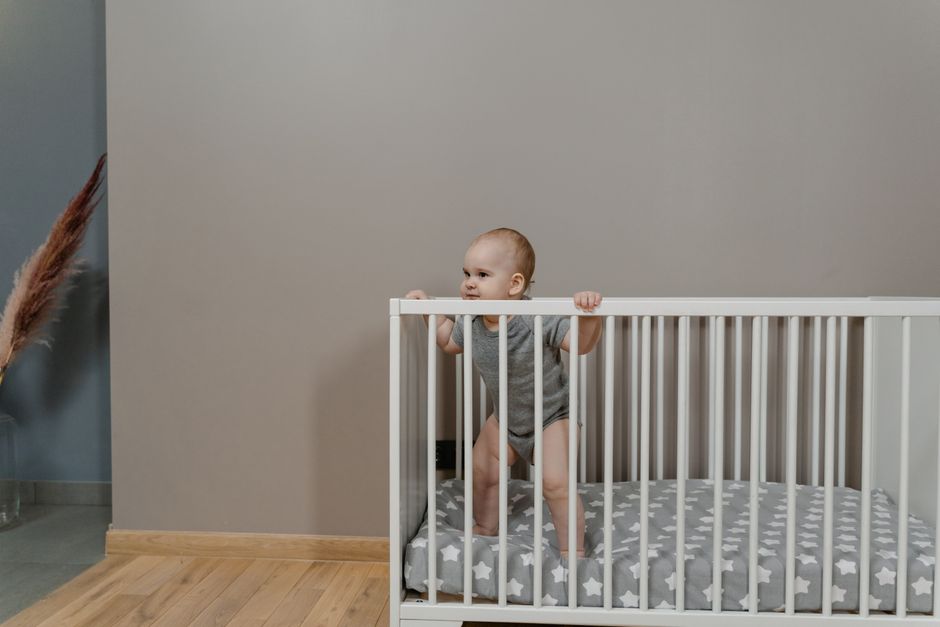
⚠️ Warning Alert: The CPSC and the American Academy of Pediatrics (AAP) explicitly warn that electrical cords should NEVER be attached to, hung across, or within 3 feet of any crib, bassinet, playpen, or toddler bed.
2. Ignoring the CPSC 3-Foot (36-Inch) Safety Zone
The gold standard rule for nursery electrical safety is the 3-Foot Perimeter Rule.
Stand at your baby’s crib and extend your arm fully in all 360-degree directions—including through the slats and upwards from the mattress at its lowest setting. If an electrical wire, sensor cable, or power adapter falls within a 36-inch radius (1 meter) of that perimeter, it is an immediate violation of infant safety guidelines.
How to Properly Measure the 3-Foot Zone:
- Lower the Mattress First: Measure from the top of the crib rail when the mattress is in its lowest, deepest position.
- Account for Reach Extension: Add an additional 12 inches to account for your toddler’s arm span when reaching through crib slats.
- Corner Mounting: Mount the camera high up in the ceiling corner of the room, using wide-angle digital zoom rather than physical proximity.
To ensure your baby’s entire sleep environment meets pediatric standards, cross-reference our guide on toxic nursery hazards and dangerous sleep items.
3. Relying on Flimsy Peel-and-Stick Adhesive Cord Covers
Many parents recognize that loose cords are dangerous and attempt a quick DIY fix using plastic stick-on cord covers from hardware stores. While well-intentioned, cheap adhesive channels create a false sense of security.
In nurseries where humidity levels fluctuate from cool mist humidifiers or temperature shifts, standard double-sided tape degrades rapidly. A heavy, energetic baby pulling on a plastic channel can rip it off the drywall in a single motion, converting a flat wall wire into a dangling cord trap.

What to Use Instead:
- Screw-Mounted Rigid Metal/PVC Conduits: If cords must run along a wall, use rigid raceways that are physically screwed into drywall anchors every 12 inches.
- Wireless Battery-Powered Monitors: Consider cameras that operate on rechargeable lithium batteries that sit safely across the room on a high shelf.
- Floor-Anchored Heavy Base Stands: Use weighted telescoping stands positioned behind heavy furniture that your child cannot reach or tip over. Check our checklist on securing nursery furniture against dangerous tip-over hazards.
4. Forgetting Secondary Cords (Sound Machines, Humidifiers, and Nightlights)
Parents frequently fix their video monitor cord but leave an array of other dangerous power cables snaking around the base of the crib.
Consider the modern nursery ecosystem:
- Sound machines placed on side tables adjacent to crib slats.
- Smart nursery humidifiers sitting on changing tables within arm’s reach.
- Nightlight cords dangling behind the glider.
If a white noise machine is placed on a shelf directly above the crib, not only does the hanging power cord present a strangulation hazard, but excessive sound exposure can also damage delicate infant eardrums. Review our clinical recommendations on safe decibel levels and white noise machine placement.
Secondary Electronics Near Crib ➡️ Hanging Power Cables ➡️ Entanglement & Heavy Object Falls💡 Pediatric / Mom Tip: Run all nursery electronics through outlet-cover boxes and keep power strips locked inside ventilated, childproof cord management boxes placed behind anchored dressers.
5. Overlooking Window Blind Cords and Wall Decor Above the Crib
The final hidden strangulation trap involves the crib’s physical location in the room. Placing a crib against an exterior window with traditional corded horizontal or vertical blinds is a catastrophic safety error.
Toddlers standing in their cribs at dawn or during naptime frequently play with dangling window cords, which can form a fatal noose in seconds without making a sound.
Safe Crib Placement Checklist:
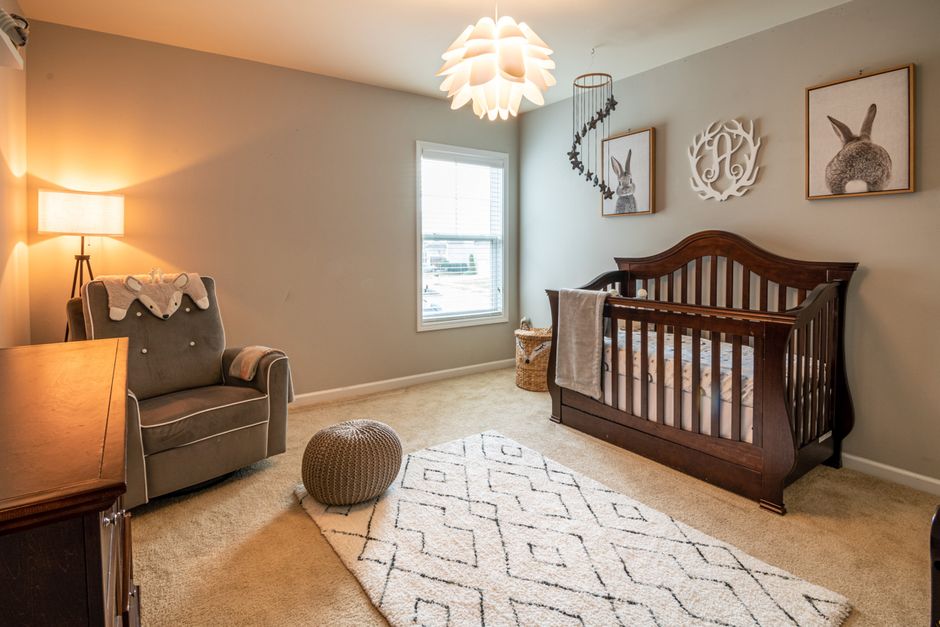
- No Window Proximity: Position the crib on an interior wall at least 3 feet away from all windows, curtains, and cords. Learn more in our CPSC guide on window blind cord strangulation hazards and babyproofing.
- Cordless Window Coverings: Replace all traditional blinds with 100% cordless roller shades or cellular blackout blinds.
- Zero Heavy Wall Hangings: Never hang heavy framed photos, wooden letters, or shelves directly over the crib area where seismic vibrations or infant pulling could cause them to fall.
- Crib Chemical Safety: When designing your baby’s room, ensure you also review toxic crib mattress chemicals and VOC off-gassing hazards for clean indoor air.
Summary: Monitor Cord Hazards vs. Safe Nursery Solutions
| Common Mistake ❌ | Healthy Alternative ✅ |
|---|---|
| Mounting camera on crib rails with flexible twist wraps for a close-up view. | Wall-mount camera at least 3 feet (36 inches) away, high on the opposite wall or ceiling. |
| Using cheap peel-and-stick adhesive channels that peel off in humid rooms. | Install screw-anchored rigid conduits with heavy-duty drywall anchors. |
| Placing white noise machines or humidifiers on tables touching crib slats. | Keep all auxiliary electronics 3+ feet away with power cords secured behind furniture. |
| Placing cribs next to windows with hanging corded horizontal blinds. | Move crib to an interior wall and install 100% cordless window shades. |
| Leaving slack power cords coiled on the floor near the nursery baseboard. | Enclose power strips and excess cables inside locked childproof cable management boxes. |
The Takeaway: Safety Comes Before the Perfect Camera Angle
As modern parents, our instincts drive us to use the latest technology to protect our little ones. But a video monitor is only a protective tool if its physical hardware does not introduce a preventable tragedy into your home.
Take five minutes today: walk into your nursery with a tape measure, check the 3-foot perimeter around your baby’s crib, anchor every dangling wire, and rest easy knowing your child’s sleep space is 100% secure.
Google AdSense Placeholder
Slot ready for "in-article". Set your AdSense publisher ID in settings when approved.
Frequently Asked Questions by Moms
How far away must a baby monitor cord be from the crib? ▼
According to the US Consumer Product Safety Commission (CPSC), all baby monitor cords, electrical wires, and camera mounts must be placed at least 3 feet (36 inches / 1 meter) away from any part of the crib or bassinet at all times.
Are adhesive cord covers safe inside a nursery? ▼
Adhesive cord covers are only safe if they are heavy-duty, screwed into drywall anchors, and positioned outside the crib's 3-foot zone. Cheap peel-and-stick channel covers can peel off walls in humid rooms, creating a dangling loop hazard.
Can a baby pull a monitor cord into the crib while standing? ▼
Yes. Once babies reach 6 to 9 months, they develop the standing grip reflex. They can reach up to 18 inches above the top crib rail and through vertical crib slats, pulling dangling cords directly into their sleeping area.

Written by Sarah Collins
Doctor-Reviewed & Fact-CheckedMom of Two & Founder of Mommy Tips & Life
Sarah is a mother of two (Liam & Maya) sharing evidence-based parenting guides, infant sleep solutions, and baby safety alerts tested in real family life and vetted against AAP clinical standards.
Google AdSense Placeholder
Slot ready for "footer-banner". Set your AdSense publisher ID in settings when approved.