7 Baby Bath Safety Hazards Most Parents Miss (And How to Prevent Slips and Burns)
Bath time should be fun, not dangerous. Learn 7 hidden baby bath safety hazards, scald burn risks, bath seat traps, and AAP-approved water safety rules.
Sarah Collins
Mom of Two & Founder of Mommy Tips & Life
Google AdSense Placeholder
Slot ready for "header-banner". Set your AdSense publisher ID in settings when approved.
🩺 Medical Disclaimer: This guide is for educational purposes and should not replace pediatric or obstetric medical consultation.
🛍️ Affiliate Disclosure: We may earn a small commission when you purchase through our links at no extra cost to you.
When my firstborn was four months old, I had a bath time scare that still gives me chills. I was giving her a gentle evening bath in our family tub using an infant bath ring. The doorbell rang with a package delivery, and for a split second, my brain thought, “I’ll just step out for ten seconds to grab it.”
Halfway down the hall, maternal instinct kicked in like a lightning bolt. I sprinted back into the bathroom just as the suction cups on the bath seat gave way and the seat tipped sideways. My daughter was seconds away from submerging under water. I scooped her up trembling, wrapped her in a towel, and sat on the bathroom floor sobbing.
That horrifying near-miss shattered my false sense of security. Like millions of parents, I assumed baby bath products were inherently safe and that drowning made loud, splashing sounds. It doesn’t. If you are auditing your home for nursery hazards, you understand how common baby gear can harbor hidden risks—just like the dangerous items we highlighted in our guide on 7 dangerous nursery items and hidden safety hazards.
The Quick Breakthrough Summary: Eliminating bath time hazards requires replacing convenience shortcuts with strict clinical protocols: practicing uninterrupted “touch supervision” at all times, capping your home water heater thermostat at 120°F (49°C) to prevent catastrophic scalding, immediately ditching deceptive suction-cup bath rings in favor of anti-slip infant tubs, and understanding the subtle signs of secondary drowning and delayed submersion complications in babies.
Here is the doctor-vetted breakdown of the seven most dangerous bath time hazards and how to keep your little one completely protected.
1. The False Security of Bath Rings and Suction Seats
Many parents purchase plastic bath seats with suction cups believing they act as life jackets or secure restraints. In reality, pediatric safety organizations including the American Academy of Pediatrics (AAP) and the Consumer Product Safety Commission (CPSC) have issued urgent warnings against them.
       BATH RING SUCTION FAILURE
   ┌────────────────────────────────────────────────────────┐
   │ Bath ring suction cups loosen on wet porcelain enamel │
   │                    ▼                                   │
   │ Baby shifts body weight or reaches for a floating toy  │
   │                    ▼                                   │
   │ Seat tips over, trapping baby upside-down underwater   │
   │                    ▼                                   │
   │ Leg holes prevent the baby from slipping out or rising │
   └────────────────────────────────────────────────────────┘
Because the seat holds the baby in place initially, parents feel a dangerous psychological license to step away to grab a clean towel or answer a phone. When the suction fails, the tight leg openings prevent the baby from righting themselves.
The Safe Alternative:
- Use an ergonomic infant tub with a non-slip textured sling placed flat on the floor or inside a dry, empty tub.
- Keep the water level shallow (2 to 3 inches maximum).
- Never rely on any device to hold your baby’s head above water.
💡 Pediatric / Mom Tip: If you ever need to leave the bathroom during bath time for any reason—even if someone is knocking at the door—wrap your baby in a towel and take them with you. Never leave an infant alone in the bathroom for even one second.
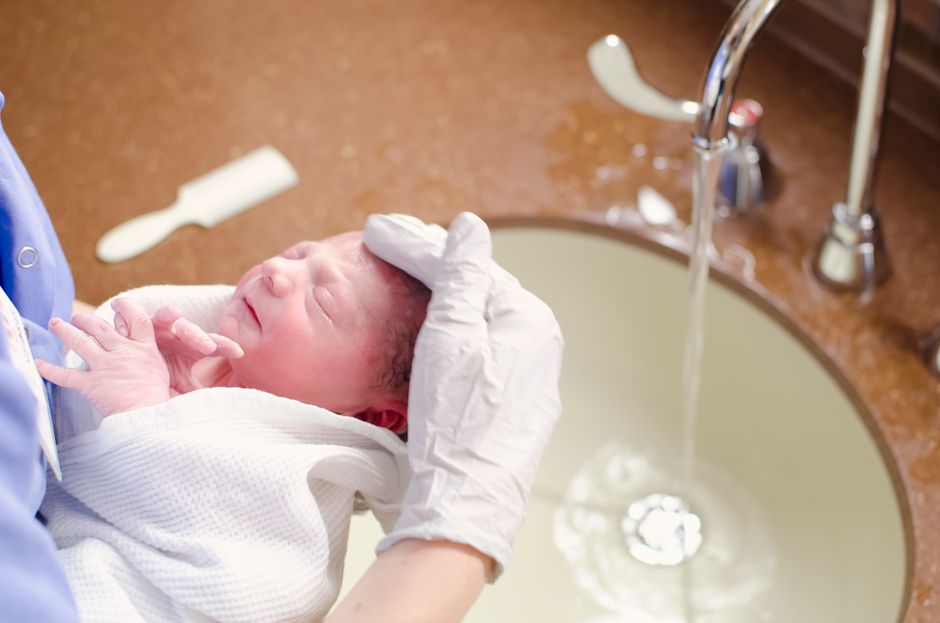
2. Scald Burns and Hidden Hot Water Pockets
Infant skin is significantly thinner than adult skin, meaning hot water that feels merely “warm” to your forearm can cause severe second- or third-degree burns on a baby in under 5 seconds.
The Home Water Heater Trap
Most residential water heaters come pre-set from the factory at 140°F (60°C). At 140°F, water creates full-thickness scald burns in just 3 seconds.
   WATER TEMPERATURE VS. INFANT SCALD TIME
   ┌──────────┬─────────────────────────────────────────────┐
   │ 140°F    │ Severe 3rd-degree burn in 3 SECONDS         │
   │ 130°F    │ Severe burn in 30 SECONDS                   │
   │ 120°F    │ Safe threshold (Burn takes > 5 MINUTES)     │
   │ 98-100°F │ Optimal baby bath temperature               │
   └──────────┴─────────────────────────────────────────────┘
How to Prevent Scalds:
- Adjust Your Water Heater: Go to your basement or utility closet and lower your water heater thermostat to 120°F (49°C).
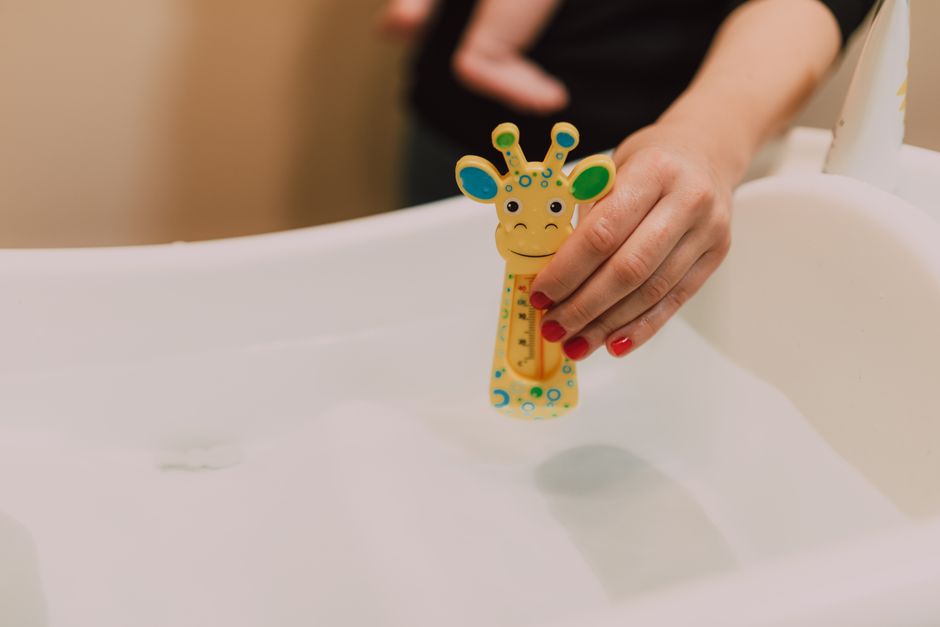
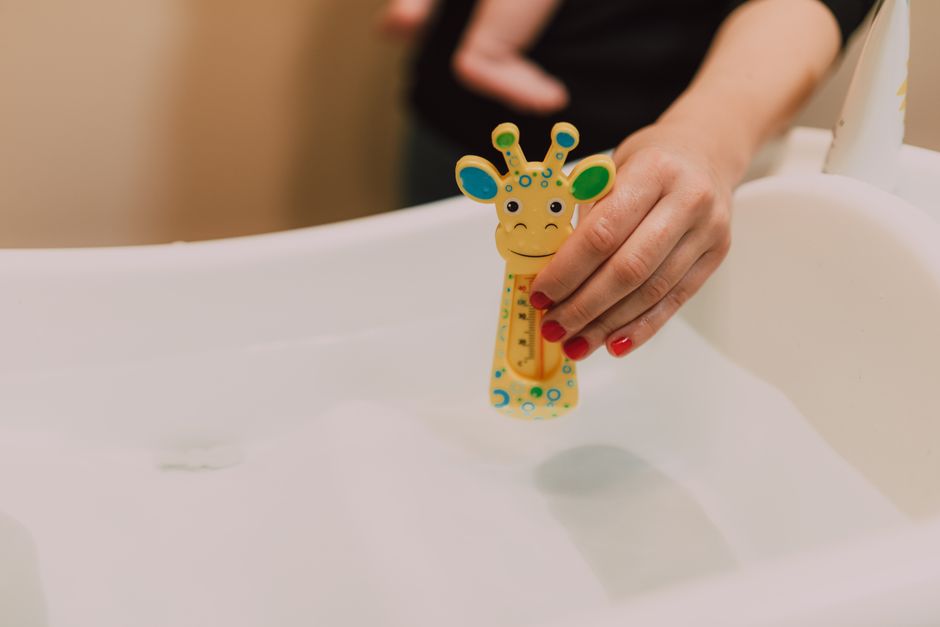
- Use a Floating Digital Thermometer: Test the water before putting your baby in. The safe range is 98°F to 100°F (36.6°C to 37.8°C).
- Swirl the Water: Water in deep tubs forms cold and boiling-hot pockets. Always swirl the water thoroughly with your hand to equalize temperature throughout.
3. Running Tap Water While Baby is Already in the Tub
It is tempting to let the faucet run while your baby is playing in the tub to keep the water warm or fill the tub faster. However, running tap water introduces two acute risks:
- Sudden Temperature Spikes: If someone elsewhere in the house flushes a toilet or turns on the washing machine, cold water is diverted, causing boiling water to shoot out of the spout directly onto your child.
- Rapid Rise in Water Depth: Running water can fill the tub faster than anticipated, catching a distracted parent off guard.
⚠️ Warning Alert: Always fill the tub to the desired depth, turn off the faucet tightly, test the water temperature, and only then place your baby inside. Install a soft silicone faucet cover to protect little heads from metal spout bumps.
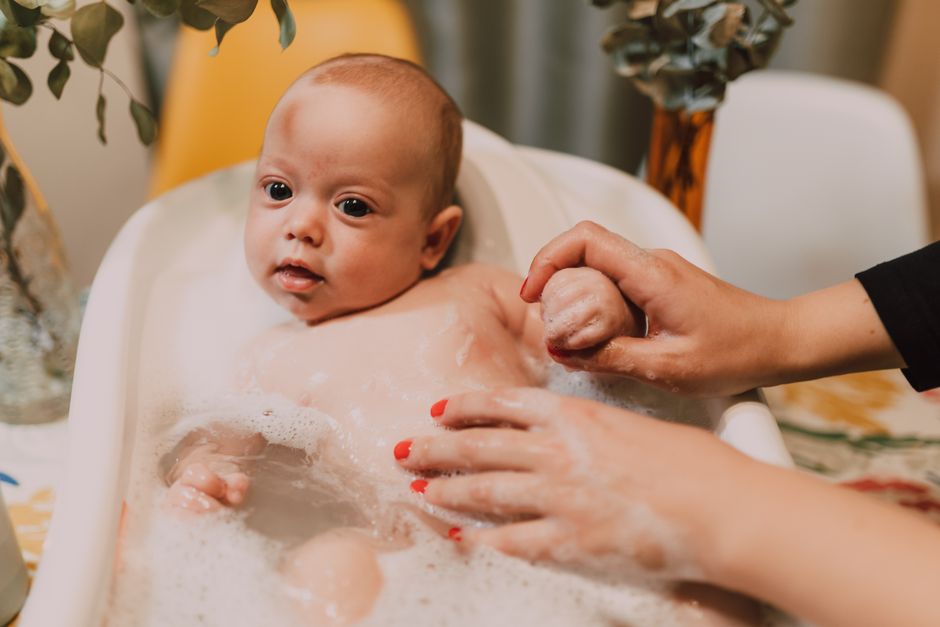
4. The Sibling Supervision Fallacy
Asking a 5-year-old or 7-year-old sibling to “watch the baby in the tub while I grab the pajamas” is a leading contributing factor to pediatric drowning incidents.
Young children lack the situational awareness, physical strength, and impulse control to rescue an infant. If the baby slips, an older sibling often freezes in panic, tries to pull them up incorrectly, or leaves the room to find a parent instead of lifting the baby immediately.
The Golden Rule: Touch Supervision
For children under 4 years old, the AAP mandates touch supervision—meaning an adult caregiver must remain within arm’s reach at all times, with eyes on the child and hands ready to intervene. When setting up nursery gear and baby items, make sure your baby’s sleep environment is equally secure by reviewing our baby gear regrets and safety essentials list.
5. Toxic Mold Inside Squirting Bath Toys
Those cute floating rubber ducks with tiny squeeze holes on the bottom are a breeding ground for pathogenic black mold and Pseudomonas bacteria.
       SQUIRTING BATH TOY CONTAMINATION CYCLE
   ┌────────────────────────────────────────────────────────┐
   │ Warm, soapy bath water enters the interior cavity      │
   │                    ▼                                   │
   │ Organic skin flakes & damp darkness fuel mold colonies │
   │                    ▼                                   │
   │ Baby squirts contaminated black sludge into eyes/mouth │
   │                    ▼                                   │
   │ Risk: Corneal eye infections, impetigo, and tummy bugs │
   └────────────────────────────────────────────────────────┘
Because the inside of these hollow rubber toys never dries completely, within 2 to 3 weeks a thick layer of toxic black biofilm develops inside. When the baby squeezes the toy into their eyes or mouth, it can cause severe bacterial conjunctivitis or intestinal infections. For a deep dive into the microbiology and testing data, read our complete guide on toxic black mold hazards in baby bath toys and safe alternatives.
The Non-Toxic Toy Solution:
- Discard hollow squirt toys once mold spores or dark biofilm appear.
- Choose one-piece molded silicone toys or twist-apart toys for thorough drying and dishwasher sanitizing.
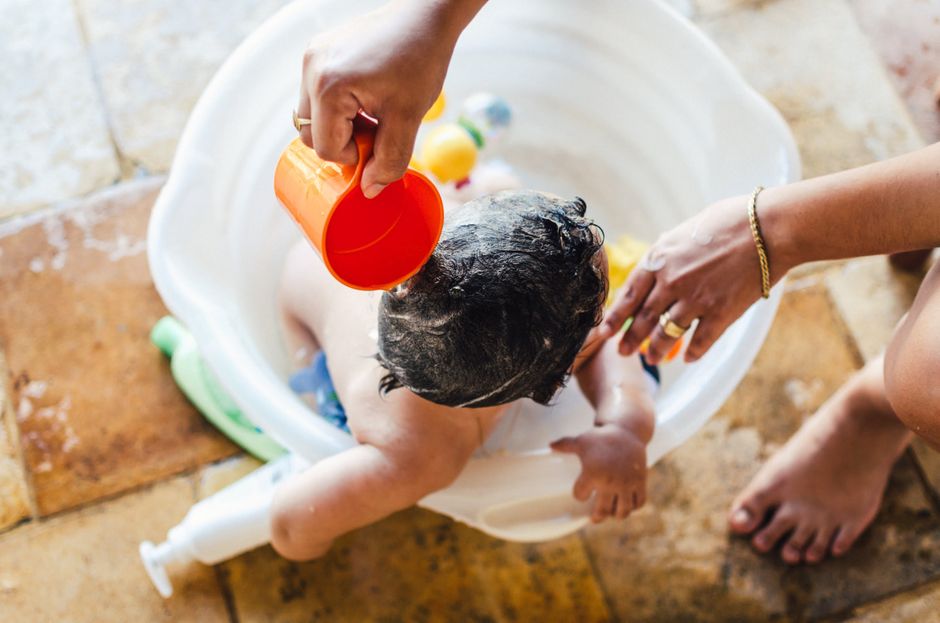
6. Slipperiness & Lack of Tub Floor Traction
Porcelain and acrylic bathtubs become as slick as ice when coated with baby wash, shampoo, and bath oil. An unsteady toddler standing up or an infant leaning forward can slip instantly, resulting in concussions, lacerations, or submersion.
Safety Fixes:
- Install a heavy-duty, machine-washable silicone non-slip bath mat with high-density suction cups across the entire tub floor.
- Avoid using bubble baths or baby bath oils during early infancy, as they degrade traction and can irritate the delicate urinary tract (causing chemical urethritis or UTIs).
7. Leaving Standing Water in the Tub After Bath Time
The bath safety routine does not end when your baby is dried and wrapped in a towel. Leaving a tub filled with water while you dress your child in the bedroom creates a fatal household drowning hazard for curious crawling babies and toddlers.
Toddlers are top-heavy; when they lean over the high rim of a standard bathtub to reach for a floating toy, their center of gravity shifts forward, and they topple headfirst into the water.
Post-Bath Safety Checklist:
- Pull the drain plug immediately before stepping away from the tub.
- Ensure all water has fully drained before leaving the bathroom.
- Install an exterior bathroom door knob child lock to prevent unattended toddlers from entering the bathroom.
Summary: The Pediatric Bath Safety Checklist
| Safety Pillar | Dangerous Habit ❌ | Doctor-Approved Protocol ✅ |
|---|---|---|
| Supervision | Stepping away for “10 seconds” or leaving sibling in charge | 100% uninterrupted adult touch supervision within arm’s reach |
| Water Temperature | Guessing by feel with water heater at 140°F | Water heater capped at 120°F; water tested at 98-100°F |
| Bath Devices | Suction-cup bath rings or floating seats | Ergonomic flat infant tub with non-slip sling |
| Water Filling | Adding hot water while baby is in the tub | Filling tub completely and testing temperature before placing baby |
| Bath Toys | Hollow squeeze toys holding dark trapped water | Solid one-piece silicone toys without holes |
| Tub Clean-up | Leaving standing water while dressing baby | Draining tub 100% immediately after bath |
Bath time is one of the sweetest bonding rituals of early parenthood. By implementing these straightforward, evidence-based safety standards, you create a joyful sanctuary where your baby can splash, explore, and thrive with total peace of mind.
Google AdSense Placeholder
Slot ready for "in-article". Set your AdSense publisher ID in settings when approved.
Frequently Asked Questions by Moms
What is the safest water temperature for a baby's bath? ▼
The optimal water temperature for an infant bath is between 98°F and 100°F (36.6°C to 37.8°C). Water above 104°F can cause severe third-degree scald burns within seconds on delicate infant skin.
Are suction-cup bath seats safe for infants? ▼
No. The American Academy of Pediatrics (AAP) and Consumer Product Safety Commission (CPSC) strongly advise against bath seats because the suction cups can release unexpectedly, trapping the baby underwater.
Can a baby drown in just two inches of bath water? ▼
Yes. Infants lack the upper body strength and motor coordination to lift their heavy heads if they slip forward. Drowning can occur silently in less than 2 inches of water in under 30 seconds.

Written by Sarah Collins
Doctor-Reviewed & Fact-CheckedMom of Two & Founder of Mommy Tips & Life
Sarah is a mother of two (Liam & Maya) sharing evidence-based parenting guides, infant sleep solutions, and baby safety alerts tested in real family life and vetted against AAP clinical standards.
Google AdSense Placeholder
Slot ready for "footer-banner". Set your AdSense publisher ID in settings when approved.