Why Hard-Sole Baby Shoes Are a Big Registry Regret: What Physical Therapists Recommend Instead
Buying cute stiff shoes for your baby? Discover why rigid soles hinder walking milestones, weaken arches, and what pediatric therapists suggest instead.
Sarah Collins
Mom of Two & Founder of Mommy Tips & Life
Google AdSense Placeholder
Slot ready for "header-banner". Set your AdSense publisher ID in settings when approved.
🩺 Medical Disclaimer: This guide is for educational purposes and should not replace pediatric or obstetric medical consultation.
🛍️ Affiliate Disclosure: We may earn a small commission when you purchase through our links at no extra cost to you.
When I was pregnant with my first child, Maya, building our baby registry was my favorite nesting hobby. Among the items at the top of my list were half a dozen pairs of miniature designer sneakers, tiny high-top basketball shoes, stiff leather loafers, and plush winter boots. They looked adorable sitting in a neat row on the nursery bookshelf.
Fast-forward twelve months: Maya was starting to pull herself up and take tentative cruising steps along the living room coffee table.
Excited to see her in her “big girl” footwear, I slipped on a pair of stiff, hard-soled mini-sneakers. The moment her feet touched the ground, Maya froze. She looked down in confusion, took two clumsy steps, tripped directly over her own stiff toes, and burst into tears. When she tried to move, she walked like a robot with concrete blocks strapped to her ankles.
That afternoon, our pediatric physical therapist gave me a reality check that changed how I viewed baby footwear forever: “Sarah, an infant’s foot isn’t a miniature adult foot. Putting stiff, rigid shoes on a pre-walker is the developmental equivalent of strapping wooden planks to their hands and asking them to play the piano.”
The Quick Breakthrough Summary: A baby’s foot is mostly soft, pliable cartilage packed with over 200,000 sensory nerve endings. Rigid, hard-soled shoes act like immobilizing casts—they block essential tactile floor feedback (proprioception), squeeze developing toes, and prevent the natural arch-strengthening grip reflex (very similar to the sensory blocking caused by baby knee pads for crawling). Once we ditched the stiff shoes, embraced 100% barefoot play indoors, and switched to ultra-flexible, wide-toe-box soft leather moccasins outdoors, Maya’s tripping vanished, and she began walking with joyful, natural balance.
Here is why hard-sole baby shoes are one of the biggest registry regrets—and what pediatric physical therapists and podiatrists actually recommend.
1. The Anatomy of an Infant Foot: Soft Cartilage vs. Adult Bone
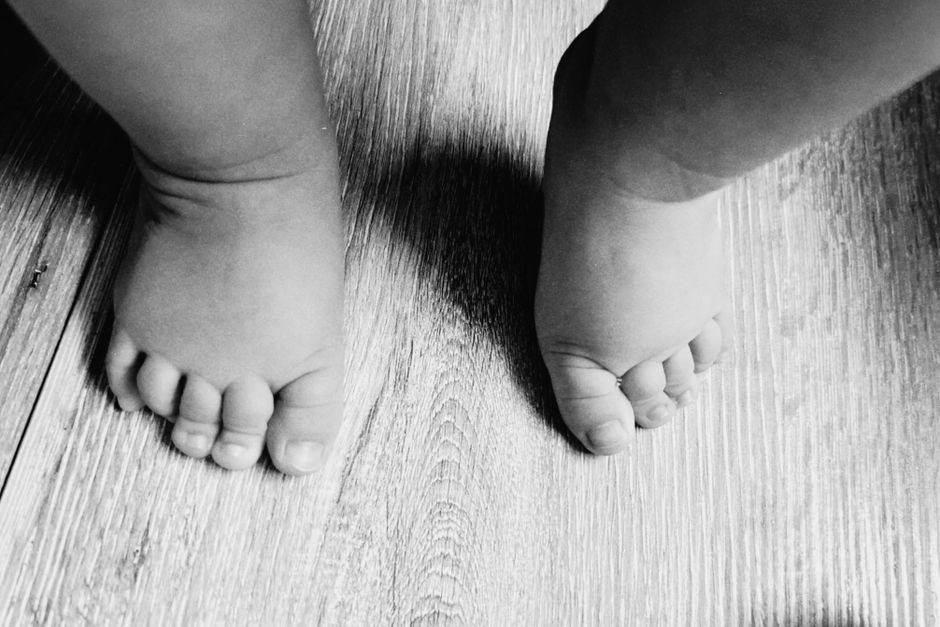
Adult feet contain 26 fully ossified bones connected by rigid ligaments. In contrast, when your baby is born, their feet contain almost zero solid bone.
   [ INFANT FOOT ANATOMY ]                      [ DANGEROUS RIGID SHOE IMPACT ]
   • Flexible, soft cartilage structure          • Acts like an immobilizing cast
   • 200,000+ sensory proprioceptive nerves      • Blinds brain to surface texture
   • Natural fat pad under arch                  • Atrophies intrinsic arch muscles
   • Wide fan-shaped toe splay                   • Compresses toes into bunion shapes ❌
The infant foot is a marvel of evolutionary engineering. The bones do not fully harden (ossify) until around age 6 to 8. During infancy and toddlerhood, the foot is pliable, moldable, and designed to expand and grip uneven surfaces to build the musculoskeletal foundation of the entire leg and spine.
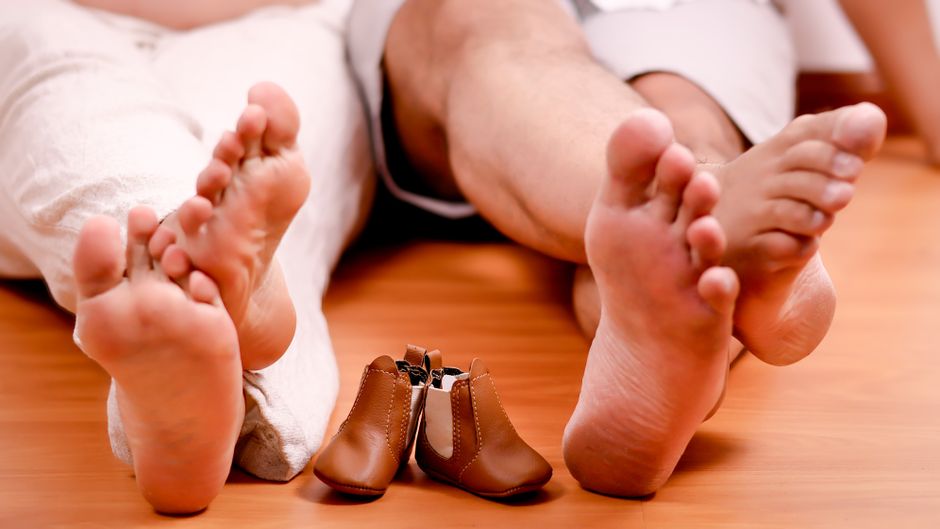
When you squeeze a soft, cartilage-based infant foot into a stiff leather shoe with a narrow toe box:
- The pliable bones are forced to conform to the shoe’s shape rather than growing naturally.
- Toe gripping is physically blocked, causing weak intrinsic flexor muscles.
- Gait mechanics are altered, forcing the child into an unnatural, wide-based robotic waddle.
To avoid other common shopping pitfalls and unnecessary nursery expenses, see our complete guide on popular baby registry items parents regret buying.
2. The Sensory Proprioception Blinding Effect (Why Stiff Soles Cause Tripping)
How does a baby learn balance? It doesn’t happen through visual calculation alone—it happens primarily through proprioception.
The soles of human feet have one of the highest concentrations of sensory nerve endings on the entire body. Every time your barefoot baby steps on carpet, wood, grass, or tile, these receptors send lightning-fast micro-signals to the brain:
Foot Senses Floor Angle ──► Spinal Cord / Brainstem ──► Instant Ankle & Core Micro-Adjustments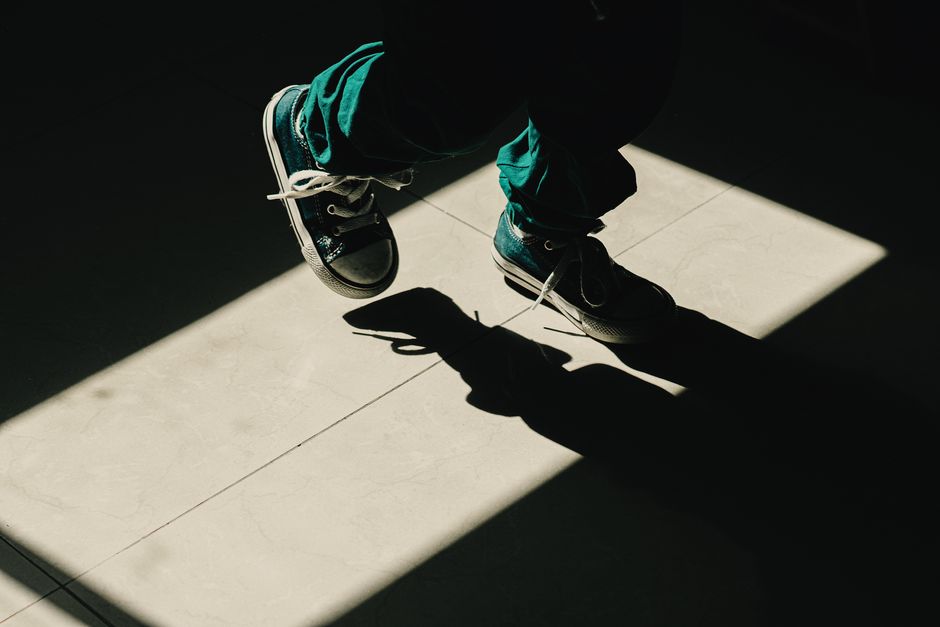
What Happens When You Add a Stiff, Thick Rubber Sole:
- Sensory Blinding: Thick rubber acts as an acoustic silencer, preventing the brain from feeling where the ground begins and ends.
- Toe Spring Tripping: Stiff shoes cannot bend at the ball of the foot (metatarsal joints). When taking a step, the rigid toe catches the floor, causing frequent stumbles and face-plants.
- Loss of Toe Gripping: Babies naturally curl and splay their toes like little suction cups for lateral stability. Rigid soles render toes useless.
If your baby is currently cruising or taking first steps, learn how to recognize normal gross motor variation in our guide on baby not walking at 15 months and physical therapy exercises.
3. The Arch Support Myth: Why Babies Are Born Flat-Footed
One of the most persistent commercial marketing myths is that babies need “supportive shoes with built-in arch cushions” to prevent fallen arches or flat feet.
Pediatric orthopedists confirm that all babies have flat feet—and that is 100% normal and healthy.
The Biology of the Infant Arch:
- The Protective Fat Pad: Every baby is born with a thick pad of fat on the medial side of their foot to protect fragile blood vessels and distribute body weight evenly during early standing.
- How True Arches Form: The longitudinal and transverse arches of the human foot are built by muscles and tendons contracting against gravity.
- The Support Trap: Placing an artificial arch pillow inside a baby shoe immobilizes the plantar fascia. If the shoe supports the arch, the muscles never have to work, resulting in permanently weakened foot musculature.
💡 Pediatric / Mom Tip: The best “arch support” on earth is running barefoot across uneven outdoor textures like soft grass, smooth sand, and garden dirt. This stimulates the plantar reflex and sculpts strong, resilient arches naturally.
4. The 3-Step “Taco Test” for Any First Walking Shoe
Before buying any baby or toddler shoe, perform the Pediatric PT 3-Step Test in the store:
   TEST 1: THE TACO ROLL
   Can you easily fold the shoe in half and twist it like a taco?
   • Rolls into a ball effortlessly? ──► APPROVED ✅
   • Resists or feels stiff? ────────► REJECT ❌

   TEST 2: WIDE TOE SPLAY
   Is the toe box shaped like a real human foot (wide fan) or an arrow?
   • Wide, rounded, fan-shaped? ──────► APPROVED ✅
   • Tapered, narrow, pointy? ────────► REJECT ❌

   TEST 3: ZERO-DROP HEEL
   Is the sole completely flat from heel to toe with zero elevation?
   • Flat zero-drop sole? ────────────► APPROVED ✅
   • Elevated cushioned heel? ────────► REJECT ❌
If a baby shoe has a thick rubber heel lift, it shifts your toddler’s center of gravity forward, forcing their pelvis into anterior tilt and promoting compensatory toe-walking habits.
⚠️ Warning Alert: Beware of other popular nursery equipment that alters natural lower body mechanics. Learn why baby walkers are banned by safety experts and delay walking, and avoid the risks of baby jumpers on infant hip dysplasia.
5. What Physical Therapists Recommend for Pre-Walkers and Toddlers
You do not need to spend $80 on miniature designer sneakers that will be outgrown in six weeks. Here is the pediatrician-approved footwear hierarchy:
Tier 1: 100% Barefoot (Gold Standard)
- Environment: Indoors at home, daycare carpet, safe backyard grass.
- Benefits: Maximum sensory input, flawless balance calibration, zero restriction on toe splay.
Tier 2: Non-Slip Gripper Socks
- Environment: Cold indoor hardwood or tile floors in winter.
- Features: Breathable cotton with silicone grip pads across the entire bottom sole to prevent slipping.
Tier 3: Soft-Sole Leather Moccasins
- Environment: Early outdoor exploration, grocery store trips, playgrounds.
- Features: Single-layer unlined genuine leather or suede soles (brands like Robeez, BirdRock Baby, or Starry Knight Design). They protect little soles from splinters and hot pavement while allowing full ground feel.
Tier 4: Minimalist Barefoot Toddler Shoes
- Environment: Confident walkers (walking independently for 3+ months) on asphalt, rocky trails, or in rainy weather.
- Features: 2mm-3mm ultra-flexible zero-drop rubber sole, wide toe box, lightweight canvas or mesh.
Also ensure your baby maintains proper postural alignment during mealtime by reviewing our guide on baby high chair posture and 90-degree footrest ergonomics.
Summary Comparison: Baby Footwear
| Shoe Feature | Dangerous / Regret Choice ❌ | Physical Therapist Approved ✅ |
|---|---|---|
| Indoor Wear | Wearing rigid sneakers indoors all day | 100% barefoot or non-slip silicone gripper socks |
| Sole Flexibility | Rigid, stiff rubber that cannot be bent | Ultra-pliable sole passing the 360° Taco Test |
| Toe Box Shape | Tapered, narrow fashion-forward toe box | Wide, rounded foot-shaped anatomical toe box |
| Arch Cushioning | Thick elevated artificial arch pillows | Flat, zero-drop footbeds that build natural strength |
| Heel Height | Elevated wedge or thick running shoe heel | Completely flat zero-drop heel-to-toe profile |
Your baby’s feet are masterpieces of natural balance. Save your registry budget for essential safety gear, leave those adorable stiff sneakers on the store shelf, and let those sweet little toes wiggle, grip, and run free!
Google AdSense Placeholder
Slot ready for "in-article". Set your AdSense publisher ID in settings when approved.
Frequently Asked Questions by Moms
When should babies start wearing hard-soled shoes? ▼
Babies do not need hard-soled shoes until they have been walking independently and confidently outdoors on rough, hot, or sharp terrain for at least 2 to 3 full months. For the first year of walking, ultra-flexible soft-soled shoes or barefoot play are strongly recommended by the American Academy of Pediatrics (AAP).
Do babies need shoes with arch support to prevent flat feet? ▼
No, this is an outdated myth. All infants are born with a natural protective fat pad on the soles of their feet that makes them appear flat-footed. Arches develop naturally through active muscle contraction, toe gripping, and weight-bearing on bare feet. Rigid arch supports weaken intrinsic foot muscles by doing the work for them.
What should I look for in a first walking shoe? ▼
Look for three essential features: (1) Maximum Flexibility (you can easily roll the shoe into a ball or taco shape), (2) Wide, Foot-Shaped Toe Box (allowing toes to splay freely without crowding), and (3) Zero-Drop Flat Soles (no elevated heel or thick cushioning that tilts posture forward).
Should my baby wear shoes indoors while learning to walk? ▼
No. Babies should be 100% barefoot indoors whenever possible. Direct contact between the sole of the foot and the floor provides crucial sensory proprioception to the brain, accelerates balance calibration, and strengthens ankle stabilizers.

Written by Sarah Collins
Doctor-Reviewed & Fact-CheckedMom of Two & Founder of Mommy Tips & Life
Sarah is a mother of two (Liam & Maya) sharing evidence-based parenting guides, infant sleep solutions, and baby safety alerts tested in real family life and vetted against AAP clinical standards.
Google AdSense Placeholder
Slot ready for "footer-banner". Set your AdSense publisher ID in settings when approved.