7 Hidden Baby Choking Hazards Around the House Most Parents Overlook
From button batteries to expanding water beads, discover 7 dangerous household choking hazards and the pediatrician-approved toilet paper tube safety test.
Sarah Collins
Mom of Two & Founder of Mommy Tips & Life

Google AdSense Placeholder
Slot ready for "header-banner". Set your AdSense publisher ID in settings when approved.
🩺 Medical Disclaimer: This guide is for educational purposes and should not replace pediatric or obstetric medical consultation.
🛍️ Affiliate Disclosure: We may earn a small commission when you purchase through our links at no extra cost to you.
It happened in less than four seconds. I had just finished vacuuming the rug, turned around to put away the laundry basket, and suddenly noticed an eerie, heavy silence in the living room. When I spun around, my ten-month-old was sitting quietly under the edge of the coffee table, chewing on something she had discovered under the sofa baseboard.
My heart plummeted into my stomach. When I gently swept her mouth, I pulled out a tiny lithium button battery from an old car key fob that had slipped between the floorboards months earlier. My hands shook uncontrollably for the rest of the day. We had spent hundreds of dollars on cabinet latches, corner guards, and outlet plugs, yet one of the deadliest items in our home was sitting right at crawler eye level.
The Quick Breakthrough Summary: Babies and toddlers explore their world orally; mouthing objects is an essential developmental milestone. Preventing devastating choking emergencies isn’t about sterilizing your home—it requires viewing your living space from a baby’s perspective. The solution rests on three core pillars: mastering the 1.25-inch “Toilet Paper Tube Rule”, conducting a monthly “Knees-and-Hands Floor Audit”, and strictly purging hidden high-risk items like water beads, loose button batteries, and whole un-sliced grapes.
Here is the comprehensive pediatric guide to the seven most dangerous, overlooked household choking hazards and how to safeguard your growing explorer.
1. The Golden “Toilet Paper Tube” Choke Standard (H2)
Before babyproofing individual rooms, parents need an objective metric for what constitutes a choking hazard. The trachea (windpipe) of an infant or toddler is roughly the diameter of their own pinky finger—about the size of a standard drinking straw.
How the Small Parts Cylinder Works (H3)
The Consumer Product Safety Commission (CPSC) uses a rigid test cylinder measuring 1.25 inches (3.17 cm) in diameter and 2.25 inches in depth.
               THE CPSC CHOKE TEST BENCHMARK
      [ Standard Toilet Paper Tube: 1.25" Diameter ]
                            ↓
   - If an object passes completely inside without force: ❌ CHOKING HAZARD
   - If an object is wider and cannot enter the tube:     ✅ AIRWAY SAFE
If any small toy, piece of pet food, or loose household item can slide entirely inside a cardboard toilet paper roll without being forced, it poses an immediate obstruction hazard for any child under three years old.
If you are currently setting up your baby’s nursery space, make sure you also review our guide on dangerous nursery items and hidden sleep hazards.

2. Hazard #1: Button Batteries & High-Powered Neodymium Magnets (H2)
While many parents know coins are hazardous, button batteries (found in remote controls, singing greeting cards, kitchen scales, and LED keychains) and tiny rare-earth neodymium magnets represent two of the most catastrophic objects a child can ingest.
The 2-Hour Tissue Necrosis Threat (H3)
When a button battery lodges in the moist esophagus, its residual electrical charge hydrolyzes bodily fluids, generating alkaline caustic hydroxide (essentially liquid drain cleaner). This creates severe chemical burns that can perforate the esophagus, vocal cords, and major aorta in as little as two hours.
Similarly, if a child swallows two or more high-powered magnets, they attract each other through intestinal walls, clamping delicate bowel loops together and causing rapid necrosis, bowel perforation, and life-threatening sepsis.
⚠️ Warning Alert: Tape all remote control battery compartments with heavy-duty electrical tape or store electronics in high cabinets. If you suspect your child swallowed a battery or magnet, go to an Emergency Department immediately—do not induce vomiting.
3. Hazard #2: Expanding Water Beads & Polymer Sensory Gel (H2)
Water beads (superabsorbent polymer balls) have surged in popularity as “sensory play” tools for toddlers. However, pediatric emergency rooms across the country have reported severe bowel obstructions from these seemingly innocent gel beads.
The Intestinal Obstruction Mechanism (H3)
When dry, water beads are the size of a pinhead and easily swallowed unnoticed. Once inside the digestive tract, they absorb stomach and intestinal fluids, expanding up to 100 times their original size.
Because they are radiolucent (invisible on standard X-rays), pediatric surgeons often struggle to locate the blockage until severe bowel ischemia occurs. For the complete medical warning and safe sensory swaps, read our full investigation on why water beads are dangerous for babies and toddlers. The CPSC and major retailers have strongly warned against having water beads in any home with infants or toddlers.
4. Hazard #3: High-Risk Food Shapes (Whole Grapes, Hot Dogs, Popcorn) (H2)
Over 50% of fatal choking incidents in young children involve food. The most dangerous foods are those that match the exact cylindrical shape and elasticity of an infant’s airway, acting like a rubber cork.
       DANGEROUS FOOD SHAPES               SAFE PEDIATRIC MODIFICATIONS
 [ Whole Grapes / Cherry Tomatoes ] ➔ Quartered Lengthwise into 4 Long Slivers
 [ Hot Dogs / Sausage Links ]       ➔ Sliced Lengthwise into Quarters, then Diced
 [ Whole Nuts / Hard Candies ]      ➔ Ground into Powders or Thinly Spread Butters
 [ Unpopped Popcorn Kernels ]       ➔ Avoid entirely until age 4+
Essential Slicing Protocols (H3)
- Grapes and Cherry Tomatoes: Never slice grapes horizontally into round circular discs (which create perfect airway plugs). Always slice them lengthwise into four long quarters.
- Hot Dogs and Sausages: Cut down the center lengthwise twice before slicing into tiny bite-sized cubes.
- Popcorn: The AAP advises avoiding popcorn completely until age 4 due to sharp husks and hard unpopped kernels that easily aspirate into bronchial lungs.
To learn the critical differences between normal protective gagging and silent choking during meals, see our baby-led weaning safety guide.
5. Hazard #4: Older Sibling Toys (Lego Bricks, Doll Accessories, Marbles) (H2)
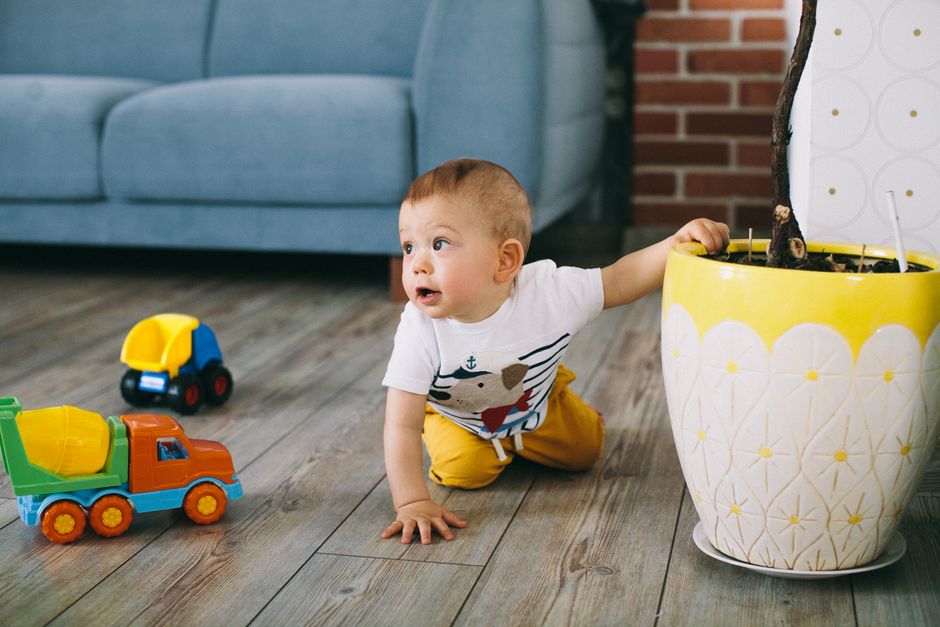
If you have a toddler or baby crawling alongside an older preschooler or elementary-aged child, older sibling toys are the #1 source of rogue choking hazards on floor surfaces.
Establishing the “Safe Play Zone” (H3)
Tiny Lego accessories, Barbie shoes, board game dice, and marbles frequently get dropped under beds, behind couch cushions, and inside carpet fibers.
- The High-Table Rule: Older siblings must keep small toys confined to raised dining tables or inside closed playpens where crawling infants cannot enter.
- The “Clean Sweep” Inspection: Use a flashlight held parallel to the floor at night; the low-angle light casts long shadows behind small dropped toys, making stray marbles and Lego bricks instantly visible.
If your toddler is also climbing furniture to reach high sibling shelves, make sure heavy furniture is bolted securely; read our furniture anchor and tip-over safety checklist.
6. Hazard #5: Deflated Latex Balloons & Plastic Film Wrappers (H2)
Many parents are surprised to learn that deflated or popped latex balloons are the leading cause of non-food choking deaths in children.
Why Latex Balloons Are Uniquely Deadly (H3)
When a child inhales a piece of smooth, pliable latex balloon or thin plastic cling wrap, the material conforms perfectly to the curvature of the larynx and vocal cords. Unlike rigid objects that can be dislodged with forceful back blows, pliable latex forms an airtight seal that acts like a one-way suction valve, making rescue breathing and Heimlich maneuvers extraordinarily difficult.
💡 Pediatric / Mom Tip: Replace traditional latex balloons with shiny Mylar foil balloons for birthdays, and immediately dispose of clear plastic produce bags and shrink wrap out of reach.
7. Hazard #6 & #7: Soft Foam Play Mats & Pet Kibble Dishes (H2)
Two final hazards frequently hide in plain sight: interlocking foam floor tiles and low pet food bowls.
- Interlocking Foam Floor Tiles: Teething babies love chewing on the soft EVA foam corners of colorful puzzle mats. With sharp incisors, infants can bite off dense foam chunks that do not dissolve and easily lodge in the throat.
- Pet Food Bowls: Hard, dry dog kibble is sized to fit animal jaws but matches the exact choking diameter for a 9-month-old infant. Keep pet feeding stations behind baby gates or elevated on sturdy stands.
While evaluating household safety, also remember to check water safety protocols; see our guide on infant bath time safety hazards and drowning prevention.

The 3-Step “Floor-Level” Safety Audit (H2)
Once a month, perform this simple 10-minute childproofing audit:
- Get Down on All Fours: Crawl across your living room, kitchen, and nursery at your baby’s exact eye height. Look underneath the refrigerator lip, under sofa skirts, and behind TV consoles.
- The Toilet Paper Roll Sweep: Place any loose object you find into an empty toilet paper roll. If it fits inside, put it in a locked high container.
- Equip and Refresh First Aid Skills: Ensure both parents and caregivers know CPR and the infant choking protocol (5 firm back blows followed by 5 chest thrusts).
Summary Checklist: Household Choking Hazards & Safe Swaps (H2)
| Household Item | Hidden Risk ❌ | Safe Pediatric Alternative ✅ |
|---|---|---|
| Grapes / Cherry Tomatoes | Round spherical shape corks windpipe | Slice lengthwise into 4 long quarters |
| Remotes & Key Fobs | Button batteries burn esophagus in 2 hrs | Tape compartments securely; store high |
| Sensory Water Beads | Expands 100x causing bowel obstruction | Use edible chia seed slime or oat flour |
| Latex Party Balloons | Conforms airtight to trachea | Use Mylar foil balloons or paper lanterns |
| Sibling Toys (Lego/Marbles) | Dropped under couch into crawl paths | Enforce high-table play and flashlight sweeps |
| Pet Kibble | Hard, dry nuggets block infant airway | Elevate pet bowls or feed behind baby gates |
By taking proactive, simple steps today and conducting regular floor sweeps, you can give your little explorer the freedom to crawl, discover, and learn in a safe, protected home environment!
Google AdSense Placeholder
Slot ready for "in-article". Set your AdSense publisher ID in settings when approved.
Frequently Asked Questions by Moms
What is the toilet paper tube test for baby choking hazards? ▼
The toilet paper roll test is a simple home safety benchmark that mimics the Consumer Product Safety Commission (CPSC) small parts cylinder. If any toy, food item, or household object fits completely inside the opening of a standard cardboard toilet paper tube (approximately 1.25 inches in diameter), it is small enough to block a baby or toddler's windpipe and must be kept strictly out of reach.
What should I do if my baby swallows a button battery? ▼
A swallowed button battery is an immediate, life-threatening medical emergency. When trapped in the esophagus, electrical current interacts with saliva to create caustic sodium hydroxide (lye), which can burn through tissue in as little as 2 hours. Go to the nearest pediatric emergency room immediately. If your child is over 12 months old, you can administer 2 teaspoons of honey every 10 minutes on the way to the hospital (up to 6 doses) to coat the battery and reduce tissue burns, per AAP clinical protocols.
What is the difference between gagging and choking? ▼
Gagging is a loud, active, protective reflex where your baby coughs, turns red, and brings food forward with retching noises. Choking is silent, terrifying, and dangerous—the airway is partially or fully blocked, meaning the child cannot cry, cough, or breathe, and their skin or lips may quickly turn blue.

Written by Sarah Collins
Doctor-Reviewed & Fact-CheckedMom of Two & Founder of Mommy Tips & Life
Sarah is a mother of two (Liam & Maya) sharing evidence-based parenting guides, infant sleep solutions, and baby safety alerts tested in real family life and vetted against AAP clinical standards.
Google AdSense Placeholder
Slot ready for "footer-banner". Set your AdSense publisher ID in settings when approved.