Why Weighted Sleep Sacks Are Dangerous: 5 Reasons Pediatricians Warn Against Them
Thinking of buying a weighted sleep sack? Discover why the AAP, CPSC, and pediatric sleep experts warn against weighted baby sleepwear and safe alternatives.
Sarah Collins
Mom of Two & Founder of Mommy Tips & Life
Google AdSense Placeholder
Slot ready for "header-banner". Set your AdSense publisher ID in settings when approved.
🩺 Medical Disclaimer: This guide is for educational purposes and should not replace pediatric or obstetric medical consultation.
🛍️ Affiliate Disclosure: We may earn a small commission when you purchase through our links at no extra cost to you.
When my second baby Maya was two months old and waking up every ninety minutes, targeted social media ads started bombarding my feed with promises of “10 hours of uninterrupted sleep.” Influencers swore by $90 weighted infant sleep sacks, claiming the gentle micro-glass beads mimicked “a mother’s comforting embrace on baby’s chest.”
Desperate for rest and running on two hours of broken sleep, I clicked “Buy Now.” But the first night I zipped Maya into that heavy sack, my maternal intuition went into overdrive. When I laid my hand on her chest, her breathing felt shallow, rapid, and labored under the concentrated weight. Watching her struggle to move her arms inside that heavy sack terrified me. I immediately unzipped her, threw the $90 sleep sack in the nursery trash, and began researching clinical medical data the very next morning.
The Upfront Breakthrough Summary: Weighted baby sleep sacks and swaddles are marketed as miraculous sleep aids, but the American Academy of Pediatrics (AAP) and the Consumer Product Safety Commission (CPSC) have issued urgent warnings against them. An infant’s ribcage is soft, flexible cartilage; placing physical weights on their chest causes thoracic compression, drops in blood oxygen saturation, and suppresses vital protective arousal reflexes. By switching to a standard lightweight, unweighted breathable sleep sack (1.0 TOG), optimizing her nursery wake windows, and using continuous white noise, Maya began sleeping 5-hour stretches safely without putting her life at risk.
1. The Anatomy of an Infant Ribcage: Why Added Weight is Dangerous
Adult weighted blankets have become popular for stress relief, leading parents to assume the same concept applies safely to infants. This assumption ignores fundamental infant physiology.
An infant’s chest wall is structurally distinct from an adult’s:
- Cartilaginous Ribcage: A baby’s ribs are composed of pliable cartilage rather than rigid calcified bone.
- Diaphragmatic Breathing: Infants rely almost entirely on diaphragm muscle contractions to expand their lungs.
[ Concentrated Weight Placed on Infant Chest ]
                      ⬇
[ Pliable Cartilage Ribcage Compressed Downward ]
                      ⬇
[ Increased Work of Breathing & Diaphragm Fatigue ]
                      ⬇
- If Left in Weighted Sacks: Lower Blood Oxygen Levels & Impaired Arousal ❌
- If Transitioned to Unweighted Wearable Blanket: Free Lung Expansion & Safe Sleep ✅
When even a few ounces of concentrated weight are placed across an infant’s chest, their work of breathing increases significantly. If their diaphragm tires, blood oxygen saturation (SpO2) drops, leading to silent hypoxemia.
For a complete list of other heavily marketed but unnecessary or risky baby gear, review our guide on popular baby registry items parents regret buying, why the FDA warns against dangerous infant sleep positioners and wedges, learn why the FDA also warns against dangerous infant head shaping pillows, how to handle babies waking when their pacifier falls out, and why pediatricians campaigned to ban dangerous wheeled baby walkers.

2. The 5 Reasons Pediatricians Warn Against Weighted Sleep Sacks
Here is the medical breakdown of why pediatric safety organizations urge parents to avoid weighted baby sleep products:
Reason #1: Thoracic Compression and Reduced Oxygen Levels
Clinical evaluations presented to the CPSC demonstrated that weighted sleepwear restricts natural ribcage excursion during sleep. In vulnerable or premature infants, this compression reduces tidal volume and impedes vital gas exchange in developing lungs.
Reason #2: Suppression of Protective Arousal Reflexes
Parents buy weighted sacks because their baby “sleeps so much deeper.” However, infant arousal from sleep is a critical biological survival mechanism:
- If an infant encounters airway obstruction, excess carbon dioxide, or an apnea episode, their brainstem must trigger an immediate arousal reflex to gasp and turn their head.
- Artificially suppressing this arousal mechanism with weighted pressure increases the risk of Sudden Infant Death Syndrome (SIDS).
⚠️ Warning Alert: In 2022, the American Academy of Pediatrics updated its Safe Sleep Policy Guidelines, stating: “Weighted swaddles, weighted sleep sacks, or weighted blankets should not be placed on or near the infant.”
Reason #3: The “Turtle on Its Back” Rolling Hazard
As infants approach 2 to 4 months of age, they begin attempting to roll:
- If a baby rolls onto their stomach while trapped inside a heavy, weighted garment, their arms and chest are pinned down by the gravitational drag of the weights.
- The infant is unable to push up, clear their airway, or roll back, creating an immediate positional asphyxiation emergency.
Reason #4: Dangerous Overheating (Hyperthermia)
Weighted sleep sacks typically feature dense multi-layered fabrics, padded baffles, and synthetic poly-pellets or glass beads that trap body heat against the infant’s skin. Overheating is one of the leading recognized external risk factors for sleep-related infant mortality.
Reason #5: Restriction of Natural Motor Movement
Infants need to kick, stretch their hips, and bring their hands to their mouth for natural self-soothing. Heavy garments restrict gross motor mobility and hip alignment. (Learn about ergonomic positioning in our guide on high chair posture and footrest mistakes).
3. Comparison: Weighted Sleep Sacks vs. Safe Sleepwear Alternatives
| Sleepwear Option | AAP Safety Rating | Key Risks or Benefits |
|---|---|---|
| Weighted Sleep Sacks | ❌ Unsafe / Advised Against | Thoracic compression, impaired arousal, rolling entrapment, overheating. |
| Weighted Swaddle Wraps | ❌ Unsafe / High Risk | Restricts chest expansion; dangerous if baby attempts rolling. |
| Standard Unweighted Sleep Sack | ✅ Pediatric Gold Standard | Replaces loose blankets safely; allows unrestricted chest & hip movement. |
| Breathable Cotton Swaddle (Arms-In) | ✅ Safe for Newborns (0-8 wks) | Snug startle-reflex comfort; must stop as soon as baby shows rolling signs. |
| Arms-Out Transition Sleep Bag | ✅ Safe for Active Rollers | Full arm mobility for pushing up while keeping baby warm. |
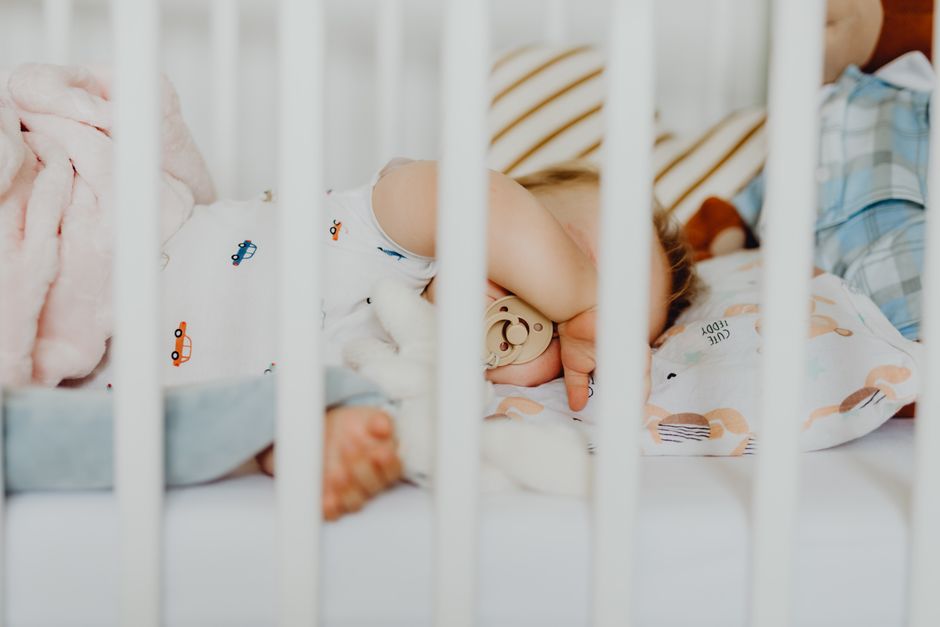
4. How to Help Your Baby Sleep Without Dangerous Gadgets
If you are feeling exhausted and were hoping a weighted sack would save your nights, take heart. Restful infant sleep does not require dangerous shortcuts:
- Follow the ABCs of Safe Sleep: Baby must sleep Alone, on their Back, in a bare Crib or bassinet with a firm, flat mattress. Avoid toxic chemicals and unsafe mattress covers and unhygienic wipe warmers that breed bacteria.
- Optimize Wake Windows: Prevent the overtired cortisol trap by putting your baby down at the first sign of tired cues.
- Master the Evening Wind-Down: Survive late-day fussiness with our gentle baby witching hour soothing strategies.
- Choose the Right TOG Rating:
- 0.5 TOG: For warm summer nurseries (74°F to 78°F / 23°C to 26°C).
- 1.0 TOG: For standard year-round nurseries (68°F to 72°F / 20°C to 22°C).
- 2.5 TOG: For chilly winter rooms (61°F to 67°F / 16°C to 19°C).
5. Confidence in Safe Sleep
As mothers, our deepest instinct is to protect our children while trying to survive the physical toll of sleep deprivation. Companies spend millions of marketing dollars exploiting that exhaustion by selling dangerous “magic fixes.”
Trust the medical science and trust your gut. A safe, simple, unweighted cotton sleep sack and a consistent, loving bedtime routine are everything your baby needs to drift off peacefully and safely.
Google AdSense Placeholder
Slot ready for "in-article". Set your AdSense publisher ID in settings when approved.
Frequently Asked Questions by Moms
Are weighted sleep sacks and swaddles safe for newborns and infants? ▼
No. The American Academy of Pediatrics (AAP), the US Consumer Product Safety Commission (CPSC), the CDC, and the National Institutes of Health (NIH) explicitly warn that weighted swaddles, weighted sleep sacks, and weighted blankets are NOT safe for infants and should never be used in any sleep environment.
Why do major retailers like Amazon, Target, and Walmart restrict weighted infant sleepwear? ▼
Following formal safety warnings from the CPSC and pediatric medical letters highlighting risks of thoracic compression, oxygen desaturation, and impaired infant arousal, major US retailers removed weighted infant sleep products from their online shelves and brick-and-mortar stores to protect infants from preventable suffocation.
What should my baby wear to sleep safely instead of a weighted sack? ▼
Dress your baby in a standard, unweighted, wearable sleep blanket (sleep sack) made of breathable cotton, bamboo, or wool, with a Thermal Overall Grade (TOG) rating matching your nursery room temperature (ideally between 68°F and 72°F / 20°C to 22°C).

Written by Sarah Collins
Doctor-Reviewed & Fact-CheckedMom of Two & Founder of Mommy Tips & Life
Sarah is a mother of two (Liam & Maya) sharing evidence-based parenting guides, infant sleep solutions, and baby safety alerts tested in real family life and vetted against AAP clinical standards.
Google AdSense Placeholder
Slot ready for "footer-banner". Set your AdSense publisher ID in settings when approved.