5 Newborn Sleep Mistakes Keeping Your Baby Awake and Overtired All Night
Is your baby fighting bedtime or waking every 45 minutes? Discover subtle wake window errors, false start triggers, and safe crib habits for peaceful nights.
Sarah Collins
Mom of Two & Founder of Mommy Tips & Life

Google AdSense Placeholder
Slot ready for "header-banner". Set your AdSense publisher ID in settings when approved.
🩺 Medical Disclaimer: This guide is for educational purposes and should not replace pediatric or obstetric medical consultation.
🛍️ Affiliate Disclosure: We may earn a small commission when you purchase through our links at no extra cost to you.
When my first daughter Maya was eight weeks old, bedtime felt like entering a nightly psychological endurance test. I would spend 45 minutes rocking, shushing, and swaying her into a limp, peaceful slumber. But the exact micro-second her head made contact with the crib mattress, her eyes would fly wide open, and she would let out a piercing shriek that shattered our fragile hope of rest.
By 3:30 AM, after walking miles of circles around our carpeted living room with aching arms and burning eyes, I hit rock bottom. I thought my baby was simply “broken” or that I lacked whatever magical maternal instinct other mothers possessed. What made it worse was following generic online advice telling me to “keep her awake longer during the day so she sleeps through the night.” That single myth almost broke my sanity.
The Quick Breakthrough Summary: The turning point arrived when our pediatric sleep specialist showed us that Maya wasn’t resisting sleep out of defiance—she was trapped in a state of severe neurochemical overtiredness. By tracking age-appropriate wake windows (putting her down before yawns appeared), instituting the 60-Second Active Sleep Pause before intervening, and aligning our nursery lighting with her infant circadian rhythm, we eliminated her nightly false starts within 4 days.
If your baby is also grunting, squirming, and waking in pain shortly after being laid flat, digestive issues may be colliding with sleep exhaustion. Explore our pediatrician-vetted guide on 5 baby colic and trapped gas mistakes and check for hidden signs of silent reflux. If your baby is already overtired and fighting bedtime with arching and screaming, read our step-by-step calming guide on calming overtired baby cortisol spikes, explore how to survive the baby witching hour, or learn how to stop baby false starts at bedtime.
Here is the complete, evidence-based breakdown of the 5 newborn sleep mistakes parents make most often—and the gentle adjustments to help your baby sleep peacefully tonight.
1. The Overtired Cortisol Trap (Missing the Subtle Sleepy Cues)
The most counter-intuitive truth of infant neurology is that sleep begets sleep, while over-tiredness produces wakefulness.
The Biological Mechanism of the “Second Wind”
When an adult gets tired, adenosine builds up, making eyelids heavy. But when an infant is pushed past their optimal biological wake window, their brain secretes a surge of cortisol (the stress hormone) and adrenaline.
This chemical rush artificially stimulates the nervous system, placing the infant in a hyper-aroused “fight-or-flight” state. At this point, the baby will fight rocking, scream during swaddling, and thrash in your arms.
[ Wake Window Exceeded (e.g., 90+ min for a 6-week-old) ]
                         ⬇
[ Adrenal Glands Release Cortisol & Adrenaline ]
                         ⬇
[ Infant Nervous System Enters Fight-or-Flight ]
                         ⬇
[ Screaming Bedtime Battles & 45-Minute False Starts ]
Newborn Wake Windows by Age
| Age | Optimal Wake Window | Maximum Tolerance |
|---|---|---|
| 0 – 4 Weeks | 35 – 60 minutes | 60 minutes |
| 5 – 8 Weeks | 45 – 75 minutes | 80 minutes |
| 9 – 12 Weeks | 60 – 90 minutes | 90 minutes |
| 3 – 4 Months | 75 – 100 minutes | 110 minutes |
💡 Pediatric / Mom Tip: Do not wait for late sleepy cues like yawning, eye-rubbing, or fussy crying. Early sleepy cues include a vacant “thousand-yard stare,” calming down in movement, turning their head away from stimuli, or slight redness around the eyebrows.

2. Intercepting “Active Sleep” (The 60-Second Pause)
One of the biggest reasons parents feel their newborns wake every 30 minutes is that adults misinterpret normal infant sleep cycles.
Active (REM) Sleep vs. Quiet (Deep) Sleep
Adults spend only 20% of their sleep in REM, while newborns spend over 50% of their sleep cycle in active REM sleep. During active sleep, your baby’s brain is forging millions of neural synapses.
During active sleep, babies:
- Grunt, squeak, and sigh loudly.
- Twitch their arms, legs, and facial muscles.
- Breathe rapidly for 10 seconds, then slowly (periodic breathing).
- Flutter their eyelids or briefly open them before closing them again.
The Cost of Rushing In
When an anxious parent hears a loud grunt or sees eyelids flicker, their immediate instinct is to scoop the baby out of the crib. This scoop accidentally wakes a sleeping baby. You have inadvertently interrupted their natural biological transition from REM sleep into deep restorative non-REM sleep. (For a complete checklist of noisy sleep signs vs. true wakefulness, check out our guide on active sleep vs. awake newborn sleep mistakes).
⚠️ Warning Alert: When your baby begins grunting or moving in the crib, stop and count to 60 seconds before picking them up. If their eyes remain closed or they settle back down, they were never awake—they were merely navigating active sleep.
3. The 45-Minute “False Start” Bedtime Trap
Does your baby fall asleep peacefully at 7:00 PM, only to wake up screaming at 7:45 PM as if bedtime was merely a 45-minute catnap?
Why False Starts Happen
A false start is almost always caused by one of two structural scheduling errors:
- The Last Wake Window Was Too Long: The baby was overtired when going down, causing elevated cortisol to wake them at the end of their first 45-minute sleep cycle.
- Circadian Rhythm Lighting Errors: Exposing an infant to artificial overhead blue/white light during evening feeds suppresses their developing pineal gland from producing melatonin.
How to Fix Evening False Starts
- Cap the Final Nap: Ensure the last nap of the day ends at least 60 to 90 minutes before bedtime so sleep pressure has time to build naturally.
- Dim the Lights by 6:00 PM: Use low, warm-toned amber or red nightlights during the bedtime routine and all nighttime feedings. (If your baby sleeps all afternoon and parties past midnight, follow our step-by-step reset for newborn day-night confusion).
- Protect the Nursery Safe Zone: Check that your nursery layout avoids dangerous hazards, as detailed in our guide to hidden nursery safety hazards and toxic crib products.
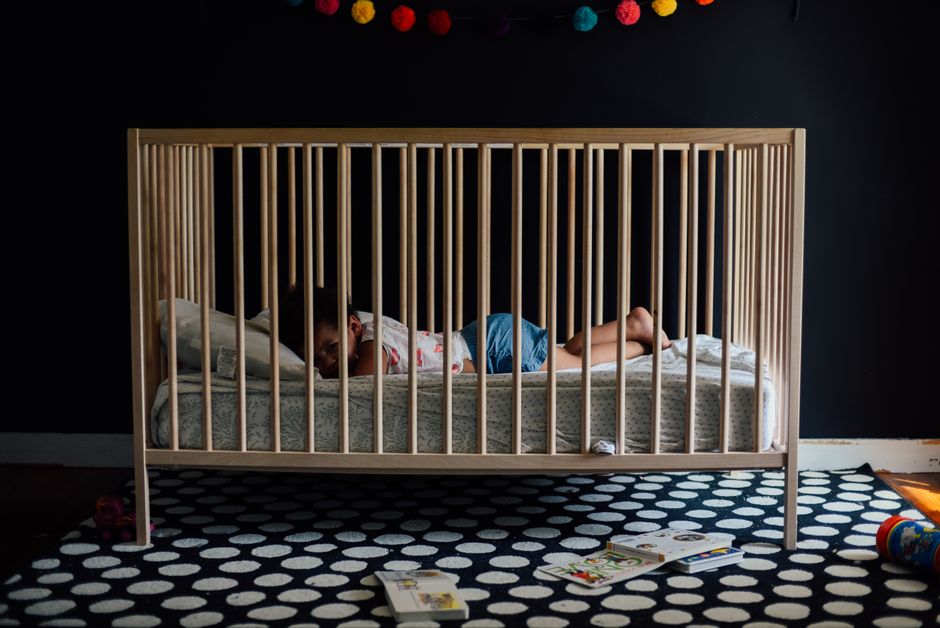
4. Nursery Environmental Traps (Noise, Light & Thermal Overheating)
Creating a soothing sleep sanctuary requires dialing in specific environmental variables that mimic the womb.
Temperature Overheating Risks
Parents often worry about their baby being cold and bundle them in fleece footies, heavy swaddles, and hats. Overheating not only causes frequent nocturnal wakefulness and night sweats but is also a major risk factor for Sudden Infant Death Syndrome (SIDS).
- Optimal Room Temperature: Maintain the nursery between 68°F and 72°F (20°C – 22°C).
- The Chest Check: Never assess temperature by feeling a baby’s hands or feet (which have immature circulation and naturally feel cool). Place two fingers on the back of their neck or chest; their skin should feel pleasantly warm and dry, never hot or clammy.
Continuous Pink/White Noise Placement
- In the womb, blood rushing through maternal arteries creates an ambient whoosh louder than a vacuum cleaner (around 80–85 dB).
- Place a continuous white or pink noise machine at least 7 feet away from the crib, set to approximately 50 to 60 dB (the level of a gentle shower). Do not use intermittent timers that turn off after 30 minutes, as the sudden silence will jar the baby awake.
5. The Dangerous Inclined Sleeper Trap & Safe Sleep Essentials
When exhaustion peaks at 3:00 AM, it is tempting to let a sleeping baby remain in a swing, car seat, bouncer, or inclined lounger.
Positional Asphyxiation Mechanics
Infants have heavy heads and weak cervical neck muscles. When placed at an incline (greater than 10 degrees), an infant’s chin can easily droop forward onto their chest. This position can compress the soft trachea, obstructing airflow silently without any loud gasping or choking sounds.
[ Baby Sleeping at an Incline (>10°) ]
                 ⬇
[ Heavy Head Rolls Forward Onto Chest ]
                 ⬇
[ Trachea Compresses (Positional Asphyxiation) ]
                 ⬇
[ Silent Oxygen Deprivation ]
SAFE SLEEP ESSENTIALS (AAP GUIDELINES):
✔ Alone in their own sleep space (no co-sleeping on sofas or soft beds)
✔ On their Back for every single sleep (naps and night)
✔ Firm, flat mattress with a snug fitted sheet
✔ Zero pillows, quilts, loose blankets, or crib bumper pads
✔ Sleep sacks / wearable blankets instead of loose swaddle blankets
Newborn Sleep Strategy Summary
| Sleep Element | Common Mistake ❌ | Evidence-Based Strategy ✅ |
|---|---|---|
| Wake Window Timing | Waiting for screaming or eye rubbing | Putting down at early subtle cues (blank stare, turning away) |
| Active Sleep | Scooping baby up at first grunt or squirm | 60-Second pause to allow transition into deep sleep |
| Bedtime Routine | Bright overhead lighting during evening feeds | Dim amber lighting 60 min before bedtime to support melatonin |
| Nursery Climate | Overbundling with fleece and hats indoors | 68°F–72°F (20°C–22°C) with breathable cotton sleep sack |
| Sleep Surface | Letting baby sleep in swings or inclined wedges | Flat, firm crib mattress adhering strictly to AAP safe sleep |
Sarah’s Reassuring Takeaway
If your nights feel overwhelming right now, take a deep breath. You are not a bad mother, and your baby is not intentionally testing you. Newborn sleep is a rapidly evolving developmental milestone, not a test of your parenting competence.
By paying attention to biological wake windows, honoring the 60-second pause during active sleep, and maintaining a calm, safe sleep environment, you will give your baby the gentle structure they need to thrive.
Disclaimer: This article is for informational purposes only and does not replace professional medical guidance. Always consult your pediatrician regarding any infant sleep safety, breathing concerns, or persistent nighttime distress.
Google AdSense Placeholder
Slot ready for "in-article". Set your AdSense publisher ID in settings when approved.
Frequently Asked Questions by Moms
Why do newborns fight sleep when they are exhausted? ▼
When an infant remains awake past their biological wake window, their immature brain perceives exhaustion as an emergency. The adrenal glands flood their bloodstream with cortisol and adrenaline, triggering a fight-or-flight state that elevates heart rate and makes calming down neurologically difficult.
What is newborn active sleep and why is it often misunderstood? ▼
Newborns spend approximately 50% of their sleep cycle in active (REM) sleep. During this phase, they frequently grunt, whimper, twitch, breathe irregularly, and even briefly open their eyes while remaining completely asleep. Rushing to pick them up interrupts their natural transition into deep sleep.
What causes a 'false start' 30 to 45 minutes after bedtime? ▼
A false start occurs when a baby treats bedtime like a short nap, waking up fully alert within 30 to 45 minutes. It is primarily triggered by severe overtiredness, a misplaced last nap too close to bedtime, or a nursery environment with excessive evening blue light.
What are the safe sleep guidelines recommended by the AAP? ▼
The American Academy of Pediatrics (AAP) recommends the ABCs of safe sleep: Alone, on their Back, in an empty Crib or bassinet with a firm, flat mattress and tight-fitting sheet, free of pillows, blankets, bumpers, stuffed animals, or positioners.

Written by Sarah Collins
Doctor-Reviewed & Fact-CheckedMom of Two & Founder of Mommy Tips & Life
Sarah is a mother of two (Liam & Maya) sharing evidence-based parenting guides, infant sleep solutions, and baby safety alerts tested in real family life and vetted against AAP clinical standards.
Google AdSense Placeholder
Slot ready for "footer-banner". Set your AdSense publisher ID in settings when approved.