Baby Gate Safety: 5 Dangerous Stair & Doorway Mistakes Most Parents Make
Did you know pressure-mounted gates at the top of stairs cause hundreds of infant emergency room visits each year? Learn critical baby gate safety rules and CPSC guidelines.
Sarah Collins
Mom of Two & Founder of Mommy Tips & Life
Google AdSense Placeholder
Slot ready for "header-banner". Set your AdSense publisher ID in settings when approved.
🩺 Medical Disclaimer: This guide is for educational purposes and should not replace pediatric or obstetric medical consultation.
🛍️ Affiliate Disclosure: We may earn a small commission when you purchase through our links at no extra cost to you.
The sound that echoed through our hallway that Saturday morning still makes my stomach drop into my shoes. My ten-month-old daughter Maya had just learned to pull herself up to a standing position. I was folding laundry five feet away when she waddled over to the baby gate at the top of our second-floor staircase and leaned her entire body weight against the mesh panel to peer over.
There was a sudden, sickening crunch. The pressure-mounted tension pads slipped half an inch along the drywall. The gate tilted violently forward over the top step. I lunged across the floor, catching Maya by the waistband of her pants just as the gate gave way. We both ended up in a sobbing heap on the hallway rug.
I was shaken to my core and furious at myself. I had bought a popular, highly rated gate online, assuming that “pressure-fit” meant safe anywhere in the house. I had no idea that I had violated the #1 cardinal rule of infant fall prevention. That afternoon, my husband and I overhauled our entire home childproofing system, replacing high-risk shortcuts with CPSC-compliant, hardware-anchored gate engineering.
1. Using Pressure-Mounted Gates at the Top of the Stairs (The #1 Fall Hazard)
According to data from the Consumer Product Safety Commission (CPSC), thousands of children under the age of two are treated in emergency rooms annually for stair-fall injuries involving improperly installed safety gates.
The most catastrophic mistake is installing a pressure-mounted gate at the top of any staircase.
[ Infant Pushes or Rattles Pressure Gate ]
                  ⬇
[ Drywall & Baseboard Friction Fails ]
                  ⬇
[ Entire Gate Dislodges Over Top Step ] ➔ Severe Fall & Head Trauma ❌
Pressure gates rely solely on wall friction and rubber tension cups. As children grow into toddlers, their pushing force easily exceeds the friction threshold.
The Golden Rule of Gate Mounting
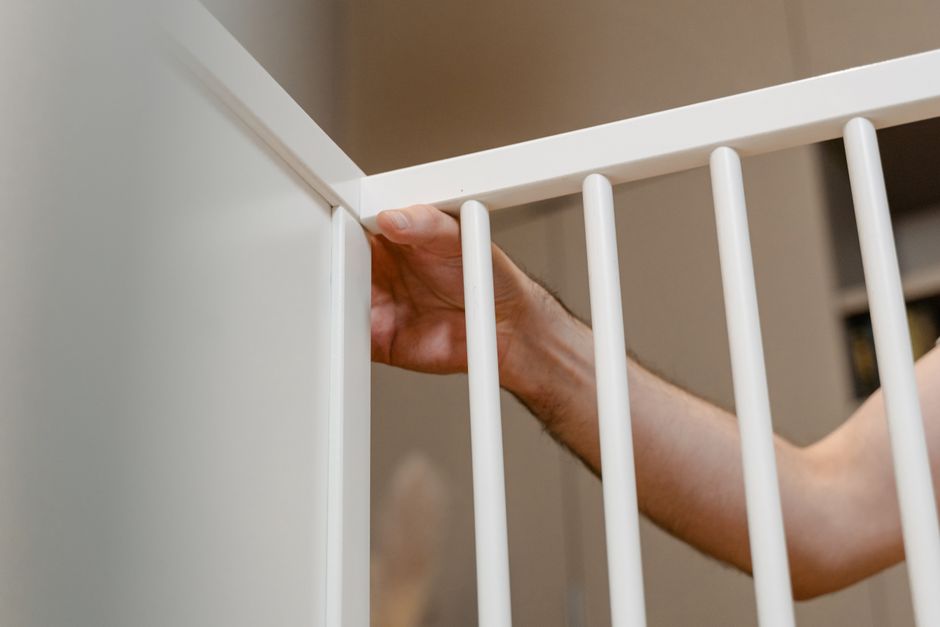
- Top of Stairs: MUST be Hardware-Mounted (screwed directly into solid wall studs or heavy wood newel posts with heavy-duty anchors).
- Bottom of Stairs & Level Doorways: Pressure-mounted gates are acceptable only where a failure results in a flat-floor tumble rather than a vertical drop.
⚠️ Warning Alert: If you have drywall at the top of your stairs without an immediate wood stud, do not rely on plastic drywall anchors. Fasten a 1x2 solid wood mounting board directly into the nearest wall studs, and screw the gate hardware directly into that solid backing.
2. Ignoring the Bottom “Trip Bar” Hazard
Many modern swing-through pressure gates feature a fixed metal threshold bar running along the floor beneath the swinging door.
While acceptable in flat hallway doorways between the kitchen and living room, installing a bottom-bar gate at the top of a staircase creates an extreme trip hazard for parents carrying laundry, diaper bags, or the baby themselves.
Parent Stepping Through Top of Stairs ➡️ Toe Catches Fixed Floor Bar ➡️ Catastrophic FallHardware-mounted top-of-stairs gates are specifically engineered without a bottom threshold bar, leaving the walking path completely flush and flat with the landing.
3. Installing Gates That Swing Outward Over the Staircase
When installing a swing gate at the top landing, the swing direction is a critical safety parameter.
If the gate is installed to swing open outward toward the staircase steps:
- If a toddler leans on the gate and the latch is only 90% engaged, the door swings outward into open air, catapulting the child down the stairs.
- A caregiver standing on the top step cannot safely open the gate without having to step backward onto dangerous lower steps.

💡 Pediatric / Mom Tip: Always set the one-way safety stop bracket so the gate can only swing inward toward the landing. This ensures that even if a child pushes hard against the closed gate, their body weight pushes the door deeper into the solid frame latch.
4. Dangerous Spacing: Gaps Underneath and Beside the Gate
A properly certified safety gate (meeting ASTM F1004 standards) must have vertical slat openings no wider than 2 3/8 inches (6 cm) to prevent infant head entrapment.
However, parents frequently make two measurement errors during DIY installation:
The Floor Clearance Gap
Leaving more than 3 inches of clearance between the bottom rail of the gate and the floor. An active crawling infant can wedge their head or torso underneath the gate, creating severe suffocation and entrapment risks.
The Side Spindle Gap
Leaving wide gaps between the outermost spindle and the wall or baluster. If the gap exceeds 3 inches, curious toddlers will attempt to squeeze their limbs through.
While securing stairways, ensure you also address other heavy furniture risks by reviewing our step-by-step guide on anchoring heavy dressers and bookcases against tip-overs.
5. Horizontal Bars and Nearby “Climbing Steps”
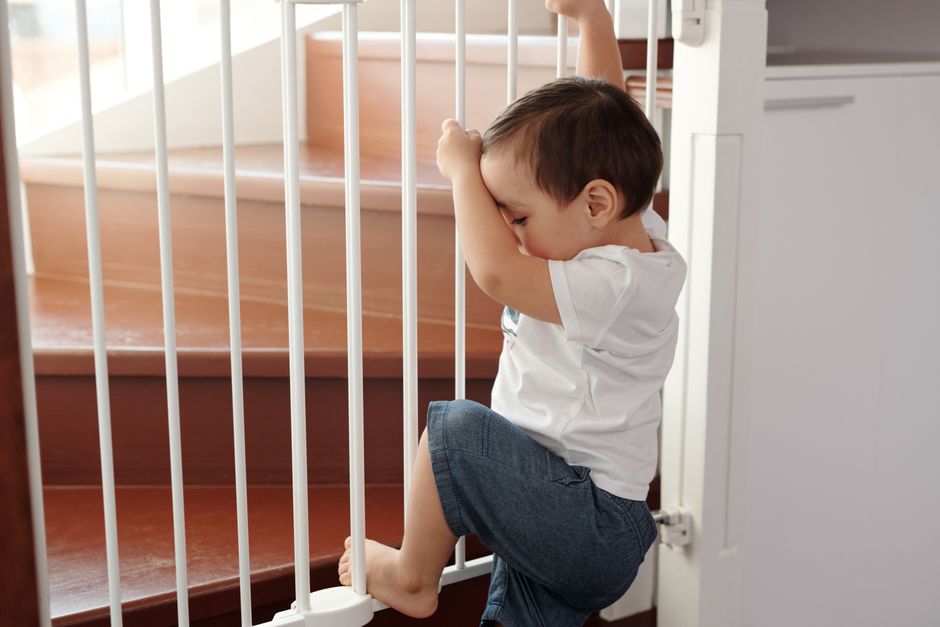
Toddlers are natural mountaineers. If your baby gate features horizontal slats, decorative crossbars, or foot-rungs, a 15-month-old will use them as a ladder to vault over the top.
Similarly, placing toy bins, stools, laundry hampers, or decorative planters within two feet of a safety gate gives toddlers a launchpad to bypass the gate entirely.

Safe Gate Checklist for Every Room
- Top-of-stairs gate is screwed directly into wall studs (Hardware-Mounted).
- No bottom trip-bar exists on the top landing gate.
- Gate door swings inward toward the hallway only.
- Gap between bottom rail and floor is less than 2 inches.
- All furniture, toy bins, and climbable items are placed at least 3 feet away.
- For additional nursery safety guidelines, check our guide to uncovering dangerous and recalled nursery products and preventing household choking hazards.
Summary: Dangerous Shortcuts vs. Safe Baby Gate Standards
| Installation Shortcut ❌ | Safe Pediatric Standard ✅ |
|---|---|
| Pressure-mounted gate at top of stairs to avoid drilling holes in drywall. | Hardware-mounted gate bolted into studs; wall patch kits easily fix holes later. |
| Gates with bottom threshold bars placed at the edge of stair landings. | Flush-walkthrough gates without bottom bars at all upper-level staircase openings. |
| Allowing gate to swing outward over the open stairwell. | Locking one-way hinge stop so gate opens only toward the interior landing. |
| Bottom floor gap > 3 inches to clear tall decorative baseboards. | Adjustable baseboard spacer kit maintaining under-gate gap below 2 inches. |
| Toy boxes and stools placed right next to the gate. | Maintaining a 3-foot clear zone on both sides of every safety gate. |
Peace of Mind Is Worth the Drill Holes
Drilling holes into your pristine baseboards or banisters might make you wince for ten seconds, but seeing a securely bolted steel gate withstand the full force of a rambunctious toddler is priceless.
Take an hour this weekend to inspect every safety barrier in your home, check the latches, eliminate trip hazards, and ensure your little explorer stays safely protected on level ground!
Google AdSense Placeholder
Slot ready for "in-article". Set your AdSense publisher ID in settings when approved.
Frequently Asked Questions by Moms
Can I use a pressure-mounted baby gate at the top of stairs? ▼
No, never. The American Academy of Pediatrics (AAP) and Consumer Product Safety Commission (CPSC) strictly prohibit pressure-mounted gates at the top of stairs. An infant leaning or pushing against them can dislodge the tension pads, causing the baby and gate to tumble down the entire flight.
Which direction should a top-of-stairs baby gate swing? ▼
A top-of-stairs gate must always swing inward toward the landing or hallway, NEVER outward over the stairs. An outward-swinging gate creates a severe fall hazard if a child leans against a partially latched door.
At what age should you stop using baby gates? ▼
Most safety gates are certified for children between 6 months and 24 months (2 years old). Once a child is tall enough (over 36 inches) or has learned how to climb over or manipulate the latch, gates can become a hazardous climbing obstacle and should be retired in favor of supervised stair practice.

Written by Sarah Collins
Doctor-Reviewed & Fact-CheckedMom of Two & Founder of Mommy Tips & Life
Sarah is a mother of two (Liam & Maya) sharing evidence-based parenting guides, infant sleep solutions, and baby safety alerts tested in real family life and vetted against AAP clinical standards.
Google AdSense Placeholder
Slot ready for "footer-banner". Set your AdSense publisher ID in settings when approved.