5 Dangerous Car Seat Safety Mistakes Most Parents Make (Winter Coats, Chest Clips & Slump Traps)
Over 80% of car seats are installed or used incorrectly. Discover the hidden dangers of bulky winter coats, improper chest clip placement, and positional asphyxiation slumping.
Sarah Collins
Mom of Two & Founder of Mommy Tips & Life

Google AdSense Placeholder
Slot ready for "header-banner". Set your AdSense publisher ID in settings when approved.
🩺 Medical Disclaimer: This guide is for educational purposes and should not replace pediatric or obstetric medical consultation.
🛍️ Affiliate Disclosure: We may earn a small commission when you purchase through our links at no extra cost to you.
On a freezing January morning when Lucas was three months old, I bundled him up in an adorable, ultra-fluffy sherpa puffer jumpsuit before buckling him into his infant car seat. I pulled the harness snug against his puffy chest, clicked the buckles into place, and felt proud of how cozy and warm he looked. We were driving down the highway when a sudden hydroplaning truck forced the car ahead of us to slam on its brakes. I hit the brake pedal with all my weight, screeching to a halt inches from disaster.
My heart was pounding in my throat as I turned around to check on Lucas. To my horror, the force of the sudden deceleration had compressed the fluffy air out of his suit—his little shoulders had slipped completely out of the harness straps, and he was slumped sideways, held only by the bottom crotch buckle. A wave of cold nausea washed over me. Had we actually impacted that car, my baby would have been hurled out of his seat.
That chilling morning led me directly to a certified Child Passenger Safety Technician (CPST). She demonstrated that over 80% of car seats are used or installed with critical safety errors. The solution didn’t require buying an expensive new seat—it was about following non-negotiable CPST protocols: the Pinch Test, the Armpit-Level Rule, and keeping bulky outerwear outside of the harness. If you want to audit other hidden dangers in your home, check our room-by-room guide on dangerous nursery items and hidden baby safety hazards.
The Physics of Infant Crash Dynamics & Car Seat Restraints
Infants and toddlers are anatomically vulnerable in high-speed vehicles. A baby’s head accounts for 25% of their total body weight, compared to only 6% in adults, while their cervical vertebrae are connected only by soft cartilage rather than fused bone.

During a crash, the laws of physics dictate that everything inside the vehicle continues traveling forward at the pre-crash speed until acted upon by an external force:
- Rear-Facing Protection: A rear-facing car seat cradles the infant’s heavy head, neck, and torso, distributing crash forces evenly across the strong shell of the seat rather than focusing tension on fragile neck ligaments.
- 5-Point Harness Dispersion: The harness transfers kinetic energy to the strongest skeletal contact points: the pelvis and clavicles.
- The Compression Danger: Any compressible material between the baby and the harness creates artificial space. In a 30-mph collision, that empty space magnifies crash forces exponentially.
5 Dangerous Car Seat Mistakes Most Parents Make
1. Buckling Baby in Bulky Puffy Coats or Snowsuits
When you strap a child into a car seat wearing a puffy winter jacket, the harness feels tight because the synthetic down creates bulky friction against your hands.
However, under the sudden gravitational forces of a crash, the weight of the child instantly compresses all that trapped air down to paper-thin thickness. This introduces 2 to 4 inches of harness slack, which can result in catastrophic spinal trauma or ejection. For a complete crash-test breakdown, read our in-depth investigation on why puffy coats make car seat harnesses deadly and how to perform the pinch test.

The Safe Winter Car Seat Protocol:
- Dress baby in thin, snug layers (fleece footie, long-sleeve onesie, leggings).
- Buckle and tighten the harness snugly against their body until it passes the Pinch Test.
- Tuck a warm blanket or their winter coat backwards over the top of the buckled harness once they are secured.
2. The Low Chest Clip Hazard (Abdominal Trauma)
The chest clip is designed to keep the shoulder straps positioned correctly over the collarbones. However, in many vehicles, the chest clip inadvertently slides down over the child’s soft belly.
In a collision, a chest clip resting on the abdomen acts as a blunt wedge, crushing the liver, spleen, and intestines against the spine.
💡 Pediatric / Mom Tip: The chest clip belongs strictly at armpit level (aligned with the child’s nipple line). Always double-check its height after pulling the harness adjustment strap.
3. Positional Asphyxiation from the “Chin-to-Chest” Slump
Infants under 4 months lack the neck muscle strength to lift their heavy heads if they slump forward. If an infant car seat is installed at too steep an upright angle, gravity pulls the baby’s head forward until their chin presses against their sternum.
This position physically keps the soft trachea closed, cutting off oxygen silently without the baby ever coughing or crying out.
⚠️ Warning Alert: Never let a baby sleep unmonitored in an infant car seat placed on the floor, couch, or table outside the car. On a flat floor, the seat sits at a steep, hazardous angle—read our urgent breakdown on why letting a baby sleep in a car seat outside the car triggers positional asphyxiation. Also ensure household safety during bath time with our guide on 7 baby bath safety hazards most parents miss.
4. Failing the 1-Inch Base Movement Rule
A car seat should never wiggle loosely across the vehicle bench. Many parents use either the vehicle seatbelt or the lower LATCH anchors, but fail to compress the car seat into the vehicle upholstery during installation.
The 1-Inch Test:
- Grab the car seat shell at the belt path (where the seatbelt or LATCH strap passes through).
- Pull firmly side-to-side and front-to-back with the strength of a firm handshake.
- If the base moves more than 1 inch (2.5 cm) in any direction, the installation is unsafe.
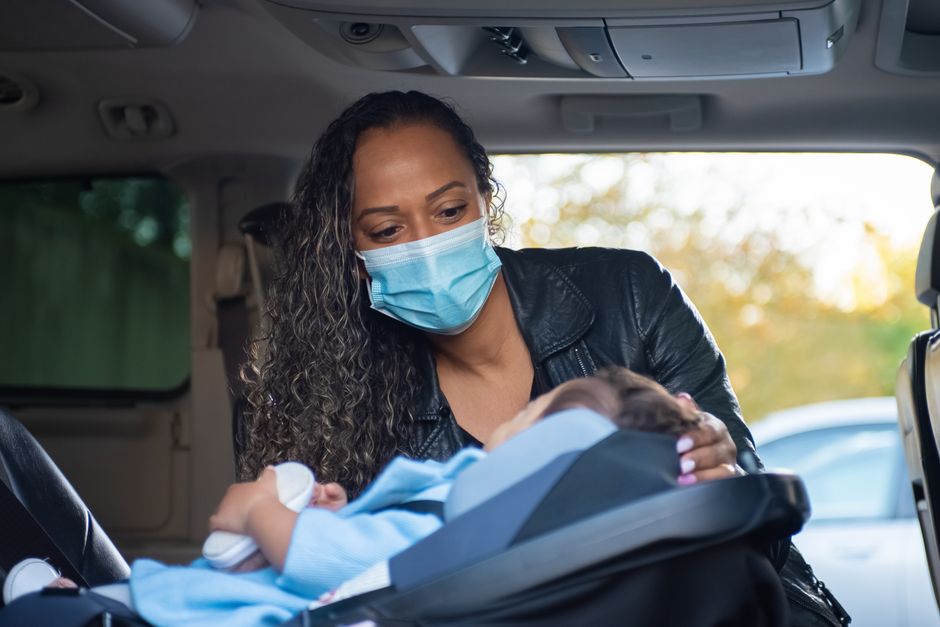
5. Using Unregulated Aftermarket Accessories
Retail shelves are filled with plush strap covers, head-positioning pillows, and seat protector mats that look comfortable. However, unless these items were crash-tested and certified by your car seat’s exact manufacturer, they void the seat’s safety warranty and can interfere with harness deployment.
Extra padding behind the head pushes the chin forward into a suffocating slump, while thick strap covers prevent the chest clip from sitting flush against the sternum. For a detailed investigation on which products to toss, read our guide on why aftermarket car seat accessories are dangerous and safe alternatives.
Comparison Table: Car Seat Safety Traps vs. CPST Best Practices
| Dangerous Mistake ❌ | CPST Approved Safety Standard ✅ |
|---|---|
| Puffy winter coats under harness | Thin fleece layers + blanket tucked over buckled seat |
| Chest clip on belly or waist level | Chest clip at armpit / nipple level |
| Harness loose (fabric can be pinched) | Zero slack (fingers slide smoothly off webbing) |
| Letting baby sleep in seat on floor | Moving sleeping baby to firm flat crib immediately |
| Using unapproved aftermarket head rests | Using only manufacturer-included inserts |
The 3-Step CPST Harness Checklist Before Every Drive
- Check the Shoulder Strap Height:
- For rear-facing seats, the straps must enter the shell slots at or below the child’s shoulders.
- For forward-facing seats, straps must enter at or above the shoulders.
- Execute the Pinch Test:
- Place your thumb and forefinger at the child’s collarbone and try to pinch the harness strap horizontally. If you can pinch any webbing between your fingertips, pull the bottom adjuster strap tighter.
- Lock the Chest Clip at Armpits:
- Slide the plastic clip up until the top edge lines up directly with the baby’s underarms.
Taking 30 extra seconds to double-check these critical checkpoints guarantees that your car seat will perform as the lifesaving restraint it was engineered to be.
Google AdSense Placeholder
Slot ready for "in-article". Set your AdSense publisher ID in settings when approved.
Frequently Asked Questions by Moms
Why is wearing a bulky winter coat dangerous in a car seat? ▼
Puffy winter coats contain layers of trapped air that compress instantly upon impact in a crash, leaving several inches of dangerous slack in the harness and risking infant ejection.
Where should the chest clip be positioned on an infant car seat? ▼
The chest clip must always be positioned at armpit level (nipple line). Placing it too low across the abdomen can cause severe internal organ damage during a collision, while placing it too high can press against the throat.
What is the pinch test for car seat harness tightness? ▼
Try to pinch the harness webbing vertically at your child's collarbone with your thumb and index finger. If you can pinch any excess fabric between your fingers, the harness is too loose and must be tightened.

Written by Sarah Collins
Doctor-Reviewed & Fact-CheckedMom of Two & Founder of Mommy Tips & Life
Sarah is a mother of two (Liam & Maya) sharing evidence-based parenting guides, infant sleep solutions, and baby safety alerts tested in real family life and vetted against AAP clinical standards.
Google AdSense Placeholder
Slot ready for "footer-banner". Set your AdSense publisher ID in settings when approved.