Why Baby Knee Pads for Crawling Are a Registry Regret (And Why Pediatricians Advise Against Them)
Thinking about buying padded knee protectors for your crawling baby? Learn why they hinder tactile sensory feedback, restrict blood circulation, cause slipping hazards, and what to use instead.
Sarah Collins
Mom of Two & Founder of Mommy Tips & Life
Google AdSense Placeholder
Slot ready for "header-banner". Set your AdSense publisher ID in settings when approved.
🩺 Medical Disclaimer: This guide is for educational purposes and should not replace pediatric or obstetric medical consultation.
🛍️ Affiliate Disclosure: We may earn a small commission when you purchase through our links at no extra cost to you.
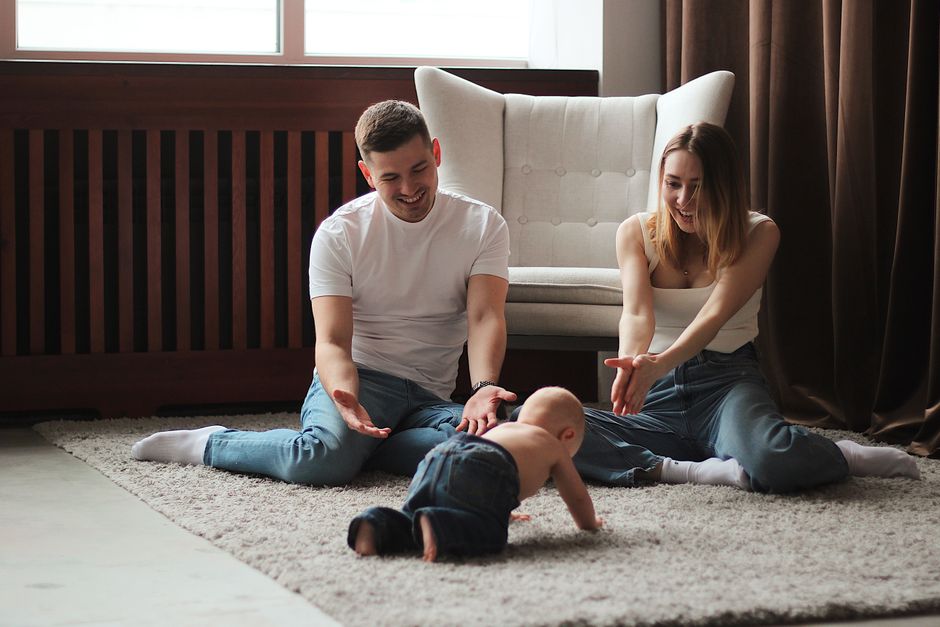
When my daughter Maya was seven months old, she began attempting her first clumsy crawls across our hardwood living room floor. After twenty minutes of enthusiastic floor play, I picked her up and gasped: her chubby little knees were bright pink!
In a state of first-time-mom panic, I immediately pulled out my smartphone and ordered a four-pack of colorful, silicone-padded “infant crawling knee pads” with glowing five-star reviews. I felt like the ultimate proactive mother—I was protecting my sweet baby’s fragile joints from cold, unforgiving oak planks.
Two days later, the package arrived. I slipped the elastic pads onto Maya’s legs and set her down. What followed was a total disaster: within three minutes, the pads slid down to her ankles. When I pulled them tighter, the elastic bunched into deep red indentations behind her knees, pinching her skin. Worst of all, every time she tried to push up onto hands and knees, the slick synthetic fabric slid out from under her, face-planting her into the floor. She burst into tears, completely unable to crawl.
The Upfront Breakthrough Summary: The turning point came when our pediatric physical therapist explained that infant knees are anatomically engineered for crawling without artificial padding. Babies do not have hardened adult kneecaps; they have flexible cartilage surrounded by natural shock-absorbing fat pads. By implementing a 3-step natural floor setup—ditching artificial knee sleeves, allowing bare skin tactile contact on a textured non-toxic foam play mat, and using loose-fitting cotton harem pants—Maya regained her traction and was zooming across the room within 48 hours.
The Pediatric Anatomy: Why Baby Knees Do Not Need Padding
To understand why crawling knee pads are a manufactured marketing gimmick, you must look at how infant joints develop.
       ┌────────────────────────────────────────────────────────┐
       │             INFANT KNEE JOINT ANATOMY                  │
       ├──────────────────────────┬─────────────────────────────┤
       │ Flexible Cartilage Core  │ Subpatellar Fat Cushion     │
       │ (No hardened bone plate) │ (Natural built-in padding)  │
       ├──────────────────────────┴─────────────────────────────┤
       │                   TACTILE PROPRIOCEPTION               │
       │  (Skin receptors send friction & balance data to brain)│
       ├────────────────────────────────────────────────────────┤
       │ Artificial knee pads mute sensory receptors, causing   │
       │ motor disorientation and preventing neural calibration.│
       └────────────────────────────────────────────────────────┘
Adults find crawling on hard surfaces painful because our patella is a rigid, fully ossified bone pressing directly against the floor. Infants, however, are born without a solid kneecap! Their patella remains soft, flexible hyaline cartilage until it begins ossifying between 2 and 6 years of age.
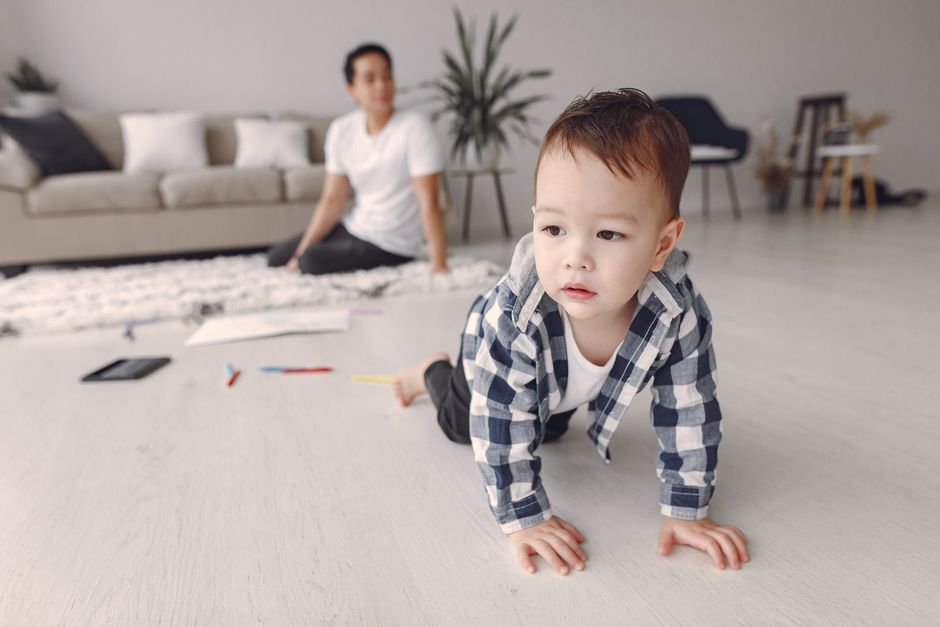
Furthermore, nature equips infants with generous subpatellar fat pads specifically designed to distribute their lightweight body mass evenly without joint pain. Mild temporary pinkness on the skin is simply normal capillary dilation from healthy friction, not tissue damage.
This is just one of many commercial baby products parents deeply regret buying. For a full audit of unnecessary nursery gear, review our viral guide on popular baby registry items parents regret buying and why hard-soled baby shoes delay walking.
1. Reason #1: The Sensory Proprioception Blocker
The most detrimental consequence of baby knee pads is the loss of proprioceptive tactile feedback.
The skin on your baby’s knees, shins, and feet is densely packed with mechanoreceptors. When bare skin touches the rug or floor, these sensory nerve endings send instantaneous millisecond feedback to the developing motor cortex:
- How slippery is this surface?
- How much downward force must my quadriceps exert to maintain balance?
- Is my knee slipping outward or staying aligned under my hip?
   ❌ WITH KNEE PADS (Sensory Mute)     ✅ BARE SKIN (Proprioceptive Precision)

       [Synthetic Foam Barrier]                [Bare Skin Mechanoreceptors]
                 \                                          |
        (No Floor Friction Data)                 (Instant Neural Feedback)
                 |                                          |
       [Slipping & Flat Belly Slide]           [Balanced Four-Point Traction]
When you strap a thick foam pad over their knees, you effectively blindfold their lower body tactile system. The baby cannot gauge traction, leading to awkward motor compensation.
2. Reason #2: The Popliteal Constriction Hazard (Circulation Red Flags)
Baby legs are adorably chunky, featuring deep rolls of baby fat. To prevent knee pads from sliding down during movement, manufacturers use tight elasticized compression bands at the top and bottom.
| Common Mistake ❌ | Healthy Alternative ✅ |
| :--- | :--- |
| Strapping tight elastic knee pads over chubby baby legs | Allowing bare knee and foot contact for natural floor grip |
| Confining baby to slippery tile or hardwood without mats | Placing a non-toxic, textured EVA or TPU foam play mat |
| Buying hard-soled shoes for pre-walkers | Keeping babies barefoot or in grip-socks during playtime |
| Using wheeled baby walkers that damage hip alignment | Providing stationary activity tables or floor push toys |
| Dressing baby in slick synthetic footie pajamas for crawls | Using breathable, loose organic cotton pants |
Within minutes of active crawling, the top elastic inevitably rolls downward into the popliteal fossa—the delicate space behind the knee joint where major blood vessels and nerves (the popliteal artery, vein, and tibial nerve) lie close to the surface.

Dangers of Popliteal Bunching:
- Impaired Venous Return: Can cause temporary swelling and discoloration in the feet.
- Friction Blisters & Chafing: Moisture and sweat trapped under synthetic bands cause painful contact dermatitis.
- Restricted Joint Flexion: Tight bands prevent the baby from smoothly transitioning into sitting or side-lying postures.
3. Reason #3: The Slippery Hardwood Paradox
Parents buy knee pads to help babies crawl on hard surfaces. In reality, most knee pads produce the exact opposite effect.
Synthetic nylon, spandex, and polyester have a much lower coefficient of friction against sealed hardwood and polished tile than human skin. Even pads with tiny silicone dots frequently cause an infant’s knees to slide outward into an awkward “frog-leg” splay.
If your baby is struggling with developmental mobility due to equipment, also check our warnings on why baby walkers are banned by the AAP, why baby jumpers cause hip strain, and why Bumbo floor seats harm posture.
What to Use Instead: The Pediatrician-Approved Floor Setup
Save your registry budget and set up your living room for natural, pain-free motor development:
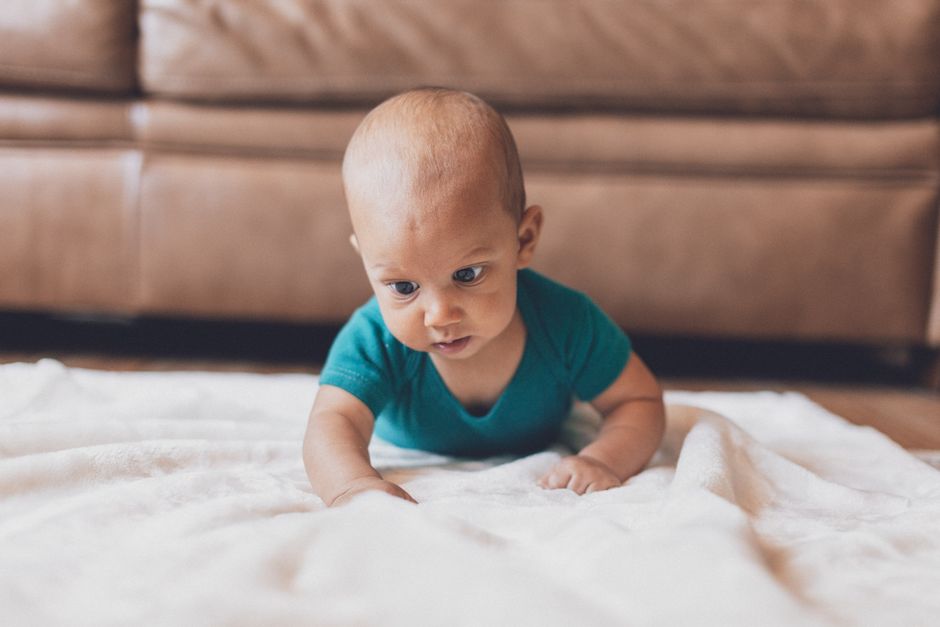
- Large Non-Toxic Foam Play Mat: Invest in a thick (0.5 to 0.8 inch) EVA or TPU non-toxic play mat. It provides optimal shock absorption and thermal insulation from cold floors while offering high-traction texture.
- Barefoot & Bare-Knee Play: Whenever the indoor temperature is comfortable (68°–72°F), let your baby explore in a simple diaper or onesie.
- Loose Organic Cotton Harem Pants: If the floors are chilly, dress your baby in loose, unrestrictive 100% cotton pants without tight elastic cuffs at the knees.
💡 Pediatric / Mom Tip: If your baby gets red marks on their knees from crawling outdoors on rough patio pavers or grass, skip the tight knee pads and dress them in a loose pair of soft cotton leggings. The cotton shields against minor scrapes without compressing blood vessels.
⚠️ Warning Alert: If your baby consistently resists weight-bearing on their knees, cries in pain when their legs are gently flexed, or displays clicking/clunking sounds in the hip joint, consult your pediatrician immediately to screen for hip dysplasia or juvenile arthritis.
Summary Checklist for Parents
- Skipped artificial crawling knee pads on baby registries.
- Embraced natural bare-skin tactile feedback for motor learning.
- Created a safe, high-traction floor play area with a quality foam mat.
- Chose loose, breathable cotton clothing over tight elastic sleeves.
- Allowed natural capillary flushing on knees without anxiety.
Google AdSense Placeholder
Slot ready for "in-article". Set your AdSense publisher ID in settings when approved.
Frequently Asked Questions by Moms
Do babies need knee pads when learning to crawl on hardwood floors? ▼
No. Pediatricians and physical therapists advise against baby knee pads. Infants are born with thick cartilaginous patellas and specialized subpatellar fat pads designed to absorb impact comfortably. Knee pads restrict natural joint mobility and dampen crucial sensory tactile feedback.
Can baby knee pads cause safety or circulation issues? ▼
Yes. The tight elastic bands on baby knee pads frequently roll down and bunch in the popliteal fossa (the sensitive crease behind the knee), restricting lymphatic drainage and venous circulation, creating painful red welts, and causing friction blisters.
Why do baby knee pads make babies slip on floors? ▼
Most synthetic knee pads are made from slick nylon or polyester blends. When placed over hardwood or tile, they reduce friction compared to bare skin, causing the infant's knees to slide out horizontally and delaying four-point reciprocal crawling.
What should my baby wear when crawling on hard floors instead? ▼
The ideal crawling attire is bare knees on a non-toxic foam play mat or low-pile rug. If the room is cold, opt for lightweight, loose-fitting 100% organic cotton pants with open bare feet for optimal toe grip.

Written by Sarah Collins
Doctor-Reviewed & Fact-CheckedMom of Two & Founder of Mommy Tips & Life
Sarah is a mother of two (Liam & Maya) sharing evidence-based parenting guides, infant sleep solutions, and baby safety alerts tested in real family life and vetted against AAP clinical standards.
Google AdSense Placeholder
Slot ready for "footer-banner". Set your AdSense publisher ID in settings when approved.