Baby Fell Off the Bed? 5 Critical Red Flags and What to Do in the First 24 Hours
Did your baby roll off the bed or changing table? Learn the exact PECARN pediatric triage protocol, concussion red flags, and first-aid mistakes to avoid.
Sarah Collins
Mom of Two & Founder of Mommy Tips & Life

Google AdSense Placeholder
Slot ready for "header-banner". Set your AdSense publisher ID in settings when approved.
🩺 Medical Disclaimer: This guide is for educational purposes and should not replace pediatric or obstetric medical consultation.
🛍️ Affiliate Disclosure: We may earn a small commission when you purchase through our links at no extra cost to you.
It happened in the blink of an eye. I was changing my seven-month-old daughter Maya on our adult bed, reached down for literally two seconds to grab a fresh pack of wipes from the floor, and heard the most sickening sound any parent will ever experience: a dull, heavy thud against the hardwood floor, followed by two seconds of suffocating silence, and then an ear-piercing scream of pure terror.
I scooped her up in my arms, shaking violently, while tears poured down my face. My mind instantly raced to the worst possible scenarios: skull fractures, internal bleeding, permanent brain damage. The suffocating guilt was overwhelming—I felt like the most irresponsible, negligent mother on the planet. I stood in the middle of our bedroom, paralyzed with panic, wondering if I should call 911, rush to the emergency room, or try to soothe her.
The Upfront Breakthrough Summary: The critical turning point came when our pediatric emergency nurse walked me through the PECARN pediatric head trauma framework. The 3-step post-fall triage system brought immediate clarity: immediately assessing conscious responsiveness (crying within 2 seconds was a vital positive sign), performing a systematic physical check for the 5 critical ER red flags (pupil dilation, repeated vomiting, boggy swelling, lethargy, or clear fluid discharge), and applying a 10-minute cold compress while logging behavioral milestones over the next 24 hours. Maya had a small goose egg, but was nursing and smiling normally within twenty minutes.
The Physics of Infant Falls: Why Falls Happen So Fast
First, take a deep breath: almost every single parent experiences an infant fall at least once.
Infants have disproportionately large, heavy heads relative to their bodies (representing roughly 25% of their total body weight compared to 6% in adults). Because their center of gravity is high, when an infant rolls or wriggles toward an edge, the weight of their head naturally leads the fall.
       ┌────────────────────────────────────────────────────────┐
       │             THE FIRST 10 MINUTES POST-FALL             │
       ├──────────────────────────┬─────────────────────────────┤
       │ Immediate Trauma Check   │ Neurological Response       │
       │ (Crying vigorously,      │ (Eye contact, suck reflex,  │
       │  breathing normally)     │  moving all four limbs)     │
       ├──────────────────────────┼─────────────────────────────┤
       │ Physical Head Scan       │ 24-Hour Observation         │
       │                          │                             │
       │ ➔ Check for firm vs soft  │ ➔ Monitor wakefulness,      │
       │   swelling, pupil size,  │   vomiting episodes, and    │
       │   and ear/nose fluid     │   balance coordination      │
       └──────────────────────────┴─────────────────────────────┘
Fortunately, infant skulls are composed of flexible plates separated by fibrous sutures and fontanelles. This elasticity is designed by nature to absorb shock and protect developing brain tissue from low-height impacts.

5 Critical Red Flags: When to Go to the Emergency Room Immediately
If your baby experiences any of the following symptoms after a fall, do not wait for a callback from your doctor—call 911 or head straight to the nearest pediatric emergency department:
1. Loss of Consciousness (Even for 5 Seconds)
If your baby went limp, closed their eyes, or did not immediately cry after hitting the ground, this indicates a temporary disruption in cerebral function that requires emergency evaluation.
2. Repeated or Projectile Vomiting
While a baby may spit up once from the intense stress and crying of a fall, two or more distinct episodes of forceful vomiting is a hallmark sign of increased intracranial pressure.
3. Unequal Pupil Sizes or Abnormal Eye Movements
Shine a flashlight gently near your baby’s eyes. Both pupils should constrict symmetrically. If one pupil is significantly larger than the other (anisocoria), or if your baby has rapid, jerky, involuntary eye movements (nystagmus) or fails to make eye contact, seek immediate medical care.
4. “Boggy” or Squishy Swelling on the Side or Back of the Head
A firm, hard “goose egg” on the forehead is normal soft tissue swelling. However, if you feel a soft, squishy swelling (like a water-filled balloon) on the side (parietal) or back (occipital) of the skull, this can indicate a subgaleal hematoma or underlying linear skull fracture.
5. Extreme Lethargy or Inability to Be Awakened
If your baby is excessively difficult to arouse from sleep, shows no interest in breastfeeding or drinking, cannot hold their head upright, or exhibits weakness in one arm or leg, these are acute neurological warning signs.
⚠️ Warning Alert: Never shake a baby to see if they are responsive after a fall. Shaking an infant causes severe whiplash and secondary axonal shearing. Gently tickle their toes, stroke their cheek, or call their name.
Comparison Table: Common Post-Fall Mistakes vs. Safe Protocol
| Common Parent Reaction ❌ | Evidence-Based Emergency Protocol ✅ |
|---|---|
| Giving ibuprofen immediately to mask pain | Avoiding pain medication for 2 hours so you can accurately monitor for neurological distress. |
| Shaking or aggressively jostling baby awake | Gently stroking toes or calling their name to verify normal arousal. |
| Applying ice directly onto bare skin | Wrapping ice in a clean washcloth and applying in 5-minute intervals. |
| Ignoring falls on carpet or soft rugs | Observing baby closely for 24 hours regardless of floor surface. |
| Assuming quietness means baby is fine | Checking if quietness is peaceful recovery vs. abnormal neurological lethargy. |
The First 24 Hours: Step-by-Step Home Observation Protocol
If your baby cried immediately, has no ER red flags, and calmed down within 10 to 15 minutes, follow this clinical 24-hour observation schedule:
Step 1: Apply a Gentle Cold Compress
Apply a cold washcloth or an ice pack wrapped in a small towel to the impact site for 5 to 10 minutes at a time. This constricts broken micro-capillaries under the skin and reduces swelling.
Step 2: Keep Awake for 30 to 45 Minutes
Do not allow your baby to drift off to sleep immediately, even if they are tired from crying. Keep them upright in your arms, talk to them, offer a comforting cuddle, and ensure they track your face and voice normally.
Step 3: Monitor the First Sleep Cycle
After 45 minutes of calm wakefulness, it is completely safe to let your baby sleep. However:
- Set an alarm for 2 hours after they fall asleep.
- Go into the nursery, turn on a soft light, and gently arouse them until their eyes open, they make a soft vocalization or stretch, and then allow them to drift back to sleep.
- Repeat this wakefulness check once more during the night.
💡 Pediatric / Mom Tip: For broader nursery and home safety precautions to prevent falls and household hazards, review our comprehensive checklist on baby-proofing furniture and tip-over prevention and dangerous nursery items parents overlook.

How to Prevent Future Bed and Changing Table Falls
Once the immediate scare passes, use this experience to childproof your daily routines:
- The “One Hand Rule”: Whenever your baby is on an elevated surface (changing table, adult bed, sofa), keep at least one physical hand firmly on their torso at all times—even if you are just reaching into a diaper bag.
- Floor-Based Diaper Changes: If you have an active, rolling baby, transition your diaper changing station to a plush floor mat. You cannot fall off the floor!
- Never Leave Baby Unattended on Adult Beds: Pillows, duvets, and mattresses cannot prevent an infant from wiggling off the perimeter.
- Beware of Household Ingestions: When babies begin exploring the floor post-fall, ensure all tiny toxic items are cleared away. Read our emergency guide on button battery hazards and ingestion symptoms.
Releasing the Mom Guilt
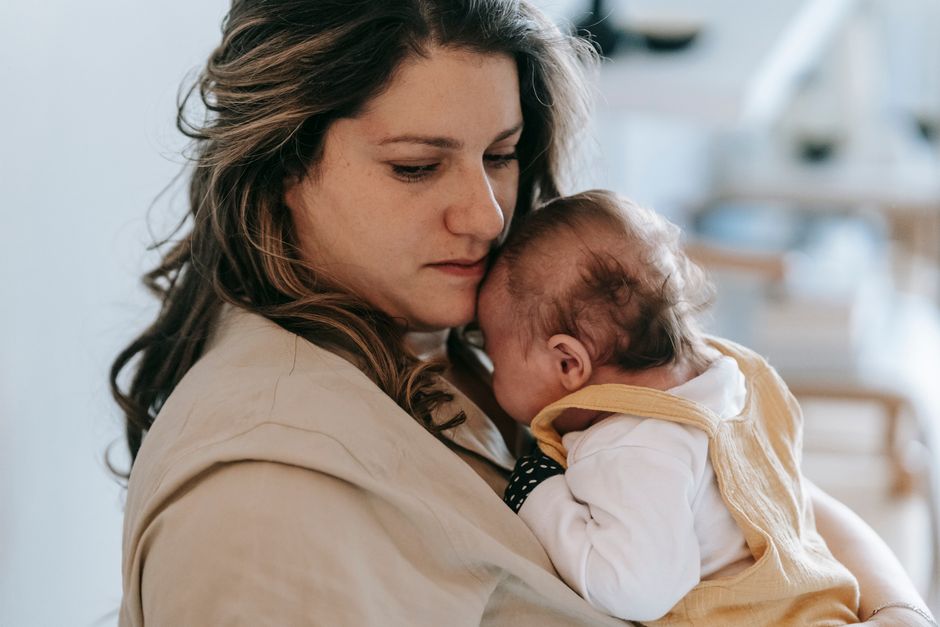
Hearing your baby hit the floor is terrifying, but beating yourself up will not protect your child. Pediatricians treat thousands of post-bed-fall infants every year, and the overwhelming majority heal completely with zero long-term complications.
Stay calm, trust your maternal instincts, follow the observation steps, and remember: you are a loving, attentive mother navigating a demanding milestone.
Google AdSense Placeholder
Slot ready for "in-article". Set your AdSense publisher ID in settings when approved.
Frequently Asked Questions by Moms
Is it normal for a baby to cry immediately after falling off a bed? ▼
Yes. In fact, crying vigorously immediately upon impact is a positive clinical neurological sign—it indicates the infant did not lose consciousness, their brainstem reflexes are functioning, and they are responsive to pain and fright.
Should I let my baby sleep after they hit their head in a fall? ▼
Yes, crying exhausts an infant, and sleep is essential. However, pediatrician protocols recommend keeping them awake for at least 30 to 45 minutes after the fall to assess responsiveness, pupil symmetry, and movement. Once they fall asleep, wake them gently after 2 hours to confirm they can be aroused and recognize you.
When does a goose egg or bump on a baby's head indicate a skull fracture? ▼
A hard, localized knot on the forehead is usually minor tissue swelling outside the skull. However, if the swelling is soft and squishy like a water balloon (boggy hematoma), especially on the side or back of the head (parietal or occipital areas), or if it spans across skull suture lines, you must go to the emergency room immediately for imaging.
Can a fall from a standard bed height (2 to 3 feet) cause brain damage? ▼
The vast majority of falls from low heights (under 3 feet onto carpet or wood) result in minor soft tissue bruising. Severe traumatic brain injury from low falls is exceedingly rare in pediatric medicine, but monitoring for red flags over 24 to 48 hours is essential.

Written by Sarah Collins
Doctor-Reviewed & Fact-CheckedMom of Two & Founder of Mommy Tips & Life
Sarah is a mother of two (Liam & Maya) sharing evidence-based parenting guides, infant sleep solutions, and baby safety alerts tested in real family life and vetted against AAP clinical standards.
Google AdSense Placeholder
Slot ready for "footer-banner". Set your AdSense publisher ID in settings when approved.