Why Is Your Baby Crying in Their Sleep Without Waking Up? (And Why You Shouldn't Rush In)
Hearing your infant wail, whimper, or grunt while their eyes stay tightly closed? Learn the science of active sleep cycles, partial arousals, and the #1 bedtime mistake parents make.
Sarah Collins
Mom of Two & Founder of Mommy Tips & Life
Google AdSense Placeholder
Slot ready for "header-banner". Set your AdSense publisher ID in settings when approved.
🩺 Medical Disclaimer: This guide is for educational purposes and should not replace pediatric or obstetric medical consultation.
🛍️ Affiliate Disclosure: We may earn a small commission when you purchase through our links at no extra cost to you.
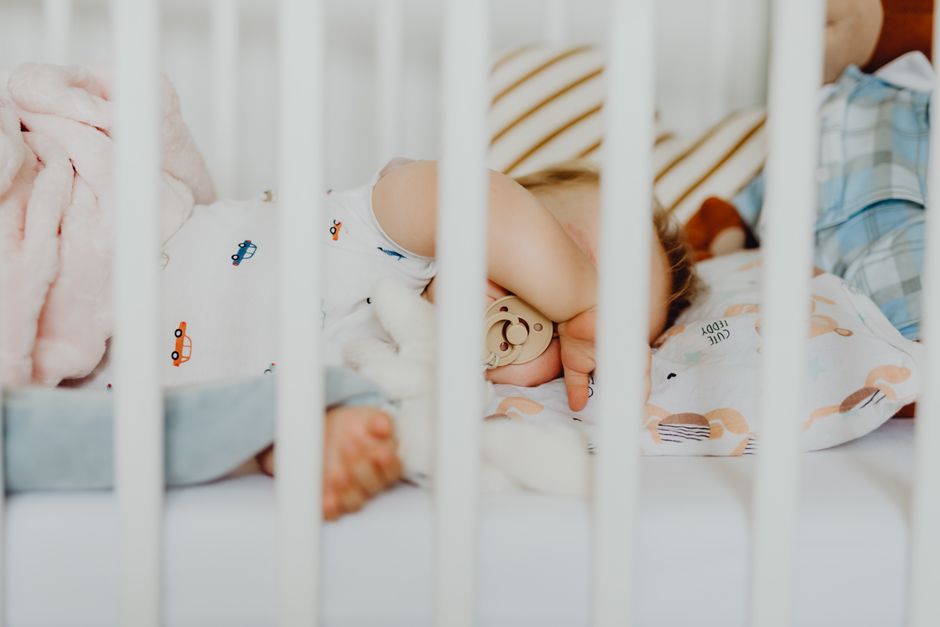
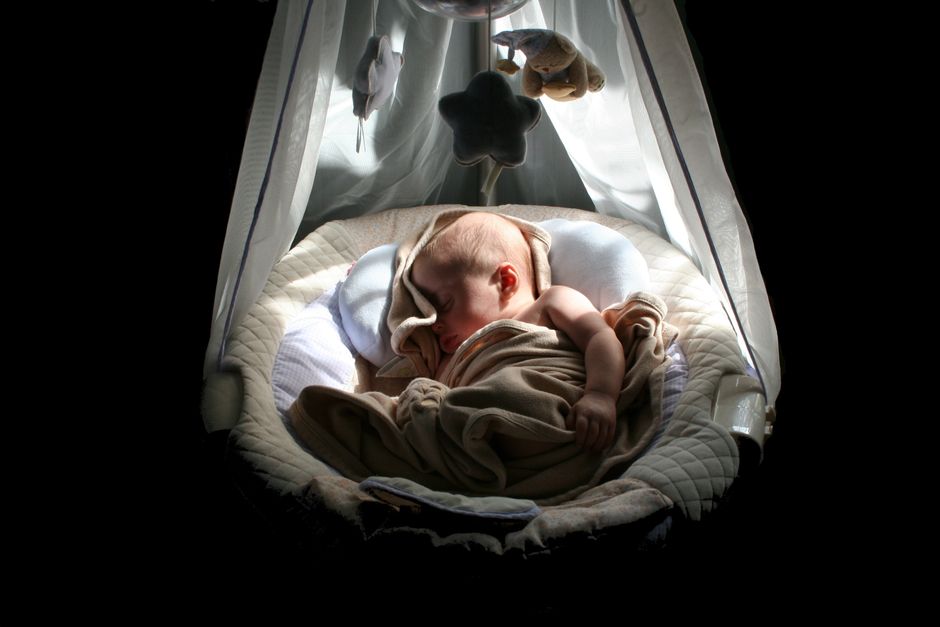
It was 3:18 AM when a sudden, piercing wail crackled through my baby monitor. My maternal adrenaline spiked instantly. I threw off the duvet, sprinted down the hallway in the dark, and scooped my two-month-old daughter Maya out of her bassinet within four seconds flat, whispering frantic reassurances and rocking her violently.
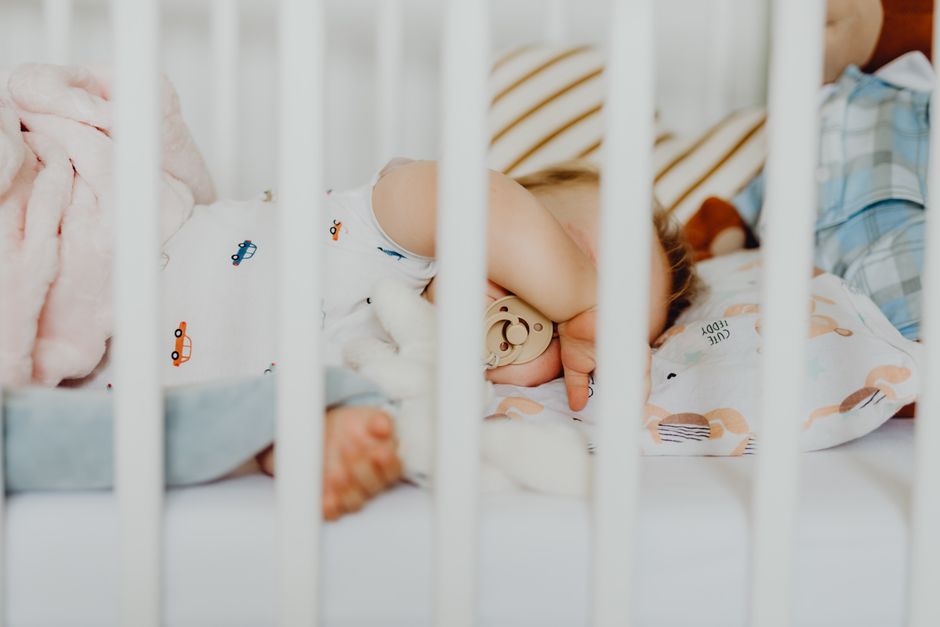
Then came the sinking realization: as I lifted her into my arms, Maya let out a terrified gasp, her eyelids fluttered open in pure shock, and she began sobbing hysterically. She hadn’t actually been awake. Her eyes had been glued shut, and she was simply vocalizing in the middle of a dream cycle. By snatching her up in a panic, I had forcibly ripped her out of deep sleep—triggering a two-hour battle of overtired nursing, pacing, and tears for both of us.
The Upfront Breakthrough Summary: The turning point in our nursery came when our pediatric sleep consultant explained that infant sleep architecture is fundamentally different from adult rest. Newborns spend half their night in noisy, erratic Active Sleep. By implementing the 3-step “Observational Pause” protocol—waiting 60 to 90 seconds before touching the crib, using subtle hands-on chest settling before lifting, and distinguishing between active sleep whimpers and true hunger cries—we prevented 80% of accidental nighttime awakenings and taught Maya how to connect her sleep cycles independently.
The Neurological Mystery: Active Sleep vs. Quiet Sleep
To stop sabotaging your baby’s sleep consolidation, you must understand how infant brains cycle through rest. While adults spend roughly 80% of the night in quiet, motionless Non-REM sleep, newborns and young infants dedicate up to 50% of their sleep to REM (Active Sleep).
       ┌────────────────────────────────────────────────────────┐
       │             THE 45-MINUTE INFANT SLEEP CYCLE           │
       ├──────────────────────────┬─────────────────────────────┤
       │ Active REM Sleep (50%)   │ Deep Quiet Sleep (50%)      │
       │ (Irregular brainwaves)   │ (Slow, rhythmic breathing)  │
       ├──────────────────────────┼─────────────────────────────┤
       │ Rapid eye movements      │ Still limbs, relaxed body   │
       │ Facial grimacing & smiles│ Regular respiratory rate    │
       │ Sudden whimpers & cries  │ Heavy, deep restorative     │
       │ ➔ Involuntary vocal cord │   physical rest             │
       │   firing during REM      │                             │
       └──────────────────────────┴─────────────────────────────┘
During Active Sleep, an infant’s brain is forging millions of neural synapses, processing sensory input from the day, and strengthening motor memory. Because the brainstem mechanism that temporarily paralyzes adult muscles during REM sleep (REM atonia) is still developing in infants, babies physically act out their sleep states.
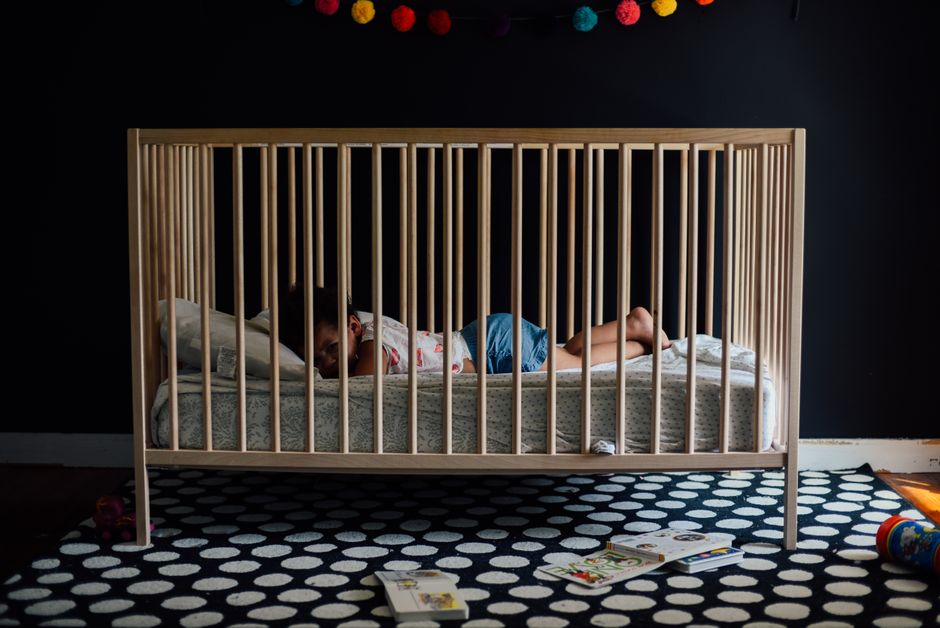
They squirm, suck their lips, kick their legs, grunt rhythmically, and can even let out loud, heart-wrenching cries—all while remaining in a restorative sleep stage. If this sounds familiar, check our in-depth analysis on active sleep vs. awake grunting mistakes to recognize healthy sleep noises.
1. The #1 Mistake: The “Rescue Rush” Trap
When parents hear a sharp cry at night, the primal maternal instinct is to instantly pick the baby up. However, in sleep medicine, this is known as an accidental arousal.
   ❌ THE RESCUE RUSH (Cycle Interrupted)  ✅ THE 90-SECOND PAUSE (Cycle Connected)

        [Baby Cries in Active Sleep]            [Baby Cries in Active Sleep]
                     \                                      |
            (Parent Snnatches Baby)                 (Parent Waits 60-90s)
                     |                                      |
         [Baby Jolted Wide Awake]                [Baby Resettles Automatically]
                     |                                      |
         [2-Hour 3 AM Wake Window]               [Deep Sleep Cycle Continues]
When you grab an infant whose eyes are closed, you shatter their physiological sleep bridge. They go from being asleep in a warm crib to suddenly floating through cold air in a brightly lit room with a frantic parent in their face. This activates their sympathetic nervous system (fight-or-flight), spiking cortisol and preventing them from falling back asleep.
The 90-Second Rule:
- Watch, Don’t Touch: Look at the baby monitor or peer over the bassinet rail without making noise.
- Check the Eyelids: Are their eyes open and tracking you, or are they shut with rapid eye twitches underneath?
- Count to 60: In over 70% of cases, active sleep whimpering peaks for 20–40 seconds and then suddenly ceases as the baby drifts into a deeper Non-REM wave.
2. Partial Arousals Between Sleep Cycles
An adult sleep cycle lasts 90 to 120 minutes. An infant sleep cycle is remarkably short: only 45 to 50 minutes.
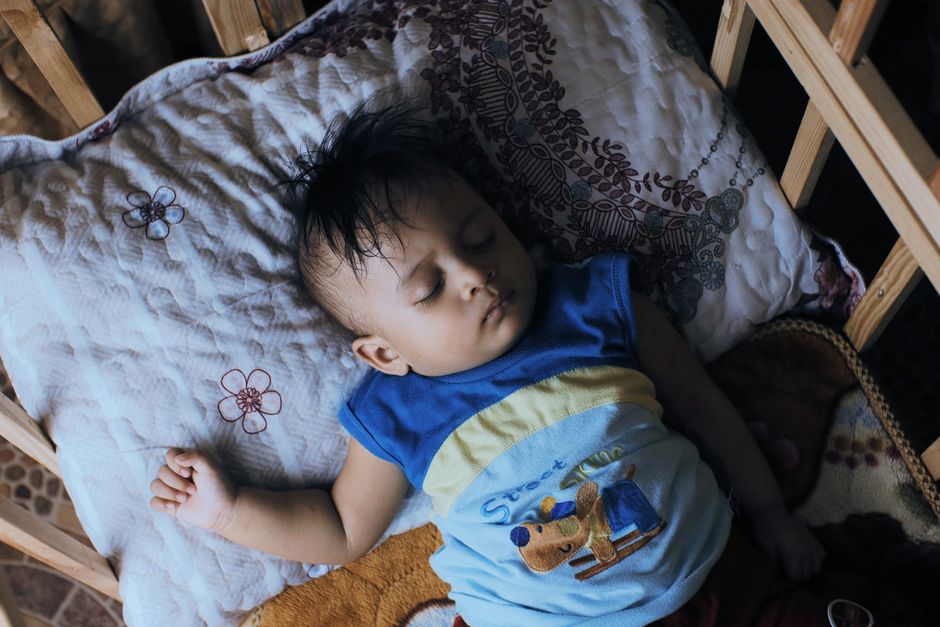
Every 45 minutes, your baby enters a vulnerable transitional zone known as a partial arousal. During this transition, their brain tests the environment:
- Is their sleeping environment the same as when they drifted off?
- Are they warm, safe, and comfortable?
During this micro-wake, infants often cry out for 15 to 30 seconds as they shift their body posture. If parents step in with bottles, pacifiers, or rocking every time this transition occurs, the baby never learns how to link cycles on their own. For parents struggling with frequent night waking, review our complete breakdown on why babies wake up every hour at night and how to fix it.
3. The Biological Comparison: Awake Cry vs. Sleep Whimper
Understanding the vocal and physical markers of true waking versus sleep-state vocalization will save your sanity:
| Sleep Vocalization Clues (Stay Back) 💤 | True Awake Distress (Intervene) 🚨 |
| :--- | :--- |
| Eyes are tightly closed or fluttering rapidly | Eyes are wide open, scanning, and making eye contact |
| Crying is intermittent (wail, pause 10s, whimper) | Crying is continuous, building in volume and intensity |
| Body is loose, heavy, or exhibiting quick startles | Body is tense, rigid, with hands clenched in fists |
| Sucking reflex on air or fists while eyes stay shut | Rooting frantically, turning head sharply toward touch |
| Baby quiets down within 45 to 90 seconds | Crying persists past 2 minutes without de-escalation |
💡 Pediatric / Mom Tip: If your baby is whimpering and starting to escalate during a sleep transition, try “hands-on settling” before lifting them out of the crib. Place one warm, firm palm flat on their chest and gently rest your other hand on their forehead. The grounding pressure mimics the womb and often allows them to bridge the cycle without waking up.
4. Overtiredness and Cortisol Spikes
If your baby’s sleep crying is intense, frequent, and occurs within the first 30 to 60 minutes of bedtime, the root trigger is almost certainly overtiredness.
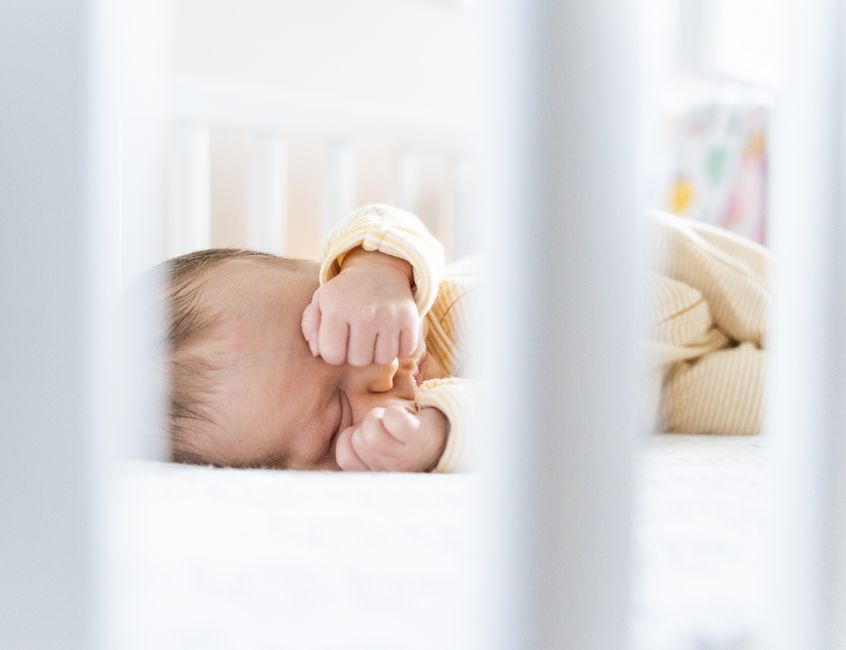
When an infant exceeds their optimal wake window during the day, their adrenal glands flood their bloodstream with cortisol and adrenaline. This chemical cocktail causes:
- Sleep Fragmentation: Fragmented sleep where the nervous system cannot achieve restorative delta waves.
- False Starts: Waking up screaming 20–45 minutes after bedtime.
- Restless REM Agitation: Intense physical thrashing and loud cries during sleep.
To prevent this biochemical stress response, ensure you are honoring age-appropriate wake windows outlined in our newborn sleep wake window guide and avoid the disastrous pitfalls of the 4-month sleep regression.
5. Physical Discomfort Triggers: Gas and Thermal Stress
While neurological sleep cycles explain most vocalizations, physiological discomfort can cause sleep-crying without full wakefulness:
- Trapped Intestinal Gas: As gut motility slows at night, gas bubbles expand in the colon, causing painful visceral contractions that make a sleeping infant groan and cry out.
- Nursery Temperature Fluctuations: If the room drops below 68°F (20°C) or rises above 72°F (22°C), babies will squirm and whimper in their sleep trying to thermo-regulate.
- Lost Pacifiers: If an infant has a strong sucking association, dropping the dummy mid-cycle can trigger a reflex cry. See our strategies for babies waking when the pacifier falls out.
⚠️ Warning Alert: If crying in sleep is accompanied by rapid grunting on every exhalation, chest retractions (ribs sucking in), or blue-tinged lips, this is a sign of respiratory distress. Seek immediate emergency medical care.
Step-by-Step Nightly Protocol: The 3-Tier Intervention Ladder
Before rushing in tonight, memorize this 3-tier response ladder:
TIER 1: THE OBSERVE & PAUSE (0 to 90 Seconds)
└── Stand by the crib silently in the dark.
└── Confirm eyes are closed and limbs are relaxed.
└── 80% of sleep whimpers resolve here.

TIER 2: THE LOW-STIMULATION HANDS-ON (90 Seconds to 3 Minutes)
└── Place firm palm on baby's chest (containment hold).
└── Introduce gentle rhythmic shushing ("shhh... shhh...").
└── Re-insert pacifier if used, keeping baby in the crib.

TIER 3: THE CALM LIFT & ASSESSMENT (After 3 Minutes of Escalation)
└── If eyes open and cries escalate to full arousal, lift slowly.
└── Keep lights dim, check diaper, and offer feed if hungry.
By respecting your baby’s sleep cycles and resisting the urge to rescue them from normal dream vocalizations, you give them the precious gift of independent self-soothing and consolidated nighttime sleep.
Summary Checklist for Parents
- Waited 60 to 90 seconds before touching the crib.
- Confirmed eyes were closed before assuming awake state.
- Practiced hands-on settling in the crib before lifting.
- Optimized daytime wake windows to prevent overtired cortisol spikes.
- Maintained a safe, pitch-black, and white-noise-optimized sleep environment.
Google AdSense Placeholder
Slot ready for "in-article". Set your AdSense publisher ID in settings when approved.
Frequently Asked Questions by Moms
Why does my baby cry loudly in their sleep with their eyes closed? ▼
Infants spend nearly 50% of their sleep in REM (Active Sleep). During active sleep transitions or brief partial arousals between 45-minute sleep cycles, their brain processes sensory inputs, causing involuntary vocal cord firing, grimacing, whimpering, or even sharp cries without conscious wakefulness.
Should I pick up my baby immediately when they start crying in their sleep? ▼
No. Unless your baby is in distress or their eyes are wide open, you should wait 60 to 90 seconds (the 'Pause'). In most cases, picking them up or turning on bright lights will startle them out of a restorative sleep cycle into full wakefulness.
How can I tell if my baby is having a nightmare or night terror? ▼
True nightmares and night terrors are neurologically rare in babies under 12 to 18 months old. In newborns and young infants, crying during sleep is almost exclusively driven by active REM motor twitches, gas pressure, or physiological cycle transitions.
When should I intervene if my sleeping baby is crying? ▼
Intervene if the crying escalates into continuous, awake screaming lasting beyond 90 seconds, if their eyes open and make contact, or if you suspect physical discomfort such as a cold nursery, fever, or hunger cues.

Written by Sarah Collins
Doctor-Reviewed & Fact-CheckedMom of Two & Founder of Mommy Tips & Life
Sarah is a mother of two (Liam & Maya) sharing evidence-based parenting guides, infant sleep solutions, and baby safety alerts tested in real family life and vetted against AAP clinical standards.
Google AdSense Placeholder
Slot ready for "footer-banner". Set your AdSense publisher ID in settings when approved.