Why Your Baby Wakes Up 30 Minutes After Bedtime: 5 False Start Traps (And How to Fix Them)
Does your baby treat bedtime like a 30-minute nap? Discover why infant false starts happen, how overtiredness triggers cortisol spikes, and the exact routine to fix evening wake-ups.
Sarah Collins
Mom of Two & Founder of Mommy Tips & Life

Google AdSense Placeholder
Slot ready for "header-banner". Set your AdSense publisher ID in settings when approved.
🩺 Medical Disclaimer: This guide is for educational purposes and should not replace pediatric or obstetric medical consultation.
🛍️ Affiliate Disclosure: We may earn a small commission when you purchase through our links at no extra cost to you.
It was 7:35 PM on a Tuesday, and I had just tiptoed out of Maya’s nursery on my hands and knees, holding my breath so the floorboards wouldn’t creak. My husband and I sat on the couch with warm dinner plates in our hands for the first time in ten hours. We took one bite, exhaled—and then the nursery monitor exploded into frantic, gasping screams.
Maya was wide awake, thrashing against her sleep sack, treating her official 7:00 PM bedtime like a 35-minute afternoon catnap. For two solid weeks, this “groundhog day” nightmare played out every single night. We would spend 45 minutes rocking, feeding, shushing, and transferring her to the crib, only to start the entire exhausting circus from scratch thirty minutes later. I felt completely broken, questioning why every other baby seemed to sleep through the evening while mine treated bedtime as an intermission.
The Upfront Breakthrough Summary: What I didn’t realize then is that infant sleep cycles are exactly 30 to 45 minutes long. When a baby wakes up crying at the end of cycle one, it is called a Bedtime False Start. False starts are rarely random tantrums; they are biological distress signals triggered by three fixable culprits: overtiredness cortisol spikes, insufficient sleep pressure (adenosine deficiency), or an unresolved sleep association. By shifting Maya’s bedtime 20 minutes earlier, capping her last daytime nap at 4:30 PM, and implementing the 60-second pause, we eradicated her false starts within 48 hours.
1. The Anatomy of an Infant Sleep Cycle (Why 30-45 Minutes is the Danger Zone)
To fix false starts, you must understand how your baby’s neurological sleep architecture works. Unlike adults who experience 90-to-120-minute sleep cycles, infants have rapid 35-to-50-minute sleep cycles.
[ Baby Falls Asleep ]
       ⬇
[ 0–20 Mins: Light REM Sleep ]
       ⬇
[ 20–35 Mins: Deep NREM Sleep ]
       ⬇
[ 35–45 Mins: The "Arousal Threshold" / Bridge Between Cycles ]
       ⬇
- If Well-Balanced: Transitions smoothly into Cycle #2 (Deep Sleep)
- If Cortisol/Props Present: Triggers Full Wake-up (FALSE START!) ❌
When your baby reaches that critical 35-minute bridge, their brain briefly stirs to check their environment. If their nervous system is flooded with stress hormones or they are undergoing a major sleep cycle maturation, they wake up startled and fully alert. For infants between 3 and 5 months, see our detailed guide on navigating the 4-month sleep regression and 45-minute sleep cycles.
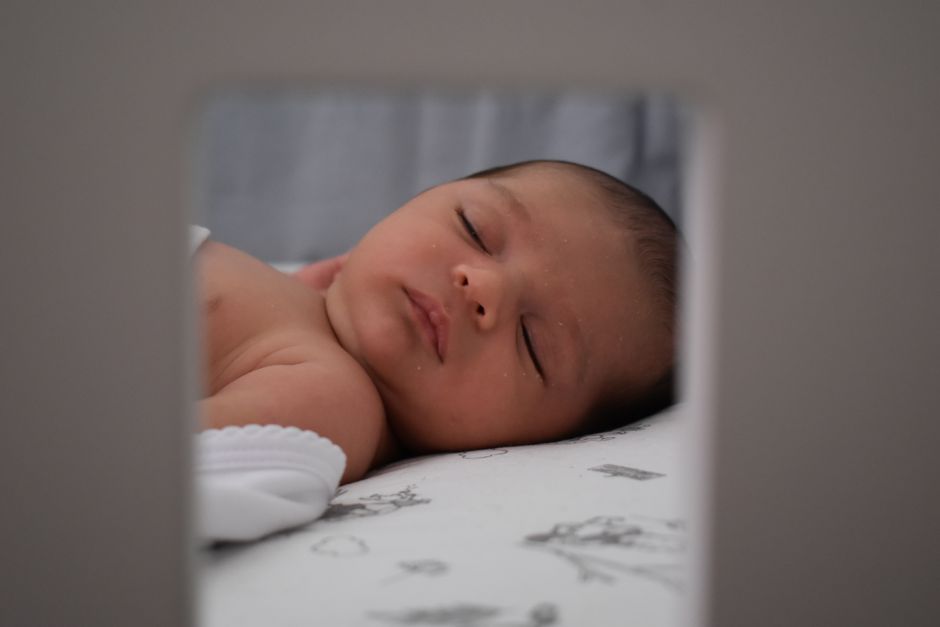
2. The 5 Major False Start Traps Keeping Your Baby Awake
If you are stuck in the 30-minute bedtime loop, one of these five common traps is almost certainly the root cause:
Trap #1: The Overtiredness Cortisol Surge (The Most Common Culprit)
When your baby’s final wake window stretches just 20 to 30 minutes too long, their brain interprets exhaustion as a survival emergency.
To keep the baby awake, the body pumps out cortisol (the stress hormone) and adrenaline. The baby may fall asleep quickly out of pure exhaustion, but as soon as they reach the light sleep transition at minute 35, the cortisol surge jars them wide awake.
If you suspect your baby is trapped in an overtired cycle, see our complete breakdown of newborn wake window traps and bedtime errors to calibrate their exact age-appropriate awake times.
Trap #2: The “Under-Tired” Sleep Pressure Deficit
The opposite mistake happens when parents put baby to bed too early after a long late-afternoon nap.
For a baby to sustain deep nighttime sleep, their brain requires a sufficient buildup of adenosine (homeostatic sleep pressure). If their last nap ends too close to bedtime, their sleep tank is only half-full—giving them just enough stamina for a quick power nap. (If this circadian imbalance persists into the middle of the night, see our deep dive on how to resolve baby split nights and 2 AM wakeful parties).
💡 Pediatric / Mom Tip: Aim for the longest wake window of the entire day to occur right before bedtime. For a 4-month-old, this is typically 2 to 2.25 hours; for a 6-to-8-month-old, 2.5 to 3 hours.
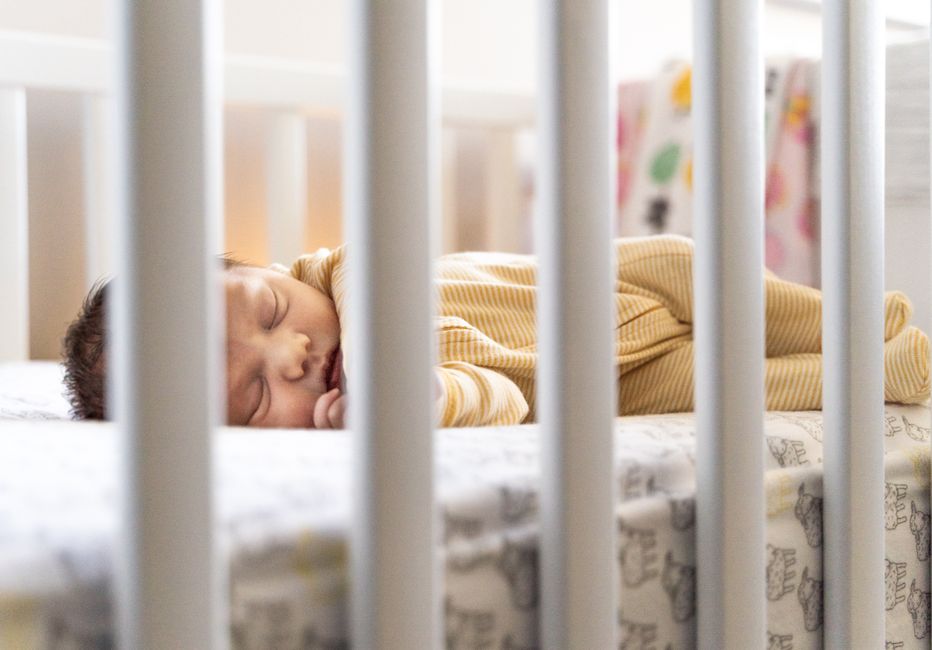
Trap #3: Unresolved Silent Reflux or Trapped Gas at Flat Laydown
When babies lie horizontal in their crib, stomach acid and trapped gas bubbles rise against the esophageal sphincter. If your baby falls asleep in your upright arms but wakes screaming 30 minutes after being placed flat on their back, digestive discomfort is often pulling them out of sleep.
Check our doctor-approved guide on how to identify silent reflux and nighttime acid burn as well as baby trapped gas remedies to protect their digestive comfort before bedtime.
Trap #4: The Disappearing Sleep Association (The “Where Did Mom Go?” Shock)
If your baby fell completely asleep while actively nursing, rocking vigorously, or sucking on a parent’s finger, that stimulus represents their brain’s mental “bookmark” for safety.
When they stir at the 35-minute sleep cycle bridge and find themselves alone in a quiet, dark, stationary crib, their brain sounds a neurological panic alarm.
Trap #5: Room Temperature Drops & Lighting Disruptions
Babies have immature thermoregulation. Between 7:00 PM and 8:00 PM, outdoor temperatures often drop, and household central heating kicks on and off. A sudden draft or an unswaddled startle reflex will cause immediate arousal at the end of the first cycle.
3. False Start Mistakes vs. Pediatric Sleep Fixes
| Bedtime Habit ❌ | Pediatric Sleep Strategy ✅ |
|---|---|
| Pushing Bedtime Later: Hoping baby will get “extra tired” and sleep longer. | Moving Bedtime 20–30 Mins Earlier: Prevents overtired cortisol spikes before they begin. |
| Letting Last Nap Run Long: Allowing baby to sleep until 5:30 or 6:00 PM. | Capping the “Bridge Nap”: Keep the last nap to a crisp 30-minute catnap ending by 4:30 PM. |
| Rushing in at the First Squeak: Lifting baby immediately during active sleep. | The 60-Second Pause: Wait one full minute to allow active REM transitioning before intervening. |
| Stimulating Bright Lights: Turning on nursery lamps to soothe the wake-up. | Pitch-Black Red-Light Environment: Keep room pitch black (level 10/10 darkness) and use 50dB white noise. |

4. The 3-Step Evening Reset Protocol to Stop False Starts Tonight
Follow this systematic schedule adjustment to reset your baby’s evening circadian rhythm:
Step 1: Lock in the “Nap Cut-Off” Time
- Calculate bedtime minus your baby’s age-appropriate wake window.
- For example, if target bedtime is 7:15 PM and wake window is 2.5 hours, the last nap must end strictly by 4:45 PM. Wake baby gently if needed.
Step 2: Move Bedtime 20 Minutes Earlier for 3 Days
- If your baby regularly has false starts at 7:45 PM after a 7:15 PM bedtime, initiate the bedtime routine earlier and put them in the crib by 6:55 PM.
- Catching them before the overtired cortisol window closes 80% of false start wake-ups.
Step 3: Master the “60-Second Pause” Before Intervening
- When the monitor activates at the 35-minute mark, don’t rush in instantly.
- Newborns and infants spend 50% of their sleep in Active REM Sleep, where they whimper, flail, groan, and open their eyes without being truly awake.
- Waiting 60 to 90 seconds often allows them to connect into deep sleep without accidental parental disruption.
⚠️ Warning Alert: If false starts are accompanied by choking sounds, chronic arching, or sudden gasping, consult your pediatrician to rule out enlarged adenoids, obstructive apnea, or formula allergies like Cow’s Milk Protein Allergy.
Final Thoughts: Consistency Beats Perfection
Bedtime false starts can make you feel like you are failing at basic parenting routines, but they are a normal developmental hurdle. Treat each bedtime not as a high-stakes test, but as an opportunity to read your baby’s biological cues.
By balancing sleep pressure and guarding against overtiredness, your evenings will transform from stressful false starts into peaceful, restorative nights for the whole family. And if your baby is also battling dawn wakings, see our companion guide on why your baby wakes up at 5 AM and how to fix early morning sleep mistakes.
Google AdSense Placeholder
Slot ready for "in-article". Set your AdSense publisher ID in settings when approved.
Frequently Asked Questions by Moms
What is a false start at bedtime? ▼
A false start occurs when a baby is put down for their main nighttime sleep but wakes up fully alert or screaming within 30 to 45 minutes—treating their official bedtime like a quick daytime nap.
Is a false start caused by being overtired or under-tired? ▼
Both can cause false starts, but overtiredness is the culprit in roughly 70% of cases. When a baby stays awake past their age-appropriate wake window, their adrenal glands release cortisol and adrenaline, causing an abrupt arousal when transitioning between light REM and deep NREM sleep cycles at the 35-minute mark.
How do I break the false start cycle tonight? ▼
First, adjust the final wake window of the day by shifting bedtime 15 to 30 minutes earlier. Second, ensure their last nap ends at least 2 to 3 hours before bedtime (depending on age) so sufficient sleep pressure (adenosine) builds up.

Written by Sarah Collins
Doctor-Reviewed & Fact-CheckedMom of Two & Founder of Mommy Tips & Life
Sarah is a mother of two (Liam & Maya) sharing evidence-based parenting guides, infant sleep solutions, and baby safety alerts tested in real family life and vetted against AAP clinical standards.
Google AdSense Placeholder
Slot ready for "footer-banner". Set your AdSense publisher ID in settings when approved.