Baby Standing Up in Crib and Crying? 5 Bedtime Mistakes (And How to Teach Them to Sit)
Is your baby standing up in the crib, screaming at bedtime, and refusing to lie down? Learn why pull-to-stand triggers sleep regressions and how to fix it.
Sarah Collins
Mom of Two & Founder of Mommy Tips & Life
Google AdSense Placeholder
Slot ready for "header-banner". Set your AdSense publisher ID in settings when approved.
🩺 Medical Disclaimer: This guide is for educational purposes and should not replace pediatric or obstetric medical consultation.
🛍️ Affiliate Disclosure: We may earn a small commission when you purchase through our links at no extra cost to you.
It was 8:30 PM on a Sunday when my eight-month-old daughter Maya pulled off her greatest—and most exhausting—developmental party trick. I laid her down in her sleep sack after a calm bedtime routine, kissed her forehead, and closed the nursery door.
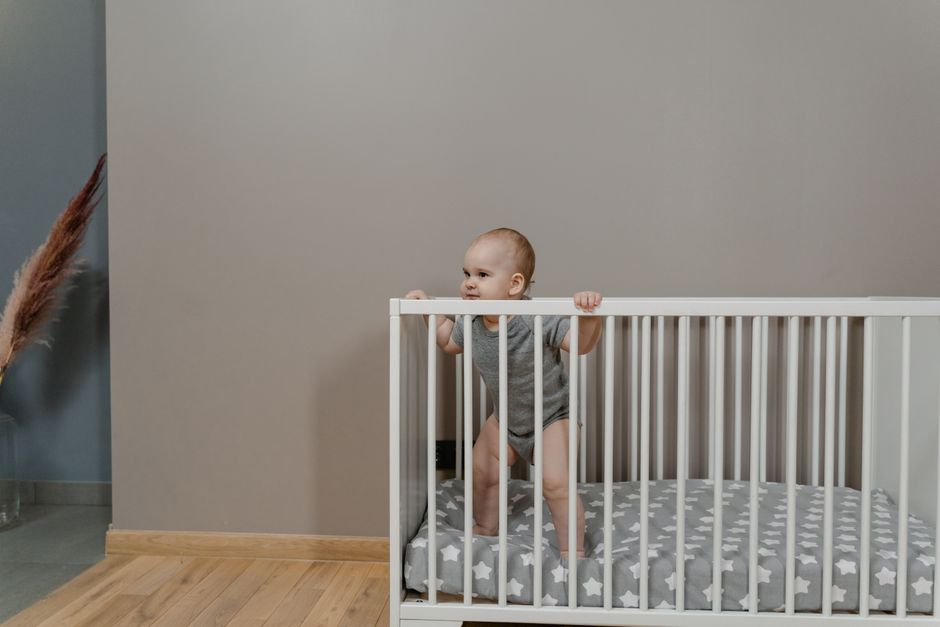
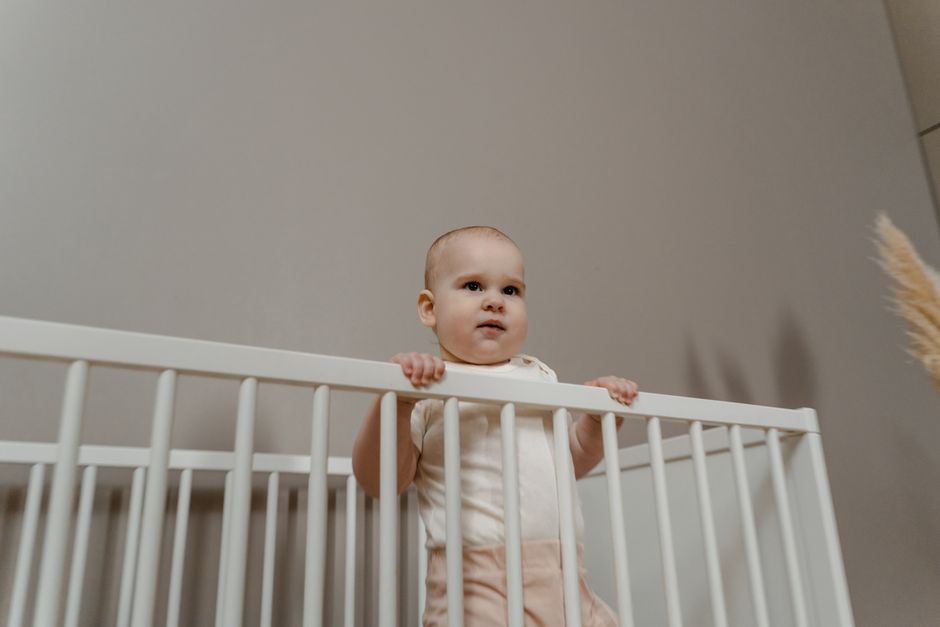
Thirty seconds later, I glanced at the baby monitor and gasped. There she was: clutching the wooden crib slats like a tiny prisoner, standing proudly on two wobbly feet, grinning from ear to ear. But five minutes later, that triumphant grin turned into sheer panic. Her knees began trembling, she locked her elbows, and she began shrieking at the top of her lungs. Every time I went in to lay her flat, she sprang right back up like a manic jack-in-the-box. We repeated this cycle 42 times until 11:00 PM, leaving both of us in tears.
The Upfront Breakthrough Summary: The reason babies get stuck standing in their cribs isn’t defiance—it is neurological milestone compulsion paired with motor asymmetry. Concentric standing (pulling up using quadriceps) develops weeks before eccentric lowering (bending hips and knees to sit safely). By stopping the interactive “lay down” game at bedtime and running a 3-step daytime floor-plop immersion—practicing assisted squatting during play, placing enticing toys at knee height, and coaching crib descent from the side slats—Maya learned to independently lower herself and fall asleep peacefully within 72 hours.
The Neurological Drive Behind Crib Standing
When an infant masters a major gross motor milestone—such as rolling, crawling, or pulling to stand—the motor cortex in their developing brain fires continuously.
       ┌────────────────────────────────────────────────────────┐
       │             THE CRIB STANDING REGRESSION LOOP          │
       ├────────────────────────────────────────────────────────┤
       │ 1. Brain unlocks 'Pull to Stand' motor circuit         │
       │                            │                           │
       │ 2. Baby practices compulsively in crib at bedtime       │
       │                            │                           │
       │ 3. Baby cannot unlock knees to sit back down (Stuck!)   │
       │                            │                           │
       │ 4. Parent repeatedly forces baby down ➔ Becomes a Game  │
       │                            │                           │
       │ 5. Cortisol spike + Exhaustion ➔ 3-hour Bedtime Battle │
       └────────────────────────────────────────────────────────┘
Even when bone-tired, an infant’s central nervous system prioritizes neuromuscular wiring over sleep drive. The crib provides the ideal environment for practicing: rigid vertical bars at perfect chest height, a firm mattress, and zero distractions.
The physiological bottleneck occurs because pulling up is an isometric pulling exercise, whereas sitting down requires eccentric eccentric quadriceps control and vestibular balance. When an infant gets to the top, they look down, realize they cannot safely reverse the movement, and experience acute vestibular panic.
1. The “Jack-in-the-Box” Trap: Constantly Laying Them Flat
The single most common parental mistake during this regression is repeatedly entering the room and forcing the baby back onto their mattress.
When you rush into the nursery every 45 seconds, pick up your baby, and physically force them into a horizontal position, two things happen psychologically:
Why Repeated Repositioning Backfires
- It Becomes an Interactive Game: To an eight-month-old brain, your rapid entry and physical intervention is exhilarating. You push them down; they pop back up; you push them down again. It becomes the ultimate interactive game.
- It Stifles Autonomous Motor Learning: If you constantly rescue them by flattening them out, their brain never learns how to initiate the hip hinge required to sit down independently.
💡 Pediatric / Mom Tip: Instead of laying your baby flat, teach them to sit. Place your hands gently on their hips, apply light downward pressure while softly bending their knees, and guide their bottom down to the mattress. Tap the mattress and say, “Down to sleep,” then step back.
This milestone battle frequently overlaps with the eight-month sleep regression challenges, where separation anxiety and motor surges collide.
2. Neglecting Daytime “Squat & Plop” Floor Training
You cannot teach a panicked, overtired baby how to sit down in the dark at 8:00 PM. The solution to crib standing must be trained on the living room floor during broad daylight.
   ❌ NIGHTTIME FORCED FLATTENING      ✅ DAYTIME FLOOR-PLOP IMMERSION

     [Baby panicked in the dark]         [Joyful living room floor play]
     [Parent forces torso down]          [Coaching knee bends & squats]
     [Zero motor skill learned]          [Building eccentric quad strength]
     ➔ Escalating screams & cortisol     ➔ Confident, self-lowering baby
The 3 Daytime Motor Exercises:
- The Couch Cushion Couch-Surfing Game: Place your baby’s favorite light-up toy or board book on a low ottoman or sofa cushion. While they are standing, move the toy down to the floor between their feet. This naturally forces them to hinge at the hips, bend their knees, and sit back on their bottom.
- The “Bum Plop” Cheer: Sit behind your baby while they pull up on the coffee table. Support their waist lightly and gently drop them onto a soft pillow while saying enthusiastically, “Bum plop! Boom!” Turn falling on their bottom into a rewarding sensory game rather than a frightening fall.
- The Couch-to-Floor Transition: Help your infant transition from cruising along furniture to lowering down safely, as outlined in our guide on baby cruising milestones and motor confidence.
3. Lowering the Crib Mattress Too Late (Severe Fall Hazard)
The moment your baby shows any sign of pushing up onto their hands and knees or pulling up on nursery furniture, the crib mattress must immediately be lowered to its lowest setting.
       ┌────────────────────────────────────────────────────────┐
       │             CRIB HEIGHT SAFETY THRESHOLD               │
       ├────────────────────────────────────────────────────────┤
       │ ❌ High / Middle Position: Top rail below nipple line   │
       │    ➔ Baby's center of gravity can pitch over rail      │
       │                                                        │
       │ ✅ Lowest Mattress Position: Top rail above armpits    │
       │    ➔ Impossible for infant to lever upper body over    │
       └────────────────────────────────────────────────────────┘
⚠️ Warning Alert: If the crib mattress is at the middle or highest setting when a baby learns to stand, their center of gravity sits above the top railing. An aggressive pull-up can cause them to pitch headfirst over the crib wall onto hard flooring. Always adjust the mattress to the lowest notch before this milestone occurs.
4. Misinterpreting Standing for Lack of Sleep Pressure
When a baby stands in the crib for 45 minutes shouting, parents frequently assume: “They clearly aren’t tired. I should bring them back out into the living room.”
This is a major schedule error. In reality, a standing baby is often severely overtired. When infants push past their biological wake window, their adrenal glands flood their bloodstream with cortisol and adrenaline.

Undertired vs. Overtired Crib Standing:
- Undertired Standing: Baby stands quietly, babbles, bounces on the mattress, and shows zero distress for 30+ minutes. (Fix: Increase preceding wake window by 15-20 minutes).
- Overtired Standing: Baby stands with red eyes, rubs their face against the crib slats, shrieks hysterically, and trembles. (Fix: Shorten preceding wake window and start bedtime routine earlier).
To fine-tune your infant’s daytime wake windows and avoid hormonal overstimulation, review our clinical guide on overtired vs undertired baby sleep cues.
5. Summary: Crib Standing Mistakes vs. Evidence-Based Fixes
| Common Mistake ❌ | Healthy Alternative ✅ | Why It Works 💡 |
|---|---|---|
| Forcing baby flat on their back every 30 seconds | Guiding hips downward with gentle knee bends | Prevents the “jack-in-the-box” game while teaching motor mechanics |
| Trying to teach sitting down during midnight meltdowns | Practicing “couch plops” and squatting during daytime play | Builds eccentric muscle memory in a calm, playful environment |
| Leaving crib mattress at medium height | Dropping mattress to lowest setting immediately | Eliminates center-of-gravity pitch-over fall hazards |
| Taking baby out of nursery when they stand | Offering verbal reassurance from cribside without rescuing | Maintains sleep boundaries and prevents bedtime stalling |
| Ignoring overtired cortisol cues | Adjusting wake windows to prevent adrenaline surges | Reduces motor hyperactivity caused by stress hormones |
What to Do If Your Baby Falls Asleep While Standing
It sounds impossible, but many desperate, overtired babies will eventually rest their head on the top railing and fall asleep standing upright with their knees locked.
If you see this on your baby monitor:
- Wait 3 to 5 minutes until they enter deep sleep (their breathing slows and their posture softens).
- Enter the room silently without turning on lights or speaking.
- Gently slip your hands under their torso and thighs, unlock their knees, and transition them horizontally onto their back. Because they are in Stage 3 deep sleep, they will not startle awake. If they do wake frequently during transfers, review our strategies for preventing bedtime false starts and transfer arousals.
Final Thoughts From Sarah
Watching your sweet, sleepy baby transform into an upright acrobat who refuses to lie down can make you feel like your sleep training or bedtime routine was completely erased.
Take comfort in knowing that this phase is an exciting sign of neurological and physical strength. Your baby is discovering their independence and exploring gravity. With five days of dedicated daytime squatting practice, a lowered mattress, and calm cribside consistency, your little acrobat will soon learn to sit, lie down, and drift into peaceful sleep all on their own.
Google AdSense Placeholder
Slot ready for "in-article". Set your AdSense publisher ID in settings when approved.
Frequently Asked Questions by Moms
Why does my baby keep standing up in the crib and crying? ▼
Pulling to stand is a powerful gross motor milestone. Once babies unlock the neurological ability to pull up around 8 to 10 months, their brains compulsively practice it in the crib. However, eccentric knee and hip flexion (sitting back down) is a separate motor skill they haven't mastered yet, leaving them physically stuck and terrified.
Should I keep laying my baby back down when they stand in the crib? ▼
No. Repeatedly laying your baby down turns bedtime into an interactive 'jack-in-the-box' game. Your baby learns that standing prompts instant parental touch and attention, reinforcing the standing behavior while escalating their agitation.
How long does the standing in the crib phase last? ▼
If handled consistently and paired with active daytime sitting practice, the crib standing phase typically resolves within 5 to 10 days once the infant learns how to safely plop down on their bottom without assistance.
Can standing in the crib cause overtiredness? ▼
Yes. Babies who remain standing until their leg muscles shake from physical exhaustion experience a massive cortisol surge, making subsequent sleep fragmented and leading to frequent nighttime false starts.

Written by Sarah Collins
Doctor-Reviewed & Fact-CheckedMom of Two & Founder of Mommy Tips & Life
Sarah is a mother of two (Liam & Maya) sharing evidence-based parenting guides, infant sleep solutions, and baby safety alerts tested in real family life and vetted against AAP clinical standards.
Google AdSense Placeholder
Slot ready for "footer-banner". Set your AdSense publisher ID in settings when approved.