Why Your Baby Only Naps for 30 Minutes: 5 Short Nap Traps (And How to Connect Sleep Cycles)
Is your baby waking up crying after exactly 30 or 45 minutes of napping? Discover the biological science behind catnapping traps and how to help your infant link daytime sleep cycles.
Sarah Collins
Mom of Two & Founder of Mommy Tips & Life

Google AdSense Placeholder
Slot ready for "header-banner". Set your AdSense publisher ID in settings when approved.
🩺 Medical Disclaimer: This guide is for educational purposes and should not replace pediatric or obstetric medical consultation.
🛍️ Affiliate Disclosure: We may earn a small commission when you purchase through our links at no extra cost to you.
I remember staring at the kitchen timer on my microwave when Maya was four months old, holding my breath as the digital clock hit 31 minutes. Like clockwork, the baby monitor on my counter crackled, followed by the shrill, frantic wailing that signaled her nap was officially over. I hadn’t even had time to drink a warm cup of coffee, let alone take a shower or breathe. I would spend 45 minutes rocking, shushing, and bouncing on an exercise ball just to get a 28-minute nap, only for Maya to wake up fussy, rubbing her eyes, and yawning five minutes later.
I thought something was broken with my daughter’s nervous system. Every baby book promised two-hour restorative afternoon slumbers, yet my days were a relentless marathon of endless soothing, micro-naps, and pure maternal depletion. I was constantly second-guessing myself, wondering if she was perpetually starving or if I had ruined her ability to rest by holding her too much.
The turning point came when our pediatric sleep specialist explained the concept of the Infant Sleep Cycle Transition Bridge. Short naps aren’t a sign of a “bad sleeper”—they are a physiological mismatch between sleep pressure, wake windows, and sleep environment. By adjusting her wake windows by just 15 minutes, darkening her nursery to cave-like pitch black, and implementing the gentle “Wait-and-Watch” pause, Maya started connecting her sleep cycles within five days, stretching her 30-minute catnaps into glorious 90-minute restorative rests. If you are also battling bedtime struggles, check our guide on fixing baby bedtime false starts.
The Architecture of Infant Daytime Sleep Cycles
To understand why your baby snaps awake at the 35-minute mark, we have to look at the brain biology of infant sleep architecture. Unlike adults who experience 90-to-120-minute cycles, an infant’s sleep cycle lasts only 35 to 45 minutes.
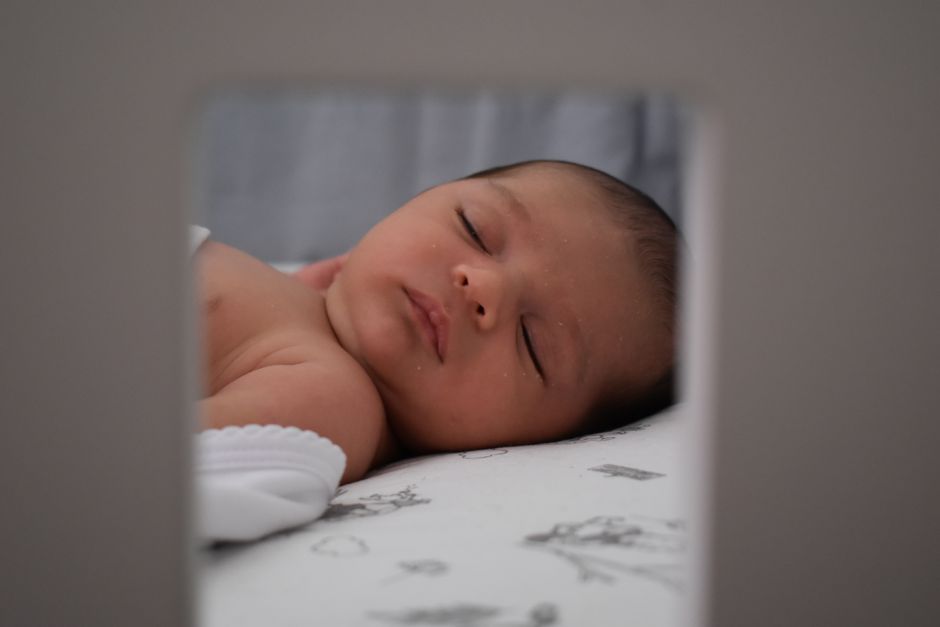
What Happens During a 45-Minute Infant Nap:
- Minutes 0–10 (Light REM Sleep): Baby drifts off, eyes dart beneath eyelids, limbs may twitch lightly.
- Minutes 10–25 (Deep NREM Sleep): Breathing becomes slow and rhythmic, muscles go completely limp. This is when physical restoration occurs.
- Minutes 25–35 (Transition Phase): Brain waves speed back up toward light sleep.
- Minutes 35–45 (The Critical Wake Zone): The infant surfaces into a brief micro-arousal state. They open their eyes, check their surroundings, and adjust their position.
If the environment or physical conditions have changed since they first fell asleep—for instance, if they fell asleep being rocked in warm arms but woke up alone on a cold, flat crib mattress—their primal alarm system fires, flooding them with adrenaline and preventing cycle connection.
5 Short Nap Traps Ruining Your Baby’s Daytime Sleep
1. The Overtiredness Cortisol Spike (Missed Wake Windows)
When parents keep a baby awake too long in hopes of making them “extra tired so they sleep longer,” the exact opposite happens. An overtired baby produces elevated levels of cortisol and adrenaline.
Cortisol acts as an internal biological alarm clock. It allows the baby to crash into initial deep sleep from sheer exhaustion, but the moment they hit the 30-minute transition phase, the circulating stress hormones violently jolt them wide awake.
💡 Pediatric / Mom Tip: Tailor your schedule strictly to age-appropriate wake windows. Review our comprehensive breakdown of newborn sleep mistakes and wake window traps to ensure your baby is put down in their optimal drowsy window.
2. The Undertired Trap (Insufficient Sleep Pressure)
Conversely, putting a baby down too early before adequate adenosine (the brain chemical responsible for sleep pressure) has accumulated leads to shallow sleep.
The baby easily falls asleep because they are slightly fatigued, but there isn’t enough biological drive to push their brain across the 40-minute hurdle into a second cycle.
How to Spot Undertired vs. Overtired Naps:
- Undertired: Baby takes 20+ minutes of quiet babbling or mild fussing to fall asleep, wakes up after 30 minutes smiling and alert, but crashes an hour later.
- Overtired: Baby falls asleep instantly or screams hysterically during the wind-down, wakes after 30 minutes crying, frantic, and rubbing their red eyebrows.
3. Environmental Light Leaks & Circadian Interference
During the day, daylight suppresses the pineal gland’s production of melatonin. Even a sliver of sunlight creeping through window blinds during the 35-minute micro-arousal can stimulate an infant’s optic nerve and tell their circadian clock that it is time to be awake.

The Nursery Sleep Sanctuary Formula:
- 100% Blackout Curtains: The room should be pitch black on a scale of 10/10 (you shouldn’t be able to see your hand in front of your face).
- Continuous White Noise: Run a low, rumbly white noise machine at 60 to 65 decibels positioned 6 feet from the crib to mask sudden household creaks or barking dogs.
- Cool Temperature: Keep the nursery between 68°F and 72°F (20°C–22°C).
4. Rushing into the Nursery at the First Whimper (The 3-Minute Pause)
Many well-meaning parents hear a stir or brief cry over the monitor at minute 38 and immediately rush in, scoop the baby up, and declare the nap finished.
Infants frequently grunt, whimper, toss their head, or even cry out with their eyes closed as they transition between sleep cycles. This is known as active sleep arousal. Rushing in too quickly inadvertently wakes a baby who was just about to fall back into deep sleep.
⚠️ Warning Alert: If your baby is consistently waking early in the morning alongside short naps, read our troubleshooting guide on why your baby wakes up at 5 AM and how to fix early waking.
5. Inconsistent Sleep Association Props
If your baby is nursed, bounced, rocked, or driven to sleep for naps, they form a strong neurological association between that specific external motion and the act of sleeping.
When they surface at minute 35 and find that the motion or nipple has disappeared, their brain perceives a safety threat and sounds the alarm.

Comparison Table: Short Nap Traps vs. Cycle-Connecting Solutions
| Nap Trap Mistake ❌ | Cycle-Connecting Strategy ✅ |
|---|---|
| Pushing baby past wake windows to “tire them out” | Watching tired cues early and putting down before cortisol spikes |
| Dim room with sunlight leaks around window edges | 100% pitch-black nursery with blackout blinds |
| Scooping baby up immediately at the 30-min whimper | Practicing the 3-minute pause to allow self-transition |
| Inconsistent nap environments (swings, car seats, couch) | Consistent crib sleep for the primary midday restorative naps |
| Sudden nap transitions without a wind-down routine | Predictable 5-minute pre-nap routine (darkness, sleep sack, lullaby) |
The 4-Step “Nap Bridge” Protocol to Extend 30-Minute Naps
Step 1: Optimize the Wake Window by 15-Minute Increments
If your baby is taking 30-minute naps, look at their current wake window. If they are over 5 months old, gently stretch their awake window by 10 to 15 minutes every three days to build sufficient sleep pressure.
Step 2: The 5-Minute Pre-Nap Wind-Down Ritual
Cues matter. Five minutes before nap time:
- Enter the darkened nursery.
- Put on the sleep sack.
- Turn on white noise.
- Sing one quiet song while holding baby upright.
- Place them in the crib calm but awake.
Step 3: The “Wait-and-Watch” 3-to-5 Minute Window
When the monitor activates at minute 35:
- Take a deep breath and pause for 3 to 5 minutes.
- Watch the video monitor: are their eyes open or shut? Are they thrashing or just rolling into a new position?
- More than 50% of the time, given a few minutes of quiet space, babies will self-soothe back into deep sleep.
Step 4: The Gentle Hands-On Soothe (The “Nap Extension”)
If baby is crying and cannot reconnect:
- Go into the dark room without turning on lights or picking them up.
- Place a firm, warm hand on their chest and gently jiggle or pat their tummy while rhythmically shushing for 2 minutes.
- Once they calm, slowly lift your hand and step out of the room.
Extending short naps requires patience and neurological maturation. By aligning your baby’s internal biological clock with an optimal environment, those frustrating 30-minute catnaps will soon turn into restorative, uninterrupted blocks of rest for both of you.
Google AdSense Placeholder
Slot ready for "in-article". Set your AdSense publisher ID in settings when approved.
Frequently Asked Questions by Moms
Why do babies consistently wake up after 30 to 45 minutes of napping? ▼
A normal infant sleep cycle lasts between 35 and 45 minutes. At the end of light active sleep, babies naturally surface. If their sleep onset props are missing or they are overtired, they startle completely awake instead of transitioning into the next deep sleep cycle.
Are short 30-minute naps biologically normal for newborns? ▼
Yes, short catnaps are developmentally normal for babies under 4 to 5 months old because their circadian rhythm and neurological sleep architecture are still maturing. However, past 5 months, habitual short naps usually indicate wake window timing errors or environmental sleep traps.
What is the 'Crib 60' or 'Crib 75' method for extending naps? ▼
It is a gentle nap-extension technique where parents leave the baby in the dark crib for a full 60 to 75 minutes from the time they were placed down, giving them uninterrupted space to practice re-settling without immediate parental stimulation.

Written by Sarah Collins
Doctor-Reviewed & Fact-CheckedMom of Two & Founder of Mommy Tips & Life
Sarah is a mother of two (Liam & Maya) sharing evidence-based parenting guides, infant sleep solutions, and baby safety alerts tested in real family life and vetted against AAP clinical standards.
Google AdSense Placeholder
Slot ready for "footer-banner". Set your AdSense publisher ID in settings when approved.