7 Signs Your Baby's Formula Isn't Agreeing with Them (And Pediatrician-Approved Swaps)
Is your formula-fed baby screaming during feeds, breaking out in hives, or suffering from explosive stools? Learn 7 unmistakable signs of formula intolerance and doctor-vetted solutions.
Sarah Collins
Mom of Two & Founder of Mommy Tips & Life
Google AdSense Placeholder
Slot ready for "header-banner". Set your AdSense publisher ID in settings when approved.
🩺 Medical Disclaimer: This guide is for educational purposes and should not replace pediatric or obstetric medical consultation.
🛍️ Affiliate Disclosure: We may earn a small commission when you purchase through our links at no extra cost to you.
When my second baby, Lucas, was seven weeks old, every single feeding turned into an emotional battlefield. Within ten minutes of finishing his bottle, his tiny tummy would distend into a hard drum, his face would turn bright crimson, and he would let out high-pitched, piercing shrieks that rattled my soul.
I remember standing in the kitchen aisle at 2:00 AM, staring at shelves packed with gentle, sensitive, organic, and hypoallergenic formula cans, feeling totally paralyzed by mom-guilt. I had already switched formulas three times in two weeks on a whim, convinced I was poisoning my baby’s delicate stomach. The sleep deprivation made every decision feel terrifying, and every online forum gave conflicting advice.
The Upfront Breakthrough Summary: The turning point came when our pediatric gastroenterologist explained that constant formula hopping was inflaming his gut even further. By stopping the chaotic switches and identifying Lucas’s true underlying issue—Cow’s Milk Protein Allergy (CMPA) rather than simple gas—we implemented a 3-step healing strategy: transitioning systematically to an extensively hydrolyzed formula, adopting paced bottle feeding to eliminate aerophagia, and allowing a strict 10-day gut stabilization window. Within 72 hours, the screaming ceased, his skin cleared, and feeding finally became a peaceful bonding ritual.
1. The 7 Telltale Signs Your Baby’s Formula Isn’t Agreeing with Them
Distinguishing between typical newborn digestive immaturity and a true formula intolerance or milk protein allergy is crucial. If your baby exhibits several of the following red flags consistently across multiple feedings, their current formula is likely causing systemic inflammation.
Sign #1: Persistent Blood or Visible Stringy Mucus in Diapers
Finding tiny streaks or specks of red or dark brown blood in your baby’s diaper is terrifying, but it is one of the clearest clinical hallmarks of Cow’s Milk Protein-Induced Allergic Proctocolitis.
When an infant cannot tolerate intact bovine milk proteins, their colon becomes inflamed and irritated, shedding microscopic intestinal lining and mucus into the stool.
⚠️ Warning Alert: If you ever spot active bright red blood, jelly-like maroon stools, or persistent green mucus lasting longer than 48 hours, photograph the diaper immediately and take it to your pediatrician for a stool guaiac test (hemoccult test).
Sign #2: Explosive, Watery Diarrhea or Hard Clay-Like Constipation
Healthy formula-fed stools are typically peanut-butter consistency and pasty tan-to-yellow.
- Diarrhea Traps: Liquid, frothy stools that soak directly into the diaper core within seconds, occurring 6 to 8 times daily with acidic diaper rash.
- Severe Constipation: Passing dry, hard pellets resembling marble stones, accompanied by intense straining, rectal bleeding, or tears. If your infant is straining with hard pebble stools, see our pediatrician-approved breakdown on baby constipation mistakes and gentle home relief.
If your baby is also struggling with severe trapped bubbles alongside stool changes, review our complete guide on how to relieve painful trapped gas and infant colic using pediatric wind-release routines.
Sign #3: Immediate Post-Feed Screaming and Tummy Distension
Does your baby’s belly look round, shiny, and tight like a basketball after drinking just two ounces?
When infant gut flora cannot break down specific carbohydrate chains or proteins in standard formulas, bacterial fermentation takes over, creating massive volumes of painful methane and hydrogen gas in the upper intestines.
Sign #4: Severe Acid Flare-Ups & Projectile Spit-Up
While mild spit-up (“happy spitting”) is normal in infancy, formula intolerance frequently triggers severe esophageal burning. If your baby arches their back, coughs wetly during feeds, or rejects the bottle midway through, they may be experiencing silent reflux triggered by milk protein inflammation.
Read our comprehensive breakdown of 7 hidden signs of baby silent reflux to see if acid burn is the real culprit behind your nursery struggles.
Sign #5: Flaring Eczema, Facial Hives, and Rough Skin Patches
Skin is the mirror of the infant gut. When an offending formula allergen triggers an immune cascade, histamines cause red, dry, scaly patches on cheeks, elbows, and behind knees. If switching detergents and moisturizers doesn’t calm the flare-up, gut inflammation is often the hidden driver—see our in-depth pediatric guide on 7 hidden signs of cow’s milk protein allergy in babies to recognize telltale diaper and skin red flags.
Sign #6: Chronic Nasal Congestion, Wheezing & Stridor
Many parents mistake allergic rhinitis for a perpetual winter cold. When bovine proteins irritate the mucosal linings, babies produce excess mucus, resulting in a constant “snorting” or “rattling” breathing sound even when free of fever.
Sign #7: Growth Faltering and Feeding Aversion
Babies are smart. When drinking milk causes visceral abdominal cramps 15 minutes later, they quickly develop an aversion to the bottle. They may bat the nipple away, scream upon seeing the feeding bib, or drop weight percentiles due to inadequate intake.
2. Common Formula Mistakes vs. Pediatric Best Practices
Many well-meaning parents unintentionally exacerbate infant digestive distress through common formula preparation and switching errors.
| Common Parent Mistake ❌ | Doctor-Recommended Best Practice ✅ |
|---|---|
| Formula Hopping: Switching brands every 48 hours when baby fusses. | 10-Day Adjustment: Follow our step-by-step gradual formula transition guide over 7 to 14 days before evaluating results. |
| Vigorous Shaking: Shaking the bottle violently, creating hundreds of micro-bubbles. | Gentle Swirling or Warm Pitcher Mixing: Swirl gently or use a formula pitcher to let bubbles settle. |
| Assuming Lactose is the Problem: Buying low-lactose formulas without medical advice. | Targeting Protein Structure: Consult your doctor about hydrolyzed whey vs. soy vs. amino acid bases. |
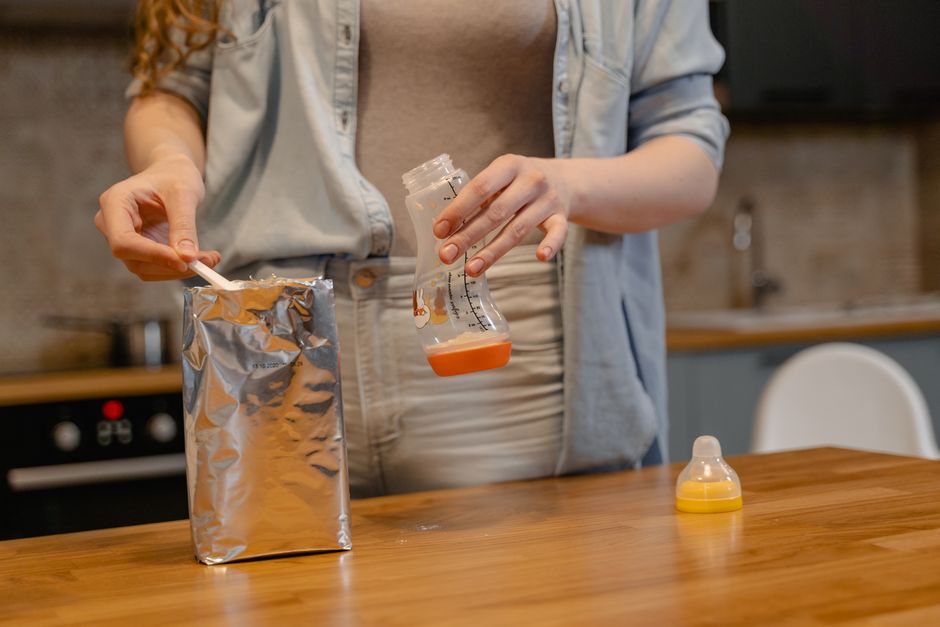
| Incorrect Powder-to-Water Ratios: Adding extra powder to “fill baby up” or extra water to stretch supply. | Strict Measurement: Follow exact manufacturer scoops; incorrect ratios stress infant kidneys. |
3. The 4 Formula Categories Explained: What to Discuss With Your Doctor
Before buying new cans at the grocery store, understand the clinical hierarchy of infant formula formulations:
1. Standard Cow’s Milk-Based Formula
- Protein Structure: Intact bovine whey and casein proteins (e.g., 60:40 or 20:80 ratios).
- Best For: 85%+ of healthy full-term infants with mature digestive tracts and no family history of atopy.
2. Partially Hydrolyzed (“Gentle” or “Sensitive”) Formula
- Protein Structure: Proteins are broken down into smaller peptide chains, making digestion slightly faster and easing mild gas.
- Best For: Infants with mild fussiness and gas, but not sufficient for diagnosed milk protein allergy.
3. Extensively Hydrolyzed Formula (Hypoallergenic)
- Protein Structure: Proteins are pre-digested into tiny peptides that the infant’s immune system does not recognize as foreign allergens (e.g., Nutramigen, Alimentum).
- Best For: 90% of babies with diagnosed Cow’s Milk Protein Allergy (CMPA) and eczema.
4. Amino Acid-Based Formula (Elemental)
- Protein Structure: 100% free synthetic amino acids with zero milk peptides (e.g., EleCare, Neocate).
- Best For: Severe non-IgE mediated allergies, eosinophilic esophagitis (EoE), or babies who fail extensively hydrolyzed formulas.
💡 Pediatric / Mom Tip: Never switch to a soy-based formula without pediatric clearance. Up to 50% of babies with cow’s milk protein sensitivity also develop cross-reactivity and allergic responses to soy protein!

4. Step-by-Step 7-Day Formula Transition Protocol
If you and your pediatrician decide a formula switch is necessary, follow this gradual transition schedule to protect your baby’s gut from sudden osmotic shocks:
Day 1 & Day 2: The 25% Intro
- Mix 75% Old Formula + 25% New Formula in every bottle.
- Watch for acute allergic reactions (swelling, hives, wheezing).
Day 3 & Day 4: The 50/50 Balance
- Mix 50% Old Formula + 50% New Formula.
- Stools may change color (hypoallergenic formulas often produce dark green, pungent stools—this is normal).
Day 5 & Day 6: The 75% Step-Up
- Mix 25% Old Formula + 75% New Formula.
Day 7 and Beyond: 100% New Formula
- Feed exclusively with the new formula and maintain for at least 10 to 14 days before assessing final digestive comfort.
Summary & When to Seek Immediate Medical Attention
Watching your baby suffer after every feeding is exhausting and heartbreaking. Remember that finding the right formula is not a personal failure—infant digestive systems develop at wildly different speeds.
Call your pediatrician immediately if your baby exhibits:
- Inconsolable crying exceeding 3 hours consecutively.
- High fever accompanied by vomiting.
- Signs of dehydration: dry mouth, no wet diapers in 6 hours, sunken soft spot (fontanelle), or lack of tears.
- Weight stagnation or drop in growth percentiles.
With patience, methodical adjustments, and medical guidance, you will find the exact nutritional balance your baby needs to thrive. And as your little one approaches the 6-month milestone, prepare for solids safely by checking our doctor-backed guide on 5 baby-led weaning mistakes and gagging vs. choking safety rules.
Google AdSense Placeholder
Slot ready for "in-article". Set your AdSense publisher ID in settings when approved.
Frequently Asked Questions by Moms
How long does it take for a baby to adjust to a new formula? ▼
It generally takes 7 to 14 full days for an infant's sensitive gut microbiome and digestive enzymes to adjust to a new formula formulation. Switching formulas too frequently or abruptly can worsen gas, stool inconsistency, and tummy cramping.
What is the difference between lactose intolerance and Cow's Milk Protein Allergy (CMPA) in infants? ▼
True lactose intolerance (inability to break down milk sugar) is extremely rare in newborns. Most formula intolerances are actually Cow's Milk Protein Allergy (CMPA) or sensitivity, which is an immune reaction to the whey and casein proteins in bovine milk, causing intestinal inflammation, eczema, mucus in stools, and severe reflux.
When should I switch to an extensively hydrolyzed or hypoallergenic formula? ▼
You should discuss switching to an extensively hydrolyzed (hypoallergenic) formula with your pediatrician if your baby displays persistent blood or visible mucus in their diapers, severe atopic eczema flares, projectile reflux, or poor weight gain.

Written by Sarah Collins
Doctor-Reviewed & Fact-CheckedMom of Two & Founder of Mommy Tips & Life
Sarah is a mother of two (Liam & Maya) sharing evidence-based parenting guides, infant sleep solutions, and baby safety alerts tested in real family life and vetted against AAP clinical standards.
Google AdSense Placeholder
Slot ready for "footer-banner". Set your AdSense publisher ID in settings when approved.