Postpartum Tailbone Pain: 5 Healing Mistakes Making Sitting and Nursing Agonizing
Struggling to sit, nurse, or stand up after birth due to sharp, knife-like coccyx pain? Learn why donut cushions backfire, pelvic floor triggers, and physical therapist-approved relief.
Sarah Collins
Mom of Two & Founder of Mommy Tips & Life
Google AdSense Placeholder
Slot ready for "header-banner". Set your AdSense publisher ID in settings when approved.
🩺 Medical Disclaimer: This guide is for educational purposes and should not replace pediatric or obstetric medical consultation.
🛍️ Affiliate Disclosure: We may earn a small commission when you purchase through our links at no extra cost to you.
It was day twelve after giving birth to my daughter Maya, and while my hospital stitches were steadily improving, sitting down to nurse her had become pure physical torture. The moment my bottom touched our plush nursery glider, a sharp, white-hot knife of pain shot straight through my tailbone.
Worse than sitting down was the agonizing moment of trying to stand back up. I would have to brace my arms against the armrests, grit my teeth, and groan as my lower pelvis felt like it was splitting in two. Desperate for relief, I ended up nursing Maya while standing propped against kitchen counters or lying flat on my side in bed, crying from sheer exhaustion and feeling like my body was permanently broken.
The Upfront Breakthrough Summary: The turning point in my healing came during an urgent evaluation with a Pelvic Floor Physical Therapist (PT). She revealed that I had sustained a severe sacrococcygeal ligament strain compounded by high-tension spasms in my pelvic floor muscles, and that the circular donut pillow I had bought online was actively pulling my coccyx out of alignment. By switching to a 3-step ergonomic recovery protocol—using an open-cutout wedge cushion, practicing diaphragmatic pelvic floor downtraining, and adopting the sidelying nursing latch—I reduced my pain by 70% within two weeks.
The Anatomy: Why the Coccyx Takes the Brunt of Childbirth
To heal your tailbone, you must understand how your pelvis opens during pregnancy and labor. The coccyx is not just an isolated bone; it serves as the crucial anchor point for the pelvic diaphragm—including the coccygeus and levator ani muscles.
       ┌────────────────────────────────────────────────────────┐
       │             THE POSTPARTUM COCCYDONIA CYCLE            │
       ├──────────────────────────┬─────────────────────────────┤
       │ Delivery Hyperextension  │ Hypertonic Muscle Spasm     │
       │ (Baby's head pushes bone)│ (Pelvic floor clenches tight)│
       ├──────────────────────────┼─────────────────────────────┤
       │ Ligament micro-tears     │ Chronic forward pull on bone│
       │                          │                             │
       │ ➔ Sitting transfers full │ ➔ Standing up forces pelvic │
       │   torso weight onto the  │   muscles to tug sharply    │
       │   inflamed coccyx joint  │   on the bruised tailbone   │
       └──────────────────────────┴─────────────────────────────┘
During the second stage of labor (pushing), the coccyx must physically pivot backward by 1 to 2 centimeters to widen the pelvic outlet.
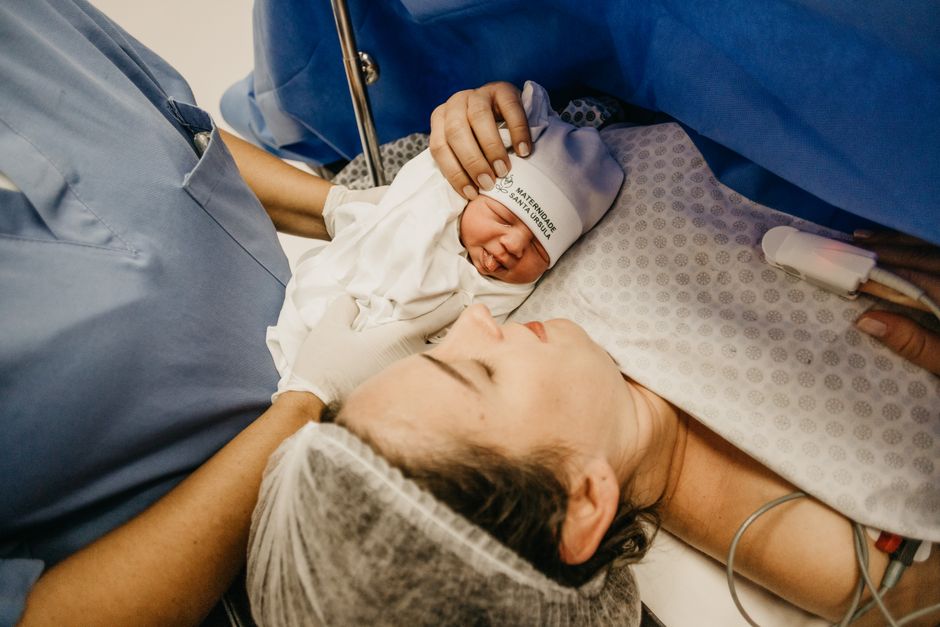
If the baby’s head descends rapidly, if delivery requires forceps or vacuum assistance, or if you pushed while lying flat on your back (lithotomy position), the tailbone can be aggressively bruised, subluxated, or fractured.
For a broader understanding of pelvic recovery, explore our guides on pelvic organ prolapse warning signs and healing from postpartum perineal tears.
1. The Donut Pillow Trap (Why It Worsens Coccyx Pain)
The most universal mistake newly postpartum mothers make is sitting on a traditional circular donut pillow.
While donut cushions are designed to relieve hemorrhoid pressure, they are disastrous for coccydynia.
   ❌ CIRCULAR DONUT PILLOW              ✅ U-SHAPED WEDGE CUSHION

       [Pelvic Floor Sags Down]               [Sit Bones Supported Firmly]
                 \                                         |
         (Spreads Sit Bones Apart)                 (Open Rear Cutout)
                 |                                         |
     [Tension Tugs Coccyx Joint]             [Coccyx Floats Zero-Pressure]
The Biomechanical Flaw:
When you sit inside the hollow ring of a donut pillow, your ischial tuberosities (sit bones) are forced apart. This creates lateral tension across your sacrotuberous ligaments and allows your pelvic organs and pelvic floor muscles to hammock downward into empty space.
Every time you stand up, those overstretched muscles contract violently, tugging the inflamed tailbone forward.
The Clinical Solution:
- Ditch the donut cushion immediately.
- Use an orthopedic coccyx cushion with a rear U-shaped cutout. This design supports your thighs and sit bones with high-density memory foam while leaving the tailbone suspended in completely open air with zero contact.
2. Inadvertently Clenching (The Kegel Mistake)
When postpartum moms feel pelvic weakness or pain, their instinct is often to perform hundreds of Kegels (pelvic floor contractions).
However, in postpartum coccydynia, the pelvic floor muscles attached to the tailbone are already in a hypertonic, guarded spasm from birth trauma.
| Common Mistake ❌ | Healthy Alternative ✅ |
| :--- | :--- |
| Sitting on a circular donut ring cushion | Using an orthopedic wedge with an open rear U-cutout |
| Doing aggressive Kegels to "tighten" the pelvis | Practicing diaphragmatic breathing and reverse Kegels |
| Slouching back onto the tailbone in recliners | Sitting forward on sit bones with lumbar roll support |
| Nursing in an upright wooden rocking chair | Nursing in the sidelying position or laid-back posture |
| Straining through painful postpartum bowel movements | Using a stool riser (Squatty Potty) and stool softeners |
Doing repetitive Kegels on a sprained tailbone is like doing bicep curls with a sprained wrist—it constantly yanks on injured ligaments and prevents tissue healing.
💡 Pediatric / Mom Tip: Practice the “Reverse Kegel” (Pelvic Floor Drop): Inhale deeply into your belly and lower ribs. As your lungs expand, visualize your sit bones widening and gently softening your pelvic floor muscles downward, as if you are releasing a sigh of relief into your seat.
3. Straining During Postpartum Bowel Movements
The nerves and muscles supporting your coccyx run in intimate proximity to the rectum. Severe constipation and straining during early postpartum bowel movements dramatically elevate intra-abdominal pressure, forcing the bruised tailbone backward against inflamed tissue.
If the fear of bathroom visits is causing you distress, follow our doctor-vetted protocol on overcoming the fear of your first postpartum poop to eliminate pelvic strain through magnesium, hydration, and mechanical foot elevation.
4. Posture Faults: The “Glider Slump”
When nursing on low couches or soft armchairs, exhausted mothers naturally sink backward into a rounded C-curve spine. This pelvic “tuck” shifts your entire upper body weight directly off your ischial tuberosities and onto your sacrum and tailbone.

Ergonomic Nursing Adjustments:
- The Lumbar Roll: Place a rolled-up towel or lumbar pillow behind your lower back to maintain a neutral lordotic curve.
- Elevate Your Knees: Place a footstool beneath your feet so your hips are bent at an angle greater than 90 degrees.
- The 30-Degree Forward Lean: When rising from a chair, hinge your torso forward from your hip crease like a skier, press through your heels, and stand up without dragging your tailbone across the cushion.
5. Overlooked Core and Hip Imbalances (Diastasis Recti)
The coccyx is part of your pelvic stability ring. If your deep abdominal wall has separated during pregnancy, your gluteal muscles and piriformis will overcompensate to stabilize your pelvis, compressing the sciatic nerve and coccygeal nerves.
Review our diagnostic guide on exercises to avoid with postpartum diastasis recti to ensure your core rehabilitation isn’t worsening pelvic floor tension.
⚠️ Warning Alert: If severe tailbone pain is accompanied by high fevers, radiating numbness down both legs, or loss of bowel/bladder control (symptoms of cauda equina syndrome), seek immediate emergency medical care. For other critical postpartum warning signs, review our postpartum recovery red flags checklist.
3 Physical Therapist-Approved Stretches for Daily Relief
Perform these gentle stretches twice daily once cleared by your obstetrician:
1. DIAPHRAGMATIC CHILD'S POSE (Wide-Knee)
└── Kneel on a soft rug, separate knees wide, and sink hips toward heels.
└── Rest forehead on the floor and take 10 slow, deep belly breaths.
└── Opens the pelvic floor and releases tension off the coccygeus muscle.

2. SUPINE FIGURE-FOUR (Piriformis Release)
└── Lie on your back with knees bent.
└── Cross your right ankle over your left knee, gently drawing left thigh toward chest.
└── Hold for 30 seconds per side to release deep gluteal tension.

3. CAT-COW WITH SACRAL FOCUS
└── On all fours, gently tilt your pelvis to tuck and extend within pain-free range.
└── Do not force end-range extension; focus on rhythmic sacral mobility.
Summary Checklist for Parents
- Replaced circular donut cushion with an open rear U-shaped wedge.
- Switched to sidelying or laid-back nursing positions.
- Practiced daily pelvic floor downtraining (Reverse Kegels).
- Supported lower back with lumbar roll to prevent tailbone slumping.
- Avoided straining during bowel movements with footstool elevation.
Google AdSense Placeholder
Slot ready for "in-article". Set your AdSense publisher ID in settings when approved.
Frequently Asked Questions by Moms
Why does my tailbone hurt so badly after giving birth? ▼
During vaginal delivery, the baby's head pushes the coccyx (tailbone) backward to expand the birth canal. This can cause severe bruising, ligament sprains, micro-fractures, or trigger high-tension spasms in the levator ani and coccygeus muscles of the pelvic floor.
Can you have postpartum tailbone pain after a C-section? ▼
Yes. During pregnancy, high levels of the hormone relaxin loosen pelvic ligaments, while the heavy gravitational weight of the fetus exerts continuous downward pressure on the sacrococcygeal joint, causing coccydynia regardless of delivery mode.
Why are round donut pillows bad for postpartum tailbone pain? ▼
Circular donut pillows allow the pelvic floor muscles to sag into the center hole unsupported. This increases downward gravitational pull on the sacrotuberous ligaments and spreads the sit bones (ischial tuberosities), increasing shearing tension directly across the bruised coccyx.
How long does postpartum coccydynia take to heal? ▼
With conservative physical therapy management, proper ergonomic seating (U-shaped wedge cushion), and pelvic floor downtraining, acute tailbone bruising improves significantly within 6 to 12 weeks.

Written by Sarah Collins
Doctor-Reviewed & Fact-CheckedMom of Two & Founder of Mommy Tips & Life
Sarah is a mother of two (Liam & Maya) sharing evidence-based parenting guides, infant sleep solutions, and baby safety alerts tested in real family life and vetted against AAP clinical standards.
Google AdSense Placeholder
Slot ready for "footer-banner". Set your AdSense publisher ID in settings when approved.