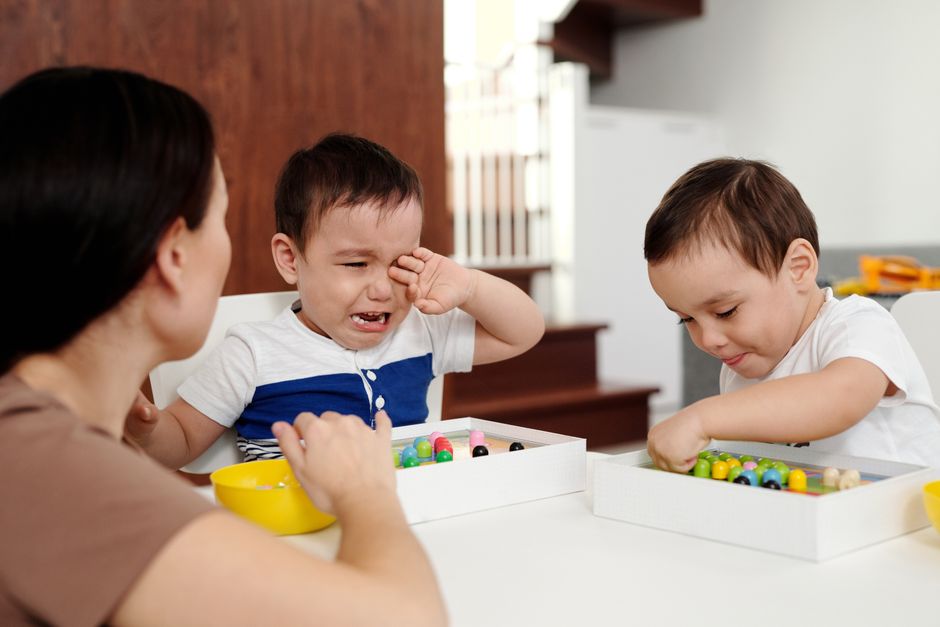
How to Handle Public Toddler Tantrums: 5 Common Traps That Escalate Meltdowns
Humiliated by a grocery store meltdown? Learn the 5 biggest mistakes parents make during public tantrums, the neuroscience of amygdala hijack, and how to co-regulate.
Sarah Collins
Mom of Two & Founder of Mommy Tips & Life

Google AdSense Placeholder
Slot ready for "header-banner". Set your AdSense publisher ID in settings when approved.
🩺 Medical Disclaimer: This guide is for educational purposes and should not replace pediatric or obstetric medical consultation.
🛍️ Affiliate Disclosure: We may earn a small commission when you purchase through our links at no extra cost to you.
It happened in Aisle 4 of Target at 11:30 AM on a crowded Saturday. My two-and-a-half-year-old son Leo wanted a giant paw-patrol bath toy that was not on our shopping list. When I gently said “not today, sweetie,” his face turned crimson, he threw his entire body backward onto the linoleum floor, and began shrieking at the top of his lungs, thrashing his legs against the bottom shelf while boxes tumbled around him.
Within thirty seconds, an entire aisle of strangers turned to stare. An elderly woman gave me a piercing look of disapproval, while a younger couple hurried past with uncomfortable smirks. My face burned with intense heat, my stomach twisted into a knot of sheer humiliation, and in a desperate panic to make the noise stop, I tried everything: I hissed, I pleaded, I promised ice cream, and I tried to yank him up by his wrists. Nothing worked; he only screamed louder. I ended up abandoning my full cart, carrying an arching, kicking toddler through the parking lot while fighting back hot tears of shame.
The Upfront Breakthrough Summary: A public toddler meltdown is not a behavioral failure or defiance—it is a physiological neurobiological storm (amygdala hijack) triggered by sensory overload and immature emotional regulation. The escalation happens when parents react from their own social panic by lecturing, threatening, or bribing. The turning point came when our pediatric behavioral specialist taught us the “Calm Anchor” method: ignore the audience, drop to eye level, reduce spoken words by 90%, physically protect their body, and hold boundaries with calm, loving neutrality. Within two weeks, public meltdowns dropped from explosive public scenes to brief, connected 60-second releases.
1. The Neuroscience of Public Meltdowns: Amygdala Hijack Explained
To handle a public meltdown with confidence, you must understand the architecture of the toddler brain.
The human brain develops from the bottom up. In toddlers (ages 1 to 4), the Prefrontal Cortex—the center for impulse control, rational logic, and emotional regulation—is barely under construction:
[ Public Sensory Overload + A Firm Boundary ("No Candy") ]
                           ⬇
[ Amygdala Detects Perceived Threat / Frustration ]
                           ⬇
[ Prefrontal Cortex (Logic Center) Shuts Completely OFFLINE ]
                           ⬇
- If Met with Lecturing, Pleading, or Anger: Fight-or-Flight Escalates ❌
- If Met with Low Voice, Neutral Body & Co-Regulation: Nervous System Returns to Calm ✅
When a boundary is set in a stimulating environment, their amygdala floods the bloodstream with adrenaline and cortisol. The logical brain goes offline. Talking, explaining, reasoning, or yelling at a dysregulated child is the neurological equivalent of trying to explain algebra to someone in the middle of a burning building!
For more guidance on emotional regulation and stopping reactive parenting traps, review our guides on how to stop toddler tantrums fast, handling toddler whining and negotiation traps, and stopping your toddler from running away in public parking lots.

2. The 5 Common Traps That Escalate Public Meltdowns
When all eyes in the store are on you, parental panic instinctively drives 5 counter-productive reactions:
Trap #1: The “Audience-Pleasing” Bribe (Intermittent Reinforcement)
- The Reaction: In desperate humiliation, you hand your child the candy bar or smartphone just to stop the screaming in the checkout line.
- The Neurological Cost: You just rewarded the amygdala hijack. The toddler’s brain stores a powerful lesson: “If I scream loud enough in public, Mom will surrender the boundary.” This guarantees that the next public trip will bring an even bigger tantrum.
Trap #2: Lecturing and Reasoning During the Peak Storm
- The Reaction: Talking constantly: “Leo, look at me! Big boys don’t cry in the store! We have toys at home! If you stop crying right now, we can go to the playground!”
- The Neurological Cost: A dysregulated brain cannot decode multi-step sentences. Your rapid voice adds more acoustic stimulation to an already flooded auditory cortex, driving the child further into panic.
Trap #3: Matching Their Chaos with Parental Anger
- The Reaction: Clenching your jaw, hissing threats (“You are in big trouble when we get home!”), or aggressively dragging them by the arm.
- The Neurological Cost: Toddlers regulate through your nervous system (co-regulation). If your mirror neurons project rage and panic, their nervous system perceives danger and escalates into full fight-or-flight combat.
Trap #4: The Public “Isolation Time-Out”
- The Reaction: Forcing a screaming child into a corner of the store or ignoring them while walking twenty feet ahead.
- The Neurological Cost: Isolating a dysregulated child triggers abandonment panic. Learn why pediatric psychologists favor co-regulation over isolation in our guide on time-out vs time-in toddler discipline strategies.
Trap #5: Physical Escalations (Hitting, Kicking, and Biting)
When physical thrashing occurs, parents often freeze or pull away. Review our actionable protocol on how to stop toddler hitting and biting immediately without using physical punishment.

3. The 4-Step “CALM ANCHOR” Protocol for Public Spaces
The next time your toddler hits the floor in the grocery store, take a slow breath and execute this 4-step framework:
[ Step 1: Shield the Boundary ] ➔ "I hear you. The Paw Patrol toy is staying here."
                 ⬇
[ Step 2: Drop & Anchor ]       ➔ Kneel down; keep hands open and body soft.
                 ⬇
[ Step 3: Minimalist Words ]    ➔ "You are safe. I am right here with you."
                 ⬇
[ Step 4: Relocate if Needed ]  ➔ Gentle bear-hug carry to car or quiet corner.
Step 1: Mute the “Audience Noise” in Your Own Mind
The hardest part of a public tantrum is your own fear of judgment. Remind yourself: You are parenting your child, not performing for strangers. Any parent who has raised a toddler has been in your exact shoes. Anyone judging you has either forgotten what toddlers are like or has never raised one.
Step 2: Drop to Eye Level and Ground Your Body
Get down on one knee next to your child. Do not tower over them. Keep your posture open, your shoulders relaxed, and your hands visible and calm.
Step 3: Use the “Low and Slow” 5-Word Rule
Limit your verbal input to a slow, calm whisper of five words or fewer:
- “You are safe. I’m here.”
- “Big feelings. I’ve got you.”
- “It’s hard to hear no.”
Step 4: The Dignified “Reset Exit” (Zero Shame!)
If your child is throwing items, kicking other shoppers, or having a prolonged sensory meltdown, do not stay in the aisle.
- Gently scoop them up into a secure, loving bear hug (securing their arms against your body).
- Calmly tell the cashier or store associate: “We are having a big toddler moment; I will be right back for my cart.”
- Carry your child out to your quiet car, turn on the air conditioning, and sit together in silence while their nervous system resets.
4. Reaction Comparison: What to Avoid vs. What Works
| Ineffective Reaction ❌ | Calming “Anchor” Alternative ✅ |
|---|---|
| Pleading & Bribing: “Please stop crying and I’ll buy you a cake pop!” | Holding Boundary: “The answer is no. I know that makes you sad.” |
| Endless Explanations: Talking and debating in Aisle 4. | Minimal Whispering: “You’re safe. I’m right here.” |
| Hissing in Anger: “Stop embarrassing me right now!” | Deep Belly Breaths: Modeling calm nervous system regulation. |
| Abandoning Cart in Shame: Feeling like a failed mother. | Dignified Exit: Taking a 5-minute calm break in the car. |

5. A Message for Every Mom Who Has Cried in a Parking Lot
Mama, having a toddler scream on the floor of a supermarket does not mean you have a “bad child,” and it certainly does not mean you are a “bad mom.”
Toddlerhood is a whirlwind of intense emotions trapped in tiny bodies that lack the vocabulary to express them. When you remain calm, hold your boundaries with love, and refuse to give in to public pressure, you are giving your child the greatest gift possible: the knowledge that your love is an unshakeable anchor, even in the middle of their biggest storms.
Google AdSense Placeholder
Slot ready for "in-article". Set your AdSense publisher ID in settings when approved.
Frequently Asked Questions by Moms
Why do toddlers always seem to have their biggest tantrums in public places? ▼
Public venues like supermarkets, malls, and restaurants combine high sensory stimulation (bright fluorescent lights, crowds, background music) with intense boundary triggers (saying 'no' to sugary treats or toys). On top of that, toddlers instinctively sense their parent's social anxiety and self-consciousness, which dysregulates their mirror neurons and amplifies their emotional storm.
Why doesn't reasoning or lecturing work during a full-blown toddler meltdown? ▼
During a tantrum, the toddler's emotional brain (amygdala) has completely hijacked their logical brain (prefrontal cortex). The prefrontal cortex temporarily goes 'offline,' meaning the child is neurobiologically incapable of processing verbal logic, lectures, or consequence negotiations until their physiological nervous system returns to a state of safety.
Should I ever give in to a public tantrum to avoid public embarrassment? ▼
No. Giving in to a tantrum—such as handing over the candy bar or toy to stop screaming—creates powerful 'intermittent reinforcement'. This accidentally teaches your child's brain that screaming and physical thrashing are effective negotiating strategies, guaranteeing larger and more prolonged future meltdowns.

Written by Sarah Collins
Doctor-Reviewed & Fact-CheckedMom of Two & Founder of Mommy Tips & Life
Sarah is a mother of two (Liam & Maya) sharing evidence-based parenting guides, infant sleep solutions, and baby safety alerts tested in real family life and vetted against AAP clinical standards.
Google AdSense Placeholder
Slot ready for "footer-banner". Set your AdSense publisher ID in settings when approved.