Toddler Throwing Food from the High Chair? 5 Mealtime Mistakes That Escalate the Battle
Tired of scrubbing food off the floor after every meal? Discover why toddlers throw food from high chairs and gentle, effective discipline strategies that stop the habit fast.
Sarah Collins
Mom of Two & Founder of Mommy Tips & Life
Google AdSense Placeholder
Slot ready for "header-banner". Set your AdSense publisher ID in settings when approved.
🩺 Medical Disclaimer: This guide is for educational purposes and should not replace pediatric or obstetric medical consultation.
🛍️ Affiliate Disclosure: We may earn a small commission when you purchase through our links at no extra cost to you.
Dinner time in my home used to look like a culinary war zone. I would spend forty-five minutes steaming organic broccoli, roasting sweet potatoes, and plating a balanced meal for my 16-month-old daughter Maya. I’d set the suction bowl on her high chair tray with high hopes.
Within thirty seconds, Maya would look directly into my eyes, flash a cheeky grin, and swipe half a handful of sweet potato puree straight onto the dining room floor. Splat. I would gasp, yell “No, Maya! Food is for eating, not throwing!”, and immediately drop to my knees with a paper towel to scrub the mess. Maya would giggle with delight and immediately chuck a piece of broccoli across the room. By the end of dinner, I was on the verge of tears, exhausted from scrubbing grout, and wondering why my toddler turned every meal into an Olympic throwing event.
The Upfront Breakthrough Summary: Toddlers do not throw food out of malice or defiance; they throw because of cause-and-effect curiosity, sensory exploration, or a pre-verbal cue that their appetite is sated. When parents react with big emotional gasps, lectures, or pick-up games, they inadvertently turn food throwing into the most entertaining theater in the house. By swapping high emotional reactions for a neutral “All Done / No Thank You Bowl”, plating micro-portions (the “Rule of Two”), ensuring proper high chair footrest ergonomics, and calmly ending the meal upon the second toss, you can eliminate high chair battles within 7 days.
1. The Psychology of the High Chair Toss: Why Toddlers Do It
To extinguish the behavior, we have to look through our toddler’s developmental lens:
- The Physics Discovery Phase: Around 10 to 18 months, toddlers discover the magic of gravity. “When I let go of this noodle, it falls downward and makes a funny squish sound!”
- The “Mom Reaction” Reward: Toddlers crave parental engagement. A loud, dramatic gasp (“NO NO NO!”) provides intense dopamine stimulation that reinforces the action far more than quiet eating.
- The “Game of Fetch”: If dropping a piece of cheese causes mommy to bend over, disappear under the tray, and pop back up, the toddler believes you are playing a fun interactive game.
[ Toddler Drops Food From Tray ]
                 ⬇
[ Parent Reacts With Dramatic Emotion / Plays Fetch ]
                 ⬇
[ Toddler Brain: "Wow, Look at This Power & Fun Game!" ]
                 ⬇
- If Continued With Shouting & Bribes: High Chair Battles & Food Waste ❌
- If Handled With Neutral Boundary & "No Bowl": Calm, Respectful Mealtimes ✅
For more evidence-based strategies on managing difficult toddler behavior calmly, see our guide on how to get toddlers to listen without yelling and how to stop toddler whining.
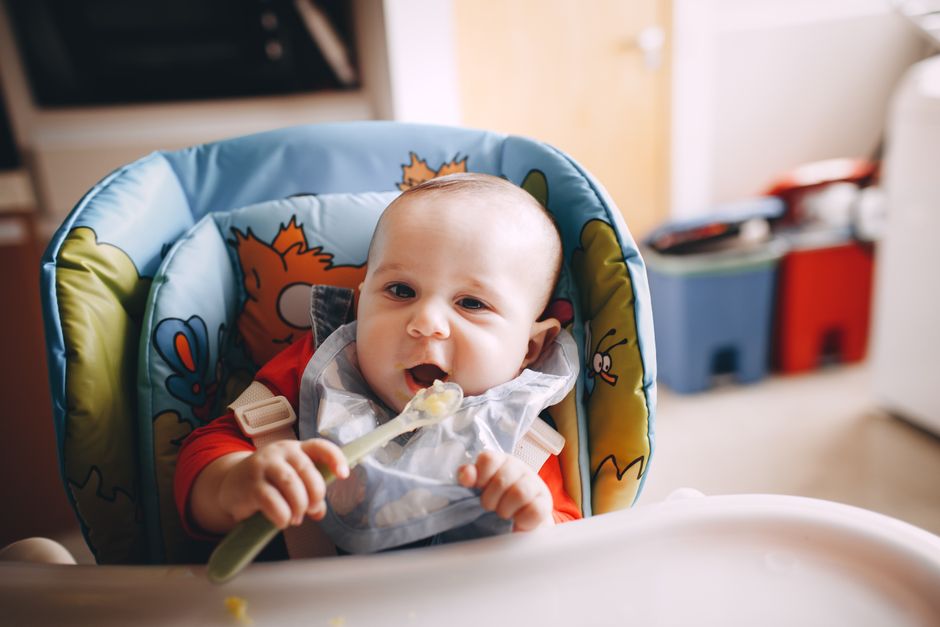
2. The 5 Common Mealtime Mistakes That Escalate Food Throwing
Most parents unknowingly reinforce the very behavior they want to stop:
Mistake #1: Overloading the Tray with Mountainous Portions
A full plate with three large scoops of food is visually overwhelming to a toddler’s small sensory system. When overwhelmed by choices and volume, their instinct is to clear the space by sweeping food onto the floor.
Mistake #2: Giving Big, Theatrical Emotional Reactions
Gasps, scowling, waving hands, and lectures like “Do you know how hard Mommy worked on this dinner?!” register as pure entertainment to a 2-year-old brain incapable of abstract guilt.
Mistake #3: Missing Physical Posture Discomfort
If your child is slumping in a chair without an adjustable footrest, their core muscles fatigue within 5 minutes. To learn why posture dictates feeding behavior, read our breakdown on baby high chair posture and footrest mistakes.
Mistake #4: Begging, Bribing, or Coaxing (“Just One More Bite!”)
Turning mealtime into a negotiation shifts control away from your toddler’s internal hunger and fullness cues, sparking power struggles.
Mistake #5: Trapping Them in the Chair Past 15–20 Minutes
Toddlers have a realistic attention span of 10 to 15 minutes for sitting at meals. Forcing them to stay seated while adults finish eating guarantees food will be launched out of sheer boredom.
💡 Pediatric / Mom Tip: The Division of Responsibility in Feeding (developed by Ellyn Satter, MS, RD): Parents decide WHAT, WHEN, and WHERE to offer food. The child decides IF and HOW MUCH to eat.
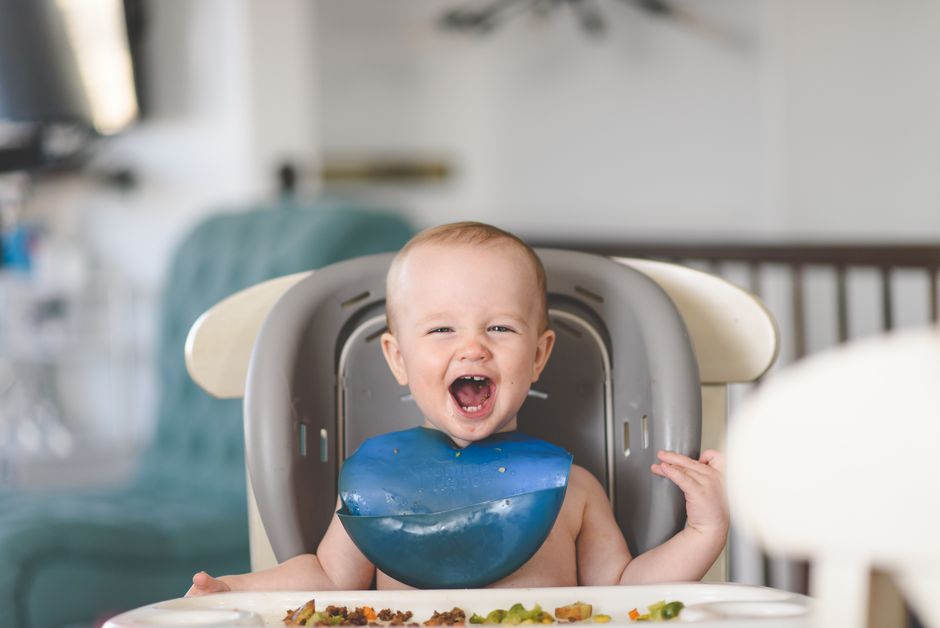
3. Comparison: Emotional Mealtime Battles vs. Gentle High Chair Boundaries
| Approach Feature | Emotional Power Struggle ❌ | Calm Connection & Boundary ✅ |
|---|---|---|
| Parent Tone | Shouting, pleading, frustrated sighs | Neutral, boring, calm, monotone voice |
| Portion Size | Full plate with multiple large scoops | 1 to 2 small pieces offered at a time |
| Reaction to Toss | Dramatic gasp & instant floor clean-up | Completely ignored until after meal |
| Alternative Offered | Begging child to eat | “All Done / No Thank You” bowl introduced |
| Meal Conclusion | Escalates into screaming match | Calm unbuckle: “Your body is telling me you’re full” |
4. The 4-Step Action Plan to End Food Throwing for Good
Implement this exact protocol starting with your very next meal:
Step 1: The “Rule of Two” (Micro-Portioning)
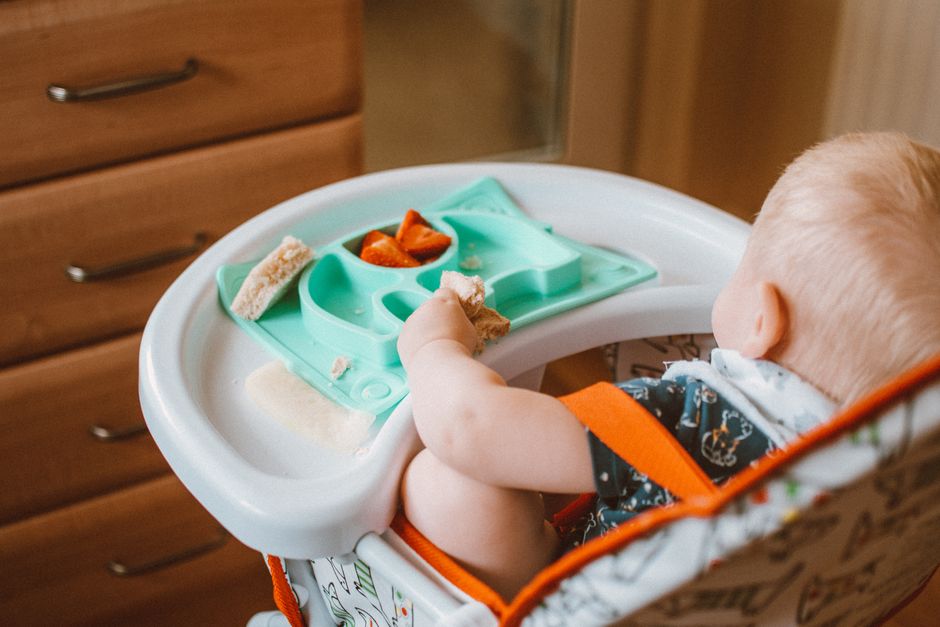
Instead of serving a full bowl, place only two bites of each food directly on the tray.
- Two quartered cherry tomatoes and two pieces of chicken.
- When they eat those, praise them: “You chewed that chicken!” and offer two more.
- A toddler cannot throw a giant pile of food if there is no giant pile on the tray!
Step 2: Introduce the “No Thank You” Bowl
Place a small suction cup or silicone ramekin in the top corner of the tray. Teach them:
- “If you don’t want the broccoli, you don’t throw it on the floor. Put it in the ‘No Thank You’ bowl.”
- Model this physically: take a piece of broccoli from their hand, place it into the bowl, and say “All done broccoli.”
Step 3: Teach the Baby Sign for “All Done”
Most food throwing at the end of meals is simply a non-verbal announcement: “I’m full and want to get down!” Model the baby sign for “All Done” (twisting both open hands back and forth). As soon as they make the sign, validate it immediately and help them down.
Step 4: The “One Warning, Then Done” Boundary
When food is thrown:
- First Throw: Maintain zero facial expression. Look at your child and calmly state: “Food stays on the tray. Throwing food tells me your tummy is full.”
- Second Throw: Without anger, immediately take the tray away, unbuckle the harness, and say: “I see you’re throwing food. That tells me your body is finished eating. Let’s get washed up.”
- Hold the Boundary: Do not offer snacks or milk 10 minutes later. If they complain, say empathetically: “We will have a yummy snack at 3:00 PM.”
⚠️ Warning Alert: Never use physical punishment, isolation time-outs, or anger at the table. Review our guide on time-out vs time-in toddler discipline for positive behavioral strategies.
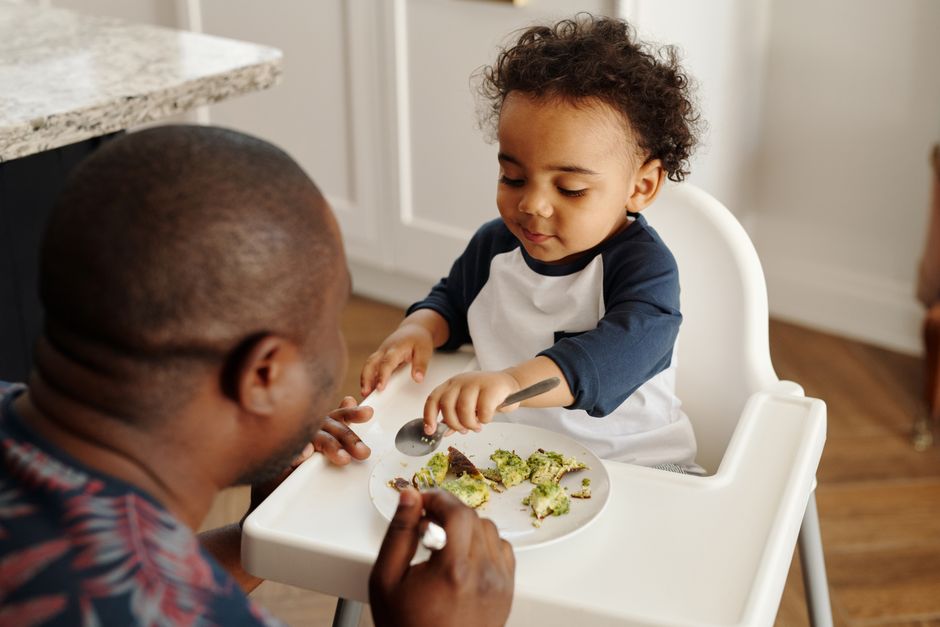
5. Cleaning Up Without the Drama
During the meal, pretend the floor does not exist. Do not look at fallen food, do not sigh, and do not pick up a single crumb while your toddler is in the high chair.
Once your child is unbuckled, playing in the living room, and out of visual range, use a splat mat or vacuum to clean up effortlessly. When you take away the audience and the entertainment, the habit fades away—leaving you with peaceful, joyful family dinners.
Google AdSense Placeholder
Slot ready for "in-article". Set your AdSense publisher ID in settings when approved.
Frequently Asked Questions by Moms
Why do toddlers throw food on the floor from their high chair? ▼
Toddlers throw food for four primary biological reasons: 1) Cause-and-effect exploration (gravity and auditory feedback), 2) Communicating fullness or boredom before they have words, 3) Overwhelm from large portion sizes, and 4) Testing parental reactions and boundary limits.
Should I pick up thrown food immediately while my toddler watches? ▼
No. When you repeatedly bend down to retrieve thrown food, your toddler perceives it as an exciting game of 'fetch.' Instead, maintain a neutral expression, introduce an 'All Done / No Thank You' bowl on the tray, and clean the floor only after the meal is officially finished.
How many chances should I give a toddler before ending the meal? ▼
Use the 'One Calm Reminder, Then Action' rule. Offer one neutral boundary ('Food stays on the tray. If you throw, it tells me your tummy is full'). If they throw a second time, calmly unbuckle them and say, 'I see you are all done,' removing them from the high chair.

Written by Sarah Collins
Doctor-Reviewed & Fact-CheckedMom of Two & Founder of Mommy Tips & Life
Sarah is a mother of two (Liam & Maya) sharing evidence-based parenting guides, infant sleep solutions, and baby safety alerts tested in real family life and vetted against AAP clinical standards.
Google AdSense Placeholder
Slot ready for "footer-banner". Set your AdSense publisher ID in settings when approved.