Why Your Toddler Laughs in Your Face When Told "No" (And 4 Discipline Traps to Stop)
Does your toddler smirk, giggle, or laugh hysterically when you correct them or say no? Understand the nervous system science of the defiance smile and how to respond calmly.
Sarah Collins
Mom of Two & Founder of Mommy Tips & Life
Google AdSense Placeholder
Slot ready for "header-banner". Set your AdSense publisher ID in settings when approved.
🩺 Medical Disclaimer: This guide is for educational purposes and should not replace pediatric or obstetric medical consultation.
🛍️ Affiliate Disclosure: We may earn a small commission when you purchase through our links at no extra cost to you.
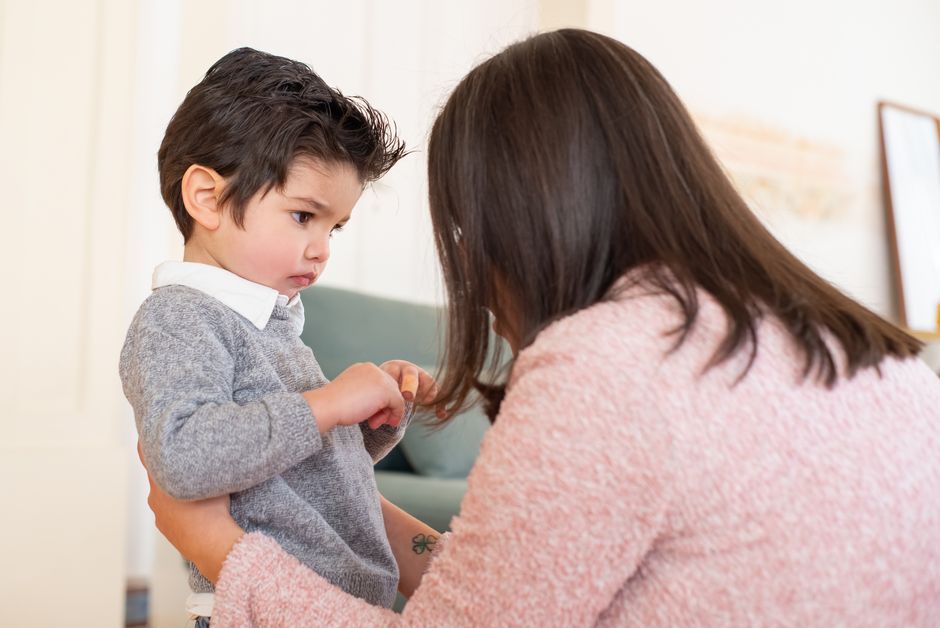
It was 5:30 PM on an exhausting Thursday, and my two-and-a-half-year-old son, Liam, was repeatedly banging a heavy metal toy truck against our newly painted living room baseboards. I knelt down, looked directly into his eyes, and used my sternest “serious mommy voice”: “Liam, NO. We do not hit the walls with trucks. Stop right now.”
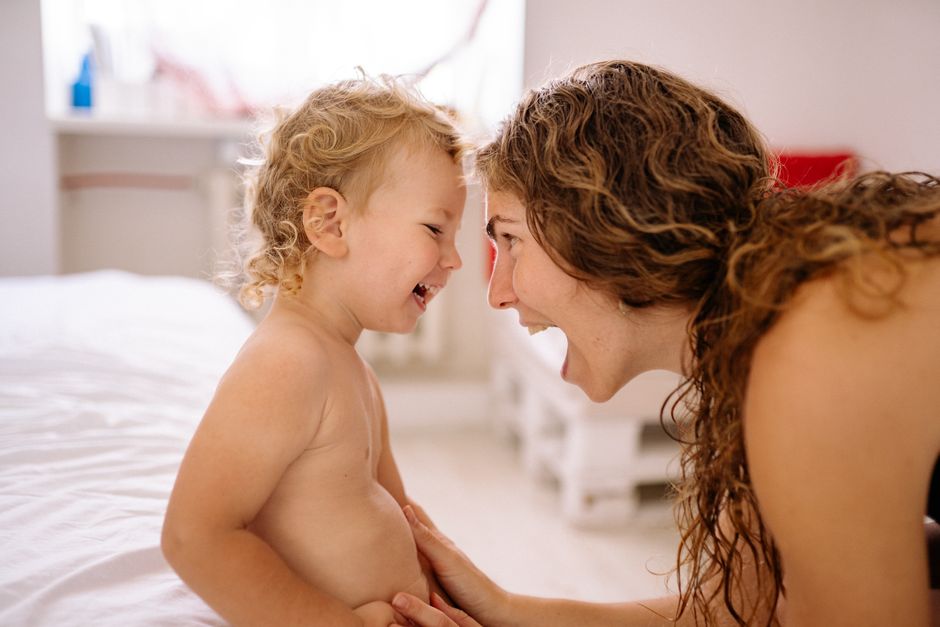
Liam froze, looked me dead in the eye, and slowly let out a massive, cheeky grin. Then, he burst into hysterical giggles and slammed the truck into the wall one more time.
My blood boiled. I felt a surge of pure parental fury. In that moment, my primitive brain thought: Is my two-year-old mocking me? Is he completely defiant? Am I raising a child who has zero respect for authority? I raised my voice, gave him a lecture, and ended up sending him to his room while shaking with anger and guilt.
The Upfront Breakthrough Summary: The turning point in our home came when a child development psychologist explained the neurological truth: toddler laughter during discipline is not defiance—it is a physiological stress response. When young children face intense adult anger, their immature nervous systems trigger an involuntary “nervous grin” to discharge acute anxiety and test social safety. By replacing angry lectures with the 3-step “Calm Anchor” protocol—maintaining a neutral poker face, physically blocking the action with gentle hands, and delivering a 5-word clear boundary—we eliminated the laughing power struggle in less than a week.
The Neuroscience of the “Nervous Grin”: Why Toddlers Smile Under Fire
To stop taking your toddler’s laughter personally, you must understand the primitive neurological wiring of a two- or three-year-old brain.
       ┌────────────────────────────────────────────────────────┐
       │             THE DISCIPLINE LAUGHTER REFLEX             │
       ├──────────────────────────┬─────────────────────────────┤
       │ Sudden Parental Sternness│ Amygdala Threat Detection   │
       │ (Deep voice, furrowed brow)│ (Cortisol & adrenaline surge)│
       ├──────────────────────────┼─────────────────────────────┤
       │ Involuntary Nervous Discharge (Giggle / Smirk)         │
       │                          │                             │
       │ ➔ Biological attempt to  │ ➔ Social appeasement reflex │
       │   diffuse intense stress │   aimed at reconnecting with│
       │   and overwhelm          │   a frightening caregiver   │
       └──────────────────────────┴─────────────────────────────┘
When an adult gets angry, our facial features change dramatically: our eyes narrow, eyebrows drop, pupils dilate, and vocal pitch deepens. To a toddler, whose emotional survival depends entirely on caregiver connection, this abrupt shift registers as a terrifying rupture of attachment.
When the amygdala experiences sudden fight-or-flight arousal without the cognitive ability to articulate fear, the body releases that overwhelming physiological tension through laughter, giggling, or running away.
If discipline in your home frequently leads to yelling or meltdowns, explore our foundational strategies on how to get toddlers to listen without yelling and managing toddler hitting and biting behaviors.
1. The 4 Common Discipline Traps That Fuel the Laughing
When parents misinterpret a nervous stress smile as intentional defiance, they often fall into predictable behavioral traps that accidentally reinforce the exact behavior they want to stop:
| Common Mistake ❌ | Healthy Alternative ✅ |
| :--- | :--- |
| Yelling: "Why are you laughing?! This is not funny!" | Keeping a completely calm, neutral facial expression |
| Delivering a 5-minute rational lecture about respect | Stating the boundary in 5 words or fewer ("Hands are for helping.") |
| Laughing back or smiling because they look cute | Holding a firm, gentle physical boundary without amusement |
| Using isolation time-outs that increase panic | Using co-regulation "time-ins" to restore nervous system safety |
| Giving multiple empty warnings without action | Stepping in immediately to physically hold the boundary |
Trap #1: The Explosive Overreaction (The Dopamine Rush)
Toddlers are little scientists constantly mapping cause and effect. If pressing a button makes a toy light up, they press it again. If smirking causes mom’s head to practically explode with high-octane emotional theatrics, the toddler’s brain finds that intense emotional power fascinating.
Trap #2: Demanding an Answer to “Why Did You Do That?”
Asking a dysregulated 2-year-old why they are laughing or why they threw a shoe is a neurological impossibility. Their prefrontal cortex cannot analyze abstract motives. Being grilled only increases their anxiety, making them laugh harder.
2. Boundary Testing: “Are You Sturdy Enough to Keep Me Safe?”
Toddlers do not want to be the boss of the house. When a toddler laughs after breaking a rule, they are asking a subconscious question: “If I push against this boundary, will my parent remain calm and sturdy, or will they fall apart and lose control?”
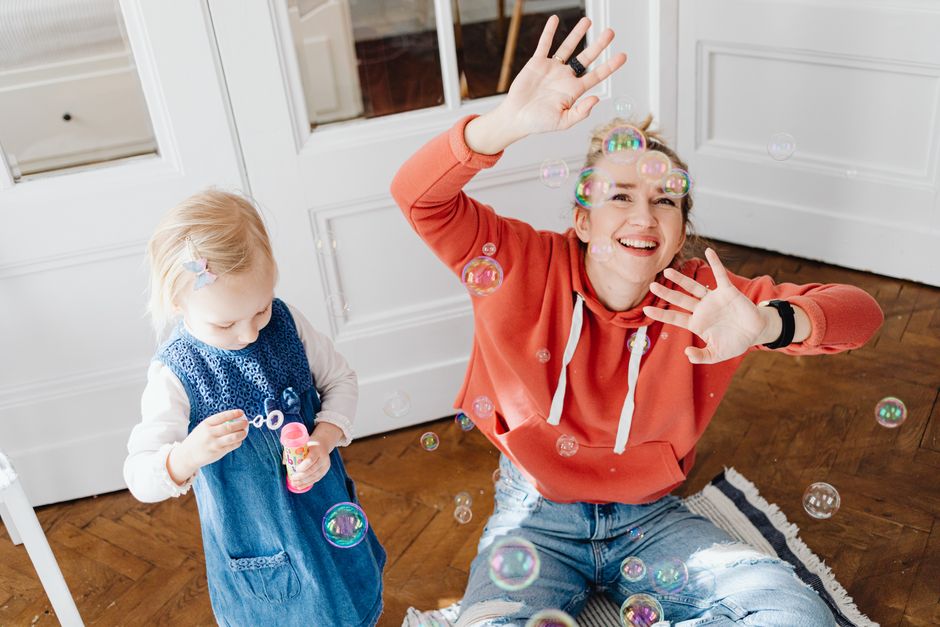
If you respond with rage or helplessness, the toddler feels unsafe, which increases anxiety-driven behavioral testing. If you respond with steady, calm authority, their nervous system relaxes.
For parents navigating intense daily standoffs, study our guide on ending toddler power struggles without punishment.
3. The 3-Step “Calm Anchor” Response Protocol
The next time your toddler smirks, giggles, or laughs after hearing “no,” follow this exact 3-step script:
   ❌ EMOTIONAL REACTION                ✅ THE CALM ANCHOR SCRIPT

   "Stop smiling right now!             [Maintain Neutral Face]
    Go to your room!"                                 |
           \                                [Block Hand Gently]
   [Elevates Toddler Anxiety]                         |
           |                            "I won't let you hit.
   [Defiance & Tantrum Spikes]           I am keeping us safe."
Step 1: Neutralize Your Face (The Poker Face)
Do not frown angrily; do not smile back. Drop your shoulders, un-clench your jaw, and maintain soft, grounded eye contact. This signals to their nervous system: You are not in danger, and you cannot manipulate my emotional state.
Step 2: Physical Intervention Over Words
Toddlers learn through somatic boundaries, not lectures. If they are throwing food, gently hold their wrist or move the plate out of reach. If they are running toward the street, pick them up calmly.
Step 3: Deliver the 5-Word Clear Limit
Speak in a low, slow, monotone cadence:
- “I won’t let you throw.”
- “Feet stay on the floor.”
- “Toys are for playing, not hitting.”
If your child becomes overwhelmed and transitions into a full tantrum, implement the connection-first principles outlined in time-out vs. time-in discipline and our emergency guide for stopping toddler tantrums fast.
4. Reconnecting After the Storm
Once the boundary has been held and the nervous giggling subsides, the final step is repairing the relational bond.
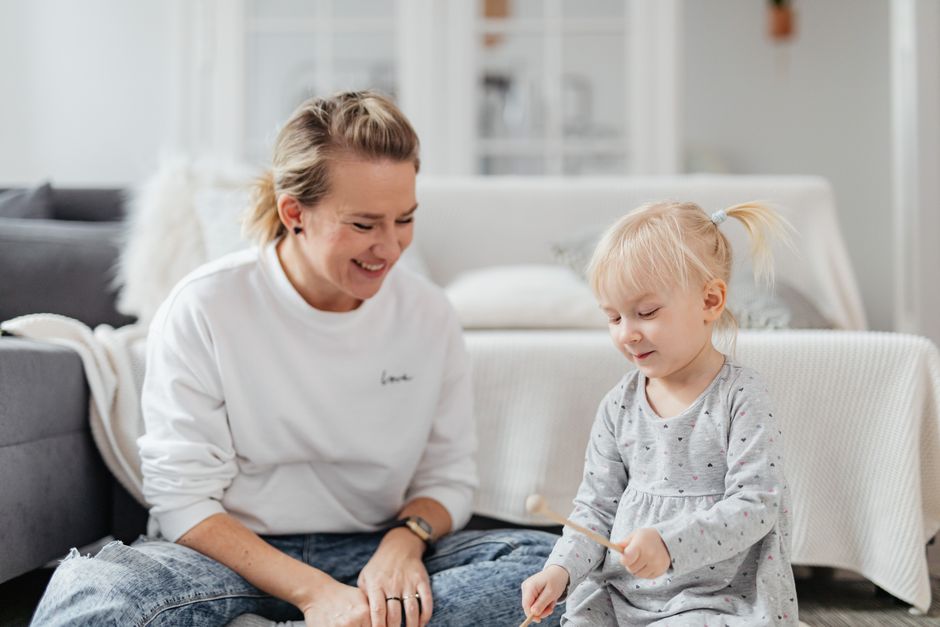
💡 Pediatric / Mom Tip: After a boundary standoff, do not hold a grudge or give the silent treatment. Once the situation is calm, say: “It was hard to stop throwing the truck earlier, wasn’t it? You were feeling really silly and excited. I love you, and my job is always to keep our home safe.” Offer a warm hug to reset their nervous system.
⚠️ Warning Alert: If a child’s inappropriate laughter is accompanied by a complete inability to engage in social referencing, lack of response to their own name, or severe repetitive self-stimulatory behaviors, consult your pediatrician to evaluate developmental and social communication milestones.
Summary Checklist for Parents
- Recognized toddler laughter as a stress reflex, not defiance.
- Maintained a neutral, calm facial expression during boundary setting.
- Physically blocked the behavior rather than yelling from across the room.
- Kept verbal limits short (5 words or fewer).
- Followed through with reconnection and emotional attunement.
Google AdSense Placeholder
Slot ready for "in-article". Set your AdSense publisher ID in settings when approved.
Frequently Asked Questions by Moms
Why does my toddler laugh or smile when I scold them or say no? ▼
Toddlers do not laugh to mock or disrespect you. Laughter during discipline is an involuntary biological nervous system discharge triggered by stress, anxiety, social embarrassment, or intense sensory overwhelm. It also serves as a coping mechanism when a toddler cannot process a parent's sudden angry facial expression.
How should I react when my child smirks or giggles during discipline? ▼
Maintain a neutral, calm facial expression and avoid yelling or demanding 'Why are you laughing?!' Physically block the unsafe behavior with a steady hand, state the boundary in 5 words or fewer, and connect with their underlying emotion rather than reacting to the nervous smile.
Does laughing when in trouble mean my toddler lacks empathy? ▼
No. A toddler's prefrontal cortex (responsible for empathy, impulse control, and emotional regulation) is still in early development. An inappropriate nervous grin is a classic sign of an immature nervous system seeking to diffuse relational tension, not lack of empathy.
How do I stop my toddler from repeating the forbidden behavior after laughing? ▼
Follow through immediately with an empathetic, physical boundary rather than issuing empty verbal threats. If they laugh and throw a toy again, calmly remove the toy without anger: 'I won't let you throw trucks. The truck is going away until tomorrow.'

Written by Sarah Collins
Doctor-Reviewed & Fact-CheckedMom of Two & Founder of Mommy Tips & Life
Sarah is a mother of two (Liam & Maya) sharing evidence-based parenting guides, infant sleep solutions, and baby safety alerts tested in real family life and vetted against AAP clinical standards.
Google AdSense Placeholder
Slot ready for "footer-banner". Set your AdSense publisher ID in settings when approved.