Toddler Hitting the New Baby? 5 Discipline Mistakes That Make Sibling Aggression Worse
Is your toddler hitting or pinching the new baby? Stop reactive punishment and learn neuro-affirming co-regulation, boundary holding, and connection scripts.
Sarah Collins
Mom of Two & Founder of Mommy Tips & Life
Google AdSense Placeholder
Slot ready for "header-banner". Set your AdSense publisher ID in settings when approved.
🩺 Medical Disclaimer: This guide is for educational purposes and should not replace pediatric or obstetric medical consultation.
🛍️ Affiliate Disclosure: We may earn a small commission when you purchase through our links at no extra cost to you.
When my son Lucas was four weeks old, I was sitting on the living room rug nursing him through an intense cluster feed. My two-and-a-half-year-old daughter, Maya, walked over with a heavy wooden building block, looked directly into my eyes with an unreadable expression, and slammed the block straight onto Lucas’s leg.
Lucas let out a blood-curdling scream.
Pure maternal panic and protective rage surged through my body. I jumped up, lunged across the rug, and screamed at the top of my lungs: “MAYA! NO! WHAT IS WRONG WITH YOU?! GO TO YOUR ROOM RIGHT NOW!”
Maya burst into hysterical, terrified sobs, curling into a tiny ball against the hallway wall. As I stood there trembling, holding my crying infant in one arm and watching my heartbroken toddler weeping in the corner, I felt like the worst mother on the planet. I was terrified that my daughter was becoming aggressive, and I had no idea how to stop it.
The Quick Breakthrough Summary: Toddler sibling aggression is not a moral failing—it is an attachment alarm. When a new sibling arrives, a toddler experiences the emotional equivalent of their spouse bringing home a second romantic partner and saying, “Be nice to them, you have to share everything now.” By replacing reactive screaming and isolation time-outs with the “Victim First” Protocol, firm non-violent body blocking, and 10 minutes of daily non-negotiable 1-on-1 Special Time, Maya’s hostility evaporated, and she transitioned from viewing her brother as a rival to becoming his gentlest protector.
Here is the child-psychologist-backed guide to ending sibling aggression with love, authority, and emotional intelligence.
1. The Psychology of Sibling Displacement: Why the Amygdala Panics
To handle sibling aggression effectively, you must understand what is happening inside your toddler’s developing brain.
   [ BEFORE NEW SIBLING ]                       [ AFTER NEW SIBLING ARRIVES ]
   Toddler = Sole Center of Family Universe      Mom/Dad Constantly Holding "The Intruder"
   Predictable Attention & Routines              Attention Fractured, Constant "Shh! Quiet!"
   Nervous System: Secure & Calm                 Nervous System: Threat Alarm (Amygdala Hijack) ❌
A toddler’s prefrontal cortex (the region responsible for impulse control, long-term reasoning, and emotional regulation) is wildly underdeveloped. When they see a parent holding, feeding, and kissing a new baby for hours every day, their primitive brain perceives a catastrophic loss of safety and connection.
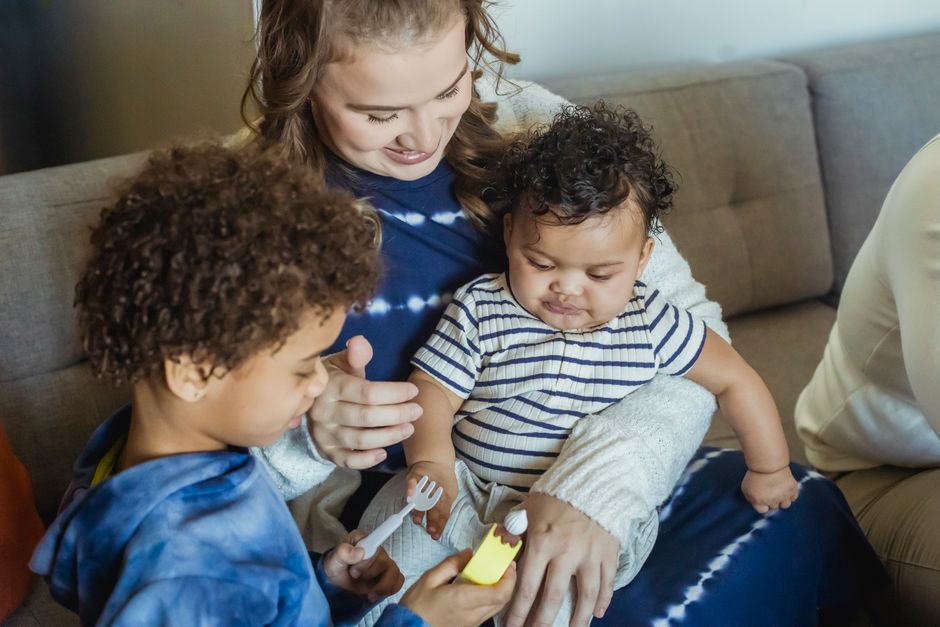
Why Toddlers Lash Out Physically:
- Testing Parental Boundaries: “If I do the worst thing imaginable, will Mom still love me, or will she abandon me for the baby?”
- Impulse Control Failure: A toddler may genuinely want to pat the baby gently, but an overwhelming urge of curiosity, jealousy, or sensory dysregulation turns a touch into a hard smack.
- Negative Attention Seeking: To a toddler starved of eye contact, negative attention (yelling, gasping, lecturing) is far better than being ignored.
If your toddler also hits during transitions or sharing disputes, review our foundational guide on toddler hitting and biting discipline strategies.
2. The Big Reaction Trap: How Screaming Fuels Future Aggression
When a toddler hits an infant, parents naturally gasp, shout, and react with high emotional voltage.
While completely understandable, this intense reaction unintentionally reinforces the exact behavior you want to extinguish.
   ┌────────────────────────────────────────────────────────┐
   │ THE BIG REACTION FEEDBACK LOOP                         │
   │ 1. Toddler taps baby on head                           │
   │ 2. Parent erupts: Screams, gasps, lectures             │
   │ 3. Toddler's Brain registers: "WOW! I have POWER!      │
   │    I can stop whatever Mom is doing in 1 second!"      │
   │ 4. Behavior Repeats: Toddler hits again for attention  │
   └────────────────────────────────────────────────────────┘
When you explode with high-octane emotion, you give the action immense theatrical significance. The toddler realizes that hitting the baby is the single fastest way to pull your eyes away from the baby and onto them.
To learn how to hold calm authority during tense moments, see our guide on how to get toddlers to listen without yelling or escalating.
3. The “Victim First” Protocol: De-escalating Jealousy Without Shame
When aggression occurs, the secret to extinguishing the behavior is reversing the spotlight of attention.
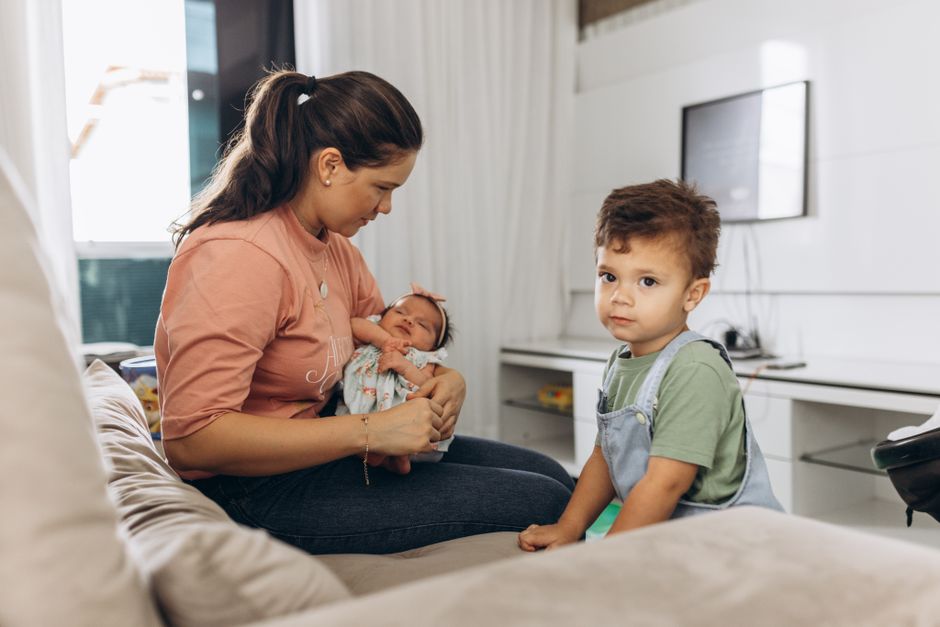
The 3-Step Execution:
- Step 1: Calm Physical Block: Place your forearm or body between the toddler and the baby without pushing or yelling.
- Step 2: Turn Your Back & Lavish Attention on the Baby: Turn your body toward the infant, cuddle them, and say softly: “Oh, sweet baby, that was loud. You are safe, Mommy is right here.” Give 80% of your initial emotional warmth to the infant.
- Step 3: Neutral, Firm Boundary with the Toddler: Once the baby is calm, turn to your toddler with a neutral, unruffled expression: “I will not let you hit Lucas. Hitting hurts. If your hands feel wild, you can squeeze this pillow.”
By attending to the victim first, you remove the high-drama payout for the aggression while keeping your boundaries crystal clear.
If you are currently relying on traditional isolation corners, learn why time-outs vs. time-ins transform toddler discipline outcomes.
4. Word-for-Word Boundary Scripts to Use at Home
Toddlers need clear, confident leadership. Never ask permission (“Can you be nice to your brother?”) or plead (“Please don’t do that, you’re making Mommy sad”).
Use these doctor-backed scripts:
   SITUATION: Toddler approaches with a raised hand or heavy toy.
   SCRIPT:   "I see your hands moving fast. My job is to keep everyone safe.
              I am putting my hand right here so no one gets hurt."

   SITUATION: Toddler says "I hate the baby! Throw him in the trash!"
   SCRIPT:   "It is really hard having a baby in our house sometimes. You wish
              it was just you and Mommy like before. I hear you, my love."

   SITUATION: Baby is crying while you are helping the toddler.
   SCRIPT:   "Baby Lucas, you have to wait a minute! Right now it is Maya's turn,
              and I am helping her with her puzzle." (Say this aloud so toddler hears!)
💡 Pediatric / Mom Tip: Blaming the baby for routine disruptions (“We can’t go to the park because the baby is napping”) breeds deep sibling resentment. Reframe the narrative: “We are resting our bodies right now, and we’ll go to the park after snack time!”
5. The 10-Minute “Special Time” Attachment Shield
The most powerful antidote to sibling jealousy is proactive connection. When a child’s “emotional attachment cup” is full, they have no psychological urge to attack their sibling.
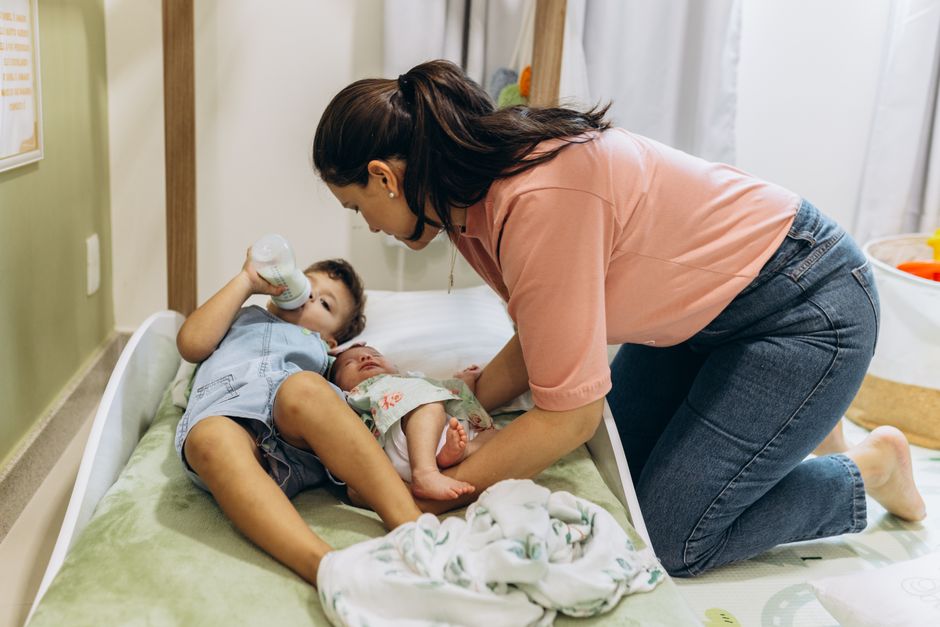
How to Implement Daily Special Time:
- Duration: 10 to 15 minutes every single day (quality over quantity).
- Rules: Put your smartphone in another room. Hand the baby to your partner or put them in the crib. Look directly into your toddler’s eyes.
- Child-Led Play: Say: “Maya, for the next 15 minutes, it is 100% Special Time. You get to choose whatever game we play, and Mommy will do whatever you want.”
- Never Cancel as Punishment: Special Time is an emotional nutrient, not a reward to be revoked for bad behavior.
If your toddler’s tantrums frequently spiral into full sensory overload, read our clinical breakdown on sensory meltdowns vs. behavioral temper tantrums.
⚠️ Warning Alert: Never leave a toddler and a newborn unattended in the same room, even for 30 seconds to use the restroom. Take the baby with you or place the infant in a safe, elevated bassinet. Sibling aggression happens in split seconds of impulse dysregulation. Also master strategies for diffusing daily toddler power struggles.
Summary Comparison: Handling Sibling Aggression
| Scenario | Reactive Trap ❌ | Connected Discipline Fix ✅ |
|---|---|---|
| Immediate Response | Shouting, gasping, and grabbing toddler roughly | Calmly blocking with arm and speaking in a low, steady voice |
| Attention Focus | Screaming at toddler while baby cries on floor | Comforting the baby first to eliminate drama rewards |
| Consequence | Sending toddler to solitary time-out in shame | Staying close, co-regulating, and holding a firm physical boundary |
| Feelings Validation | “You have to love your sweet new brother!” | “It’s hard having a baby here. It’s okay to feel mad, but not to hit.” |
| Daily Routine | Only paying attention to toddler when they act out | Scheduling 10 minutes of uninterrupted 1-on-1 Special Time daily |
Parenting two young children is an immense emotional balancing act. By protecting your baby’s physical safety while fiercely safeguarding your toddler’s sense of attachment, you will build a foundation of lifelong sibling friendship and mutual trust.
Google AdSense Placeholder
Slot ready for "in-article". Set your AdSense publisher ID in settings when approved.
Frequently Asked Questions by Moms
Why is my toddler suddenly hitting or pinching our new baby? ▼
Toddlers do not hit out of malice or cruelty. To a toddler, a new infant represents an existential disruption to their primary attachment bond with parents. Lacking the emotional maturity or language to say 'I feel forgotten and overwhelmed,' their primitive fight-or-flight brain expresses grief, jealousy, and impulse dysregulation through physical actions like hitting, pinching, or pushing.
Should I put my toddler in time-out when they hit the baby? ▼
Traditional isolation time-outs often make sibling aggression worse because they reinforce the toddler's deep-seated fear that the new baby has stolen their parents' love. When sent away alone in shame, the child's resentment toward the baby intensifies. Instead, use firm physical boundaries ('I will not let you hit') paired with connection and emotional co-regulation.
What should my immediate reaction be when my toddler hits the infant? ▼
Follow the 'Victim First' protocol: Stay physically calm, block any further strikes with your hand, immediately comfort and attend to the baby first, and then address the toddler with a neutral, non-shaming boundary ('Hands are not for hitting. You are feeling big feelings, and I will keep everyone safe').
How can I prevent my toddler from feeling jealous of the new baby? ▼
Dedicate 10 to 15 minutes of uninterrupted 'Special Time' every single day where you put your phone away, hand the baby to your partner, and let your toddler lead the play completely. Also, verbalize boundaries to the baby in front of the toddler (e.g., 'Baby Lucas, you have to wait 2 minutes while I finish reading Maya her book').

Written by Sarah Collins
Doctor-Reviewed & Fact-CheckedMom of Two & Founder of Mommy Tips & Life
Sarah is a mother of two (Liam & Maya) sharing evidence-based parenting guides, infant sleep solutions, and baby safety alerts tested in real family life and vetted against AAP clinical standards.
Google AdSense Placeholder
Slot ready for "footer-banner". Set your AdSense publisher ID in settings when approved.